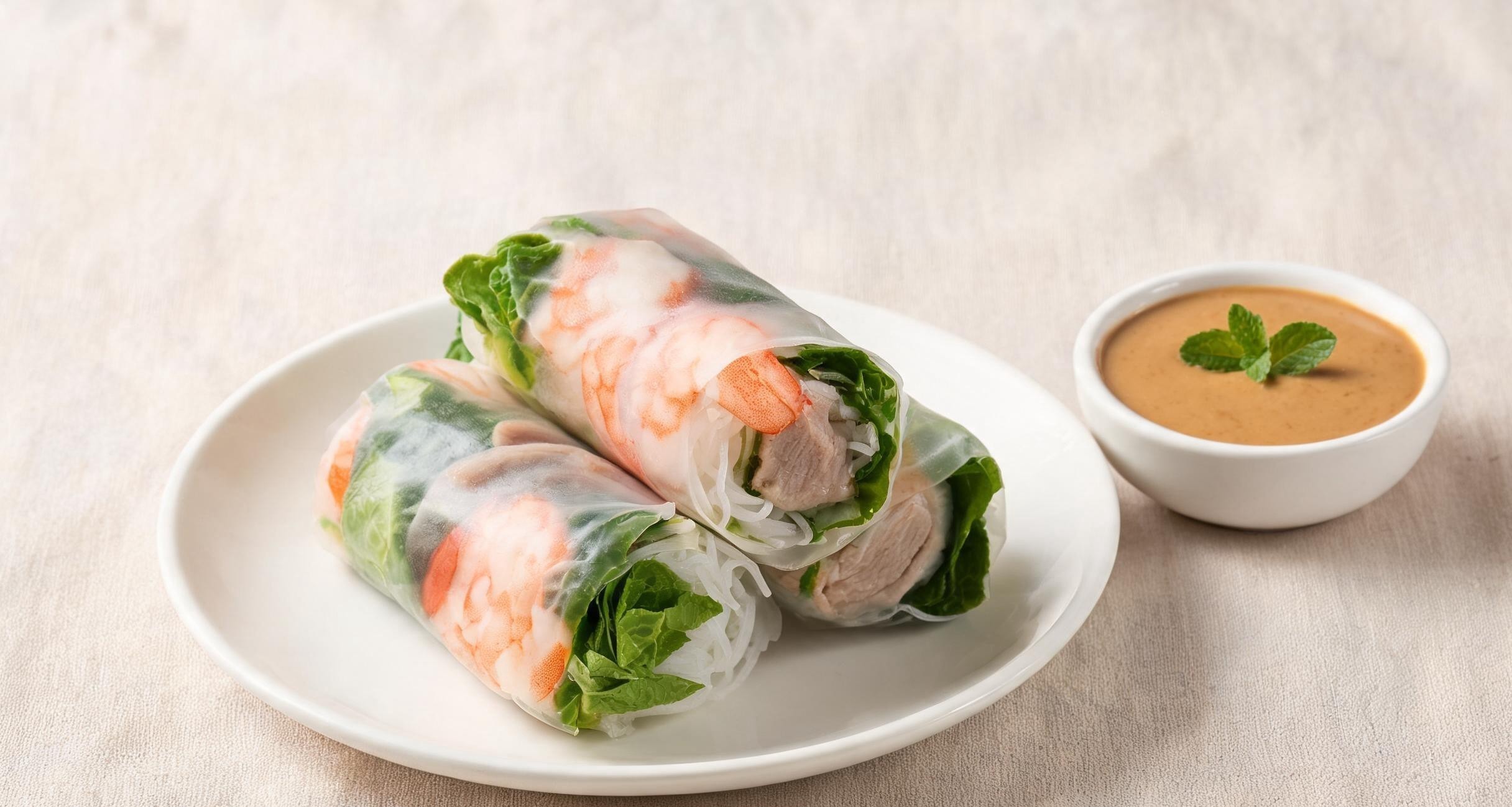
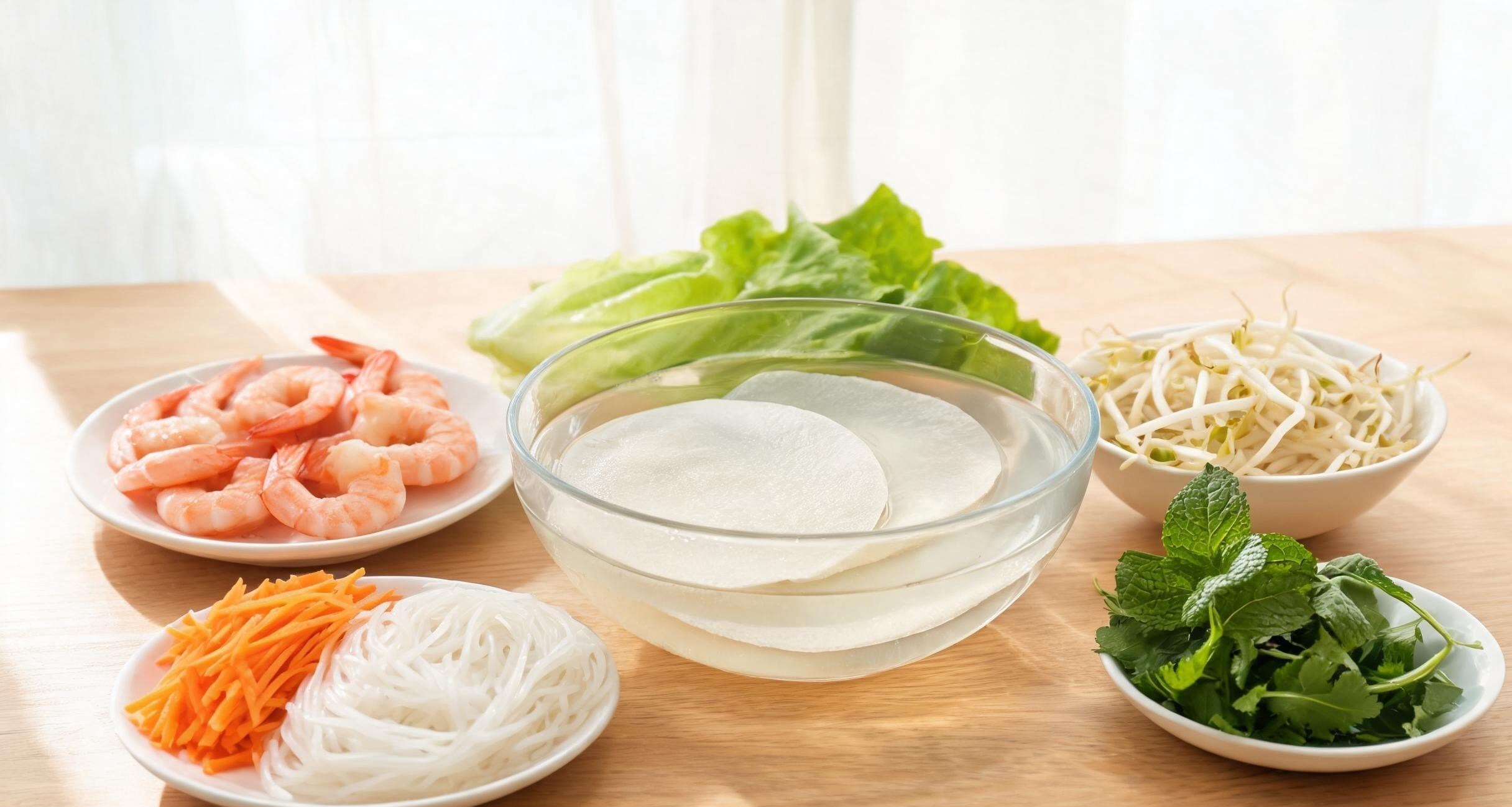
My grandmother made goi cuon every Sunday for thirty years, and she never once measured anything. I remember standing next to her at the kitchen counter in her apartment in Saigon, watching her dip a single sheet of rice paper into a bowl of warm water for exactly three seconds, no more, then lay it flat on a plate. She said the rice paper would continue to soften on its own, and if you left it in the water too long, you ended up with a gummy wrapper that tore when you tried to roll it. I have watched dozens of people overcomplicate this step, soaking the paper until it is limp and fragile. Three seconds. That is it, if your water is warm but not hot. The rice paper should still feel slightly firm when you take it out, pliable enough to bend but not so soft that it falls apart in your hands. Within about thirty seconds of sitting on the plate, it will reach the right consistency, slightly tacky and easy to work with.
The filling is where most recipes either overload the roll or under-season it. My grandmother used medium shrimp, boiled for two minutes and sliced in half lengthwise, placed pink side down on the wrapper so the color showed through the translucent rice paper. She added a handful of cooked pork, thinly sliced, a small tangle of vermicelli noodles, and then the herbs. Not a token sprig of cilantro, but a generous fistful of mint, perilla, and Vietnamese balm, stacked so that every bite had that bright, aromatic quality that separates a good spring roll from something that tastes like wet paper with shrimp inside. The herbs are not garnish. They are half the reason to make these at all. Without them, the roll is just rice and pork and shrimp, which is fine but nowhere near as good. The mint and perilla add a sharpness and freshness that cuts through the richness of the pork and the mildness of the rice vermicelli.
The rolling technique my grandmother used was simple but precise. She folded the bottom edge of the wrapper up over the filling, tucked the sides in tightly, then rolled forward, pressing gently but firmly so the roll was snug without squeezing the filling out the ends. She said the roll should feel like a firm cigar in your hand, not a loose burrito. If the wrapper tears, you probably over-soaked it or tried to pack in too much filling. I have made that mistake plenty of times. The first five or six rolls you make will look rough. By the tenth, you will have the motion down, and by the twentieth, you will wonder why you ever paid eight dollars for two rolls at a restaurant. The key is not to overfill. A good spring roll has about two inches of filling in the center, enough to give each bite some substance but not so much that the wrapper strains at the seams.
The peanut dipping sauce, or nuoc cham, is what pulls everything together. My grandmother mixed fish sauce, lime juice, sugar, garlic, and chili in a small bowl, then added a few tablespoons of hoisin and a spoonful of crushed roasted peanuts. The proportions shifted slightly every time she made it, depending on the limes and the sweetness of the fish sauce. The result was always the same: salty, sweet, sour, and slightly spicy, with the peanuts adding a crunch that contrasted with the soft wrapper and the herbs. I have seen recipes that skip the hoisin or substitute peanut butter for the crushed peanuts, and they are fine, but they taste like something adapted for an American grocery store, not like the sauce my grandmother made. The peanuts should be roughly chopped, not ground into paste, so you get bits of crunch in every dip. The chili should be fresh, sliced thin, not dried flakes from a jar.
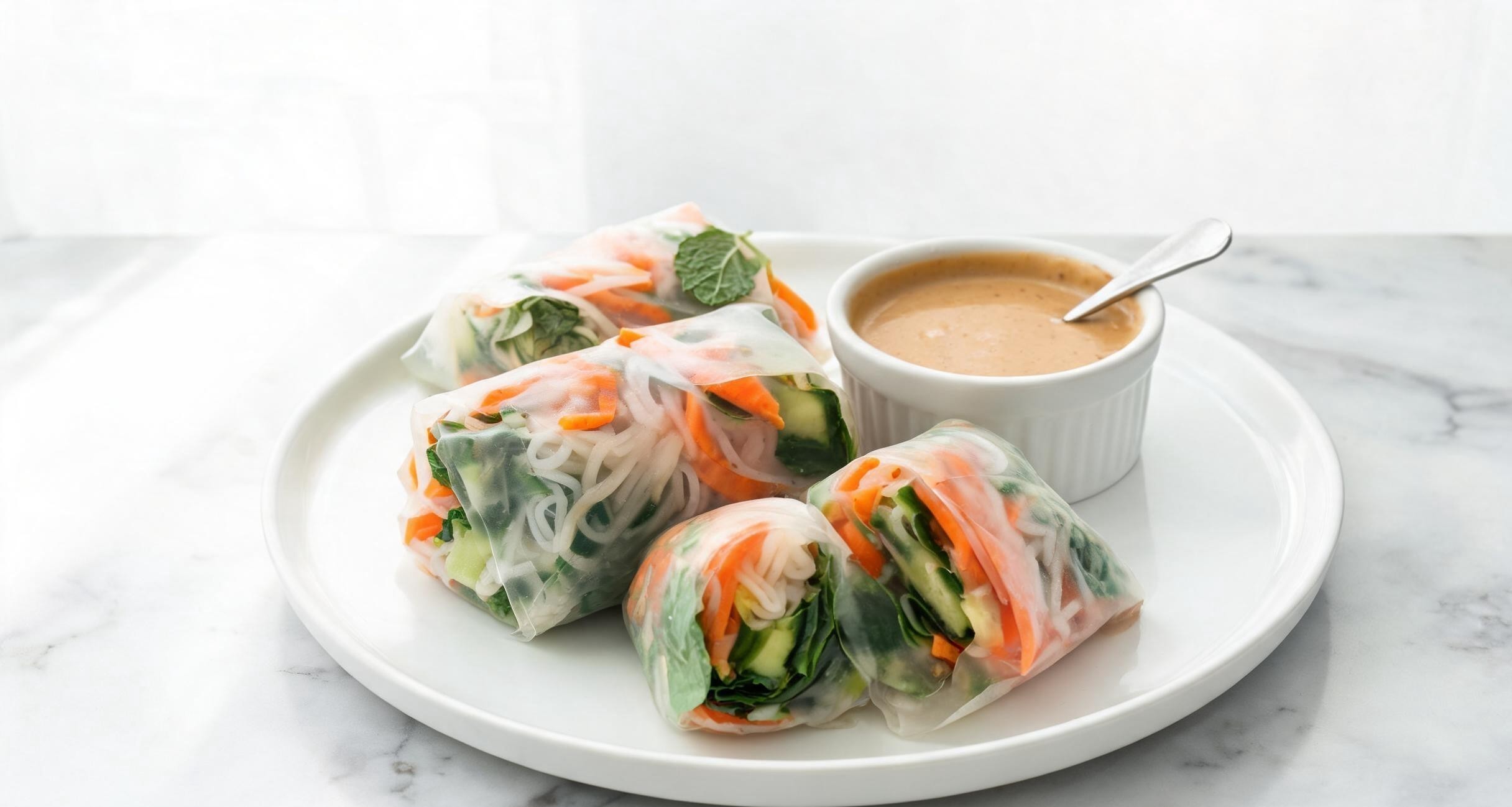
These rolls do not keep well. Within a couple of hours, the rice paper starts to dry out and crack, or the herbs begin to wilt if the rolls are wrapped too tightly in plastic. They are meant to be eaten immediately, assembled right before serving, which is why they work best as a group activity. Set out all the ingredients in small bowls, put a stack of rice paper and a bowl of warm water in the center of the table, and let everyone roll their own. My family still does this at gatherings, and the conversation that happens while people are fumbling with their first few rolls is half the point of the meal. The rolls become better as people practice, and by the end of the night, everyone has their own technique and preferences. My cousin likes hers with extra shrimp. My aunt puts in double the herbs. My grandmother, if she were still here, would tell everyone they are doing it wrong.
One last thing: do not try to make these with imitation rice paper or those thick, opaque sheets sold in some supermarkets. You need the thin, round, translucent kind that comes in a plastic wrapper, usually labeled banh trang. Look for a brand from Vietnam or Thailand. The paper should feel brittle and dry to the touch before you soak it. If it feels soft or flexible in the package, it is already too old and will not roll properly. Good rice paper is cheap, usually three or four dollars for a pack of a hundred sheets, so there is no reason to settle for the wrong kind. Once you have the right paper and the right herbs, the rest follows. My grandmother never wrote down a recipe because she did not need one, and after making these rolls enough times, you will not need one either. The process is simple, the ingredients are few, and the result is one of the best things you can eat with your hands.