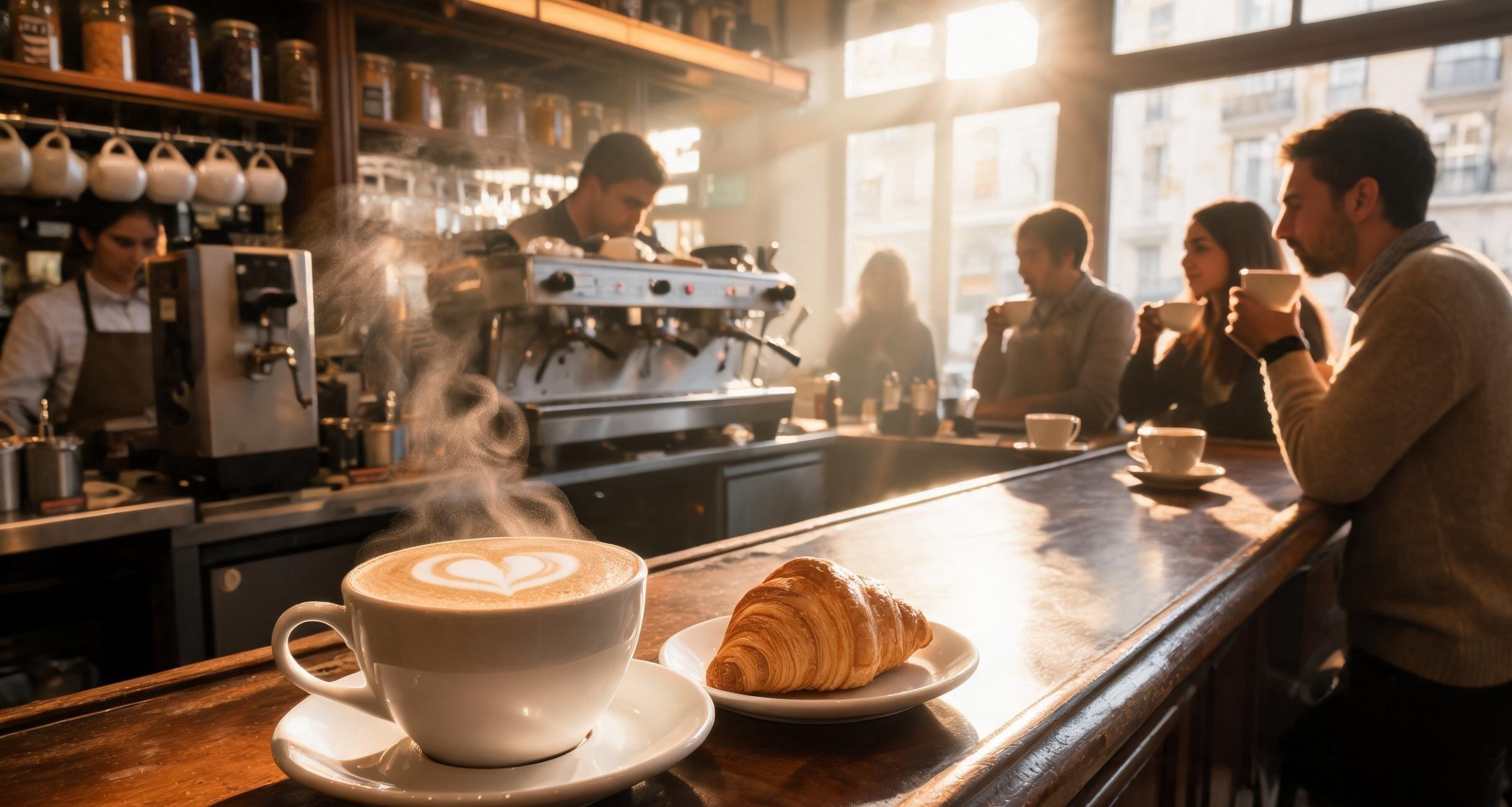
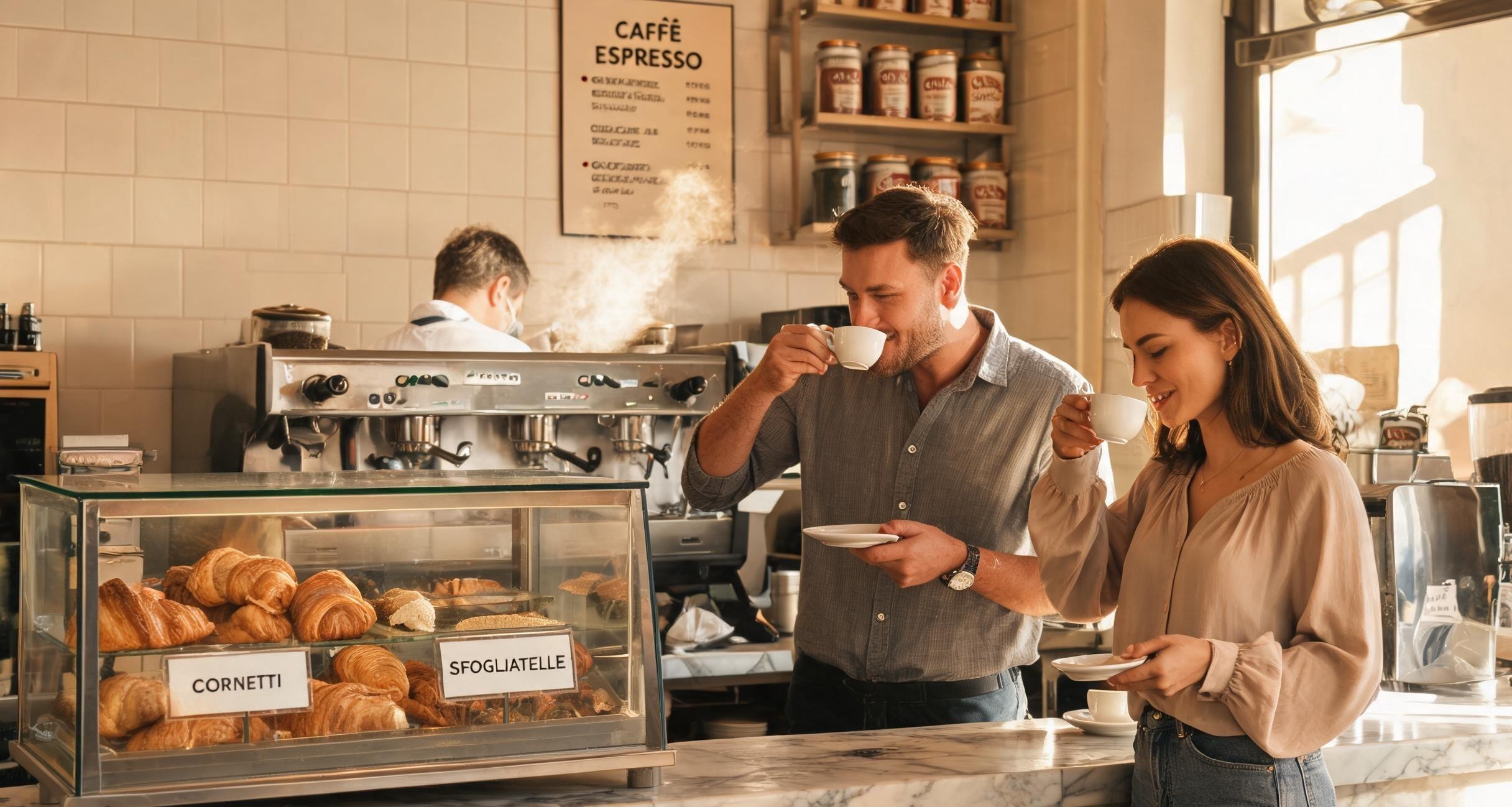
The first time I ordered a cappuccino after noon in Italy, the barista looked at me with an expression I can only describe as pity. He made it, because I was a paying customer, but he placed the cup on the counter with a slight hesitation, the way you might hand someone a letter with bad news. I drank it anyway, and it was a fine cappuccino, but I could feel the judgment in the room. I mentioned this to an Italian friend later that day and she said, simply, that cappuccino after noon is for tourists. Italians drink cappuccino only in the morning, usually with a cornetto or some pastry, and never with lunch or dinner or as an afternoon pick-me-up. The reasoning is practical: milk is heavy, and drinking milk after a full meal is considered uncomfortable and unnecessary. This is not a written law. There is no sign in any Italian bar that says no cappuccino after noon. But the social pressure is real, and once you know the rule, you feel it every time you consider breaking it.
The standing bar is the default in Italy, and it is the way most Italians consume coffee every day. You walk in, go to the cash register, pay for your coffee at a price listed on a board behind the counter, and take your receipt to the bar. The barista makes your coffee and places it on the counter with a small glass of water. You drink it standing, in one or two sips, because Italian espresso is small and strong and not meant to be lingered over. The whole interaction takes about ninety seconds. If you sit at a table, the price doubles or triples. This is not a scam. It is the economics of space. A seat at a cafe table is a limited resource, and you are paying for the privilege of occupying it. The standing bar is the democratic option: fast, cheap, and egalitarian. Everyone stands, from the CEO to the construction worker, and there is no hierarchy in the line. First come, first served, and move aside when you are done.
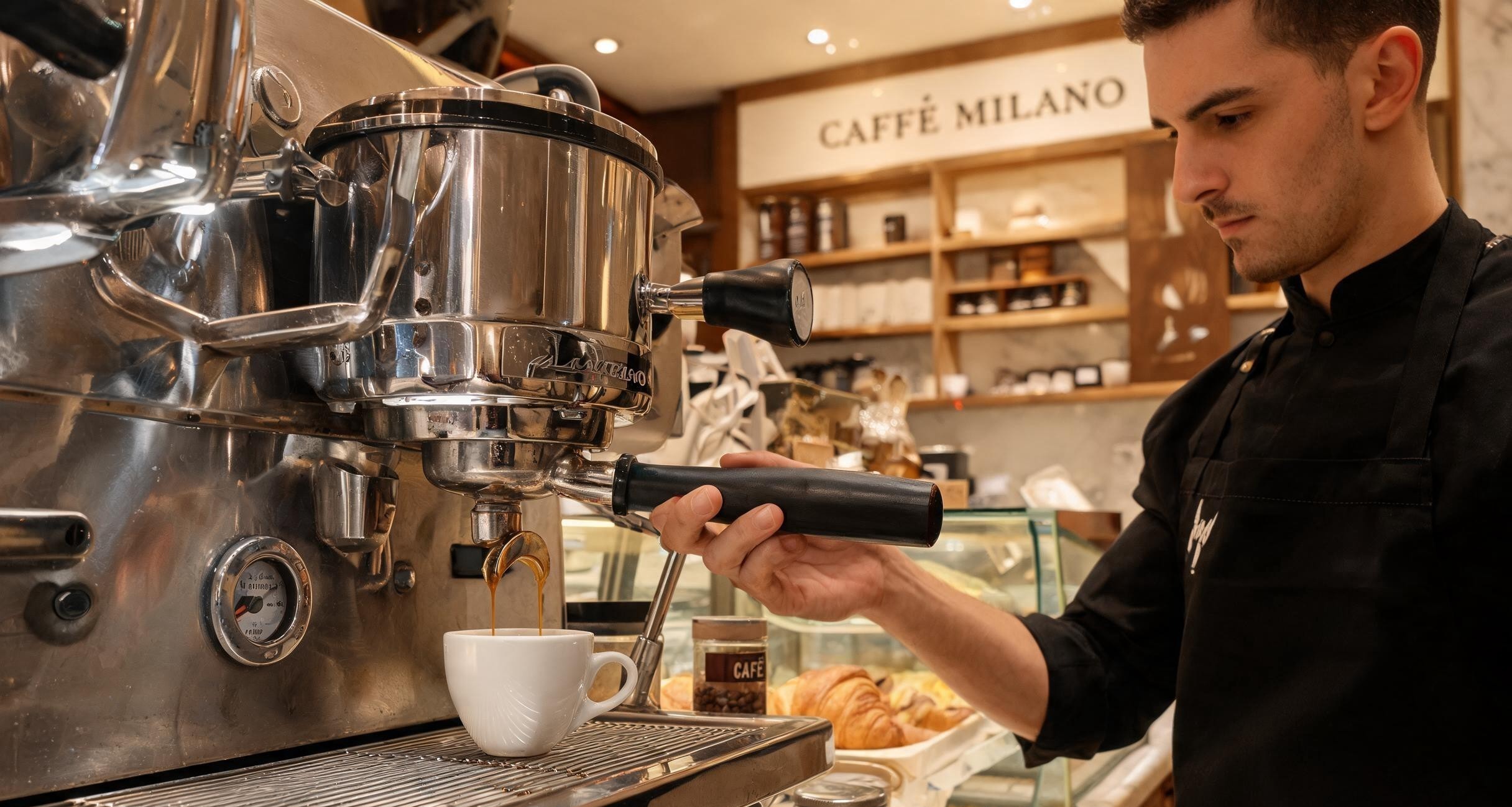
The vocabulary of Italian coffee is small and specific. An espresso is simply a caffe. If you want a double, you ask for a caffe lungo, which adds hot water. A ristretto is a shorter pull, with less water and more concentration. Macchiato means stained, and it comes in two versions: macchiato caldo, with a drop of hot milk foam, and macchiato freddo, with a drop of cold milk. Corretto means corrected, and it is an espresso with a shot of grappa or sambuca or brandy, typically ordered by older men in the morning. Orzo is barley coffee, a caffeine-free alternative served to children or people who want the ritual without the buzz. There is no such thing as a vanilla latte or a caramel macchiato or a flat white in a traditional Italian bar. If you order one, you will get something, but it will not be what you expected, and the barista will not be happy about making it.
The unspoken rules extend to the pace of consumption. You do not take your espresso to go in a paper cup. The to-go cup does not exist in traditional Italian coffee culture, and while some modern cafes in tourist areas have started offering it, the practice is still considered odd. Coffee is consumed at the bar, standing, and it is consumed quickly. I watched a businessman in Rome order an espresso, drink it in one pull, put down his cup, check his phone, and walk out. The whole visit took forty-five seconds. This is not rudeness. It is efficiency. The Italian coffee bar is not a lounge. It is a refueling station. You stop, you drink, you go. The idea of sitting in an armchair with a laptop and a single coffee for three hours, which is standard in American cafes, would be considered strange and slightly wasteful in Italy. Not wrong, just unnecessary. Coffee is a pause, not a destination.
I broke the rules more than once during my time in Italy, and each time the reaction was a variation on the same theme: polite confusion. I ordered a latte once, expecting a coffee drink, and received a glass of hot milk. Latte means milk in Italian. If you want milk with coffee, you ask for a caffe latte or a latte macchiato. The language matters, and the precision of the language reflects the precision of the culture. I ordered an Americano once and the barista grimaced, because an Americano is hot water added to espresso, which Italians consider a waste of good coffee. He made it, but he added the water with visible reluctance. I asked for cream in my coffee once, which does not happen in Italy, and the barista pointed to the milk and said that is what we have. Every interaction was polite. Nobody yelled. But the message was clear: there is a right way to do this, and you are not doing it.
What these rules protect is not tradition for its own sake. They protect the quality of the experience. When everyone follows the same script, the coffee bar runs efficiently, the prices stay low, the quality stays high, and the interaction between customer and barista is brief and respectful. The rules are not about exclusion. They are about a shared understanding of what coffee is supposed to be: a small, strong, hot drink consumed quickly and without fuss. Once you accept that definition, the rest of the rules make perfect sense. Cappuccino is for morning because milk in the afternoon feels heavy. Standing is the norm because sitting costs more and takes longer. Taking it to go is unnecessary because the bar is everywhere, and you are never more than a two-minute walk from an espresso. The Italian coffee system is one of the most efficient food systems in the world, and it works precisely because everyone agrees on the rules, even if nobody wrote them down.