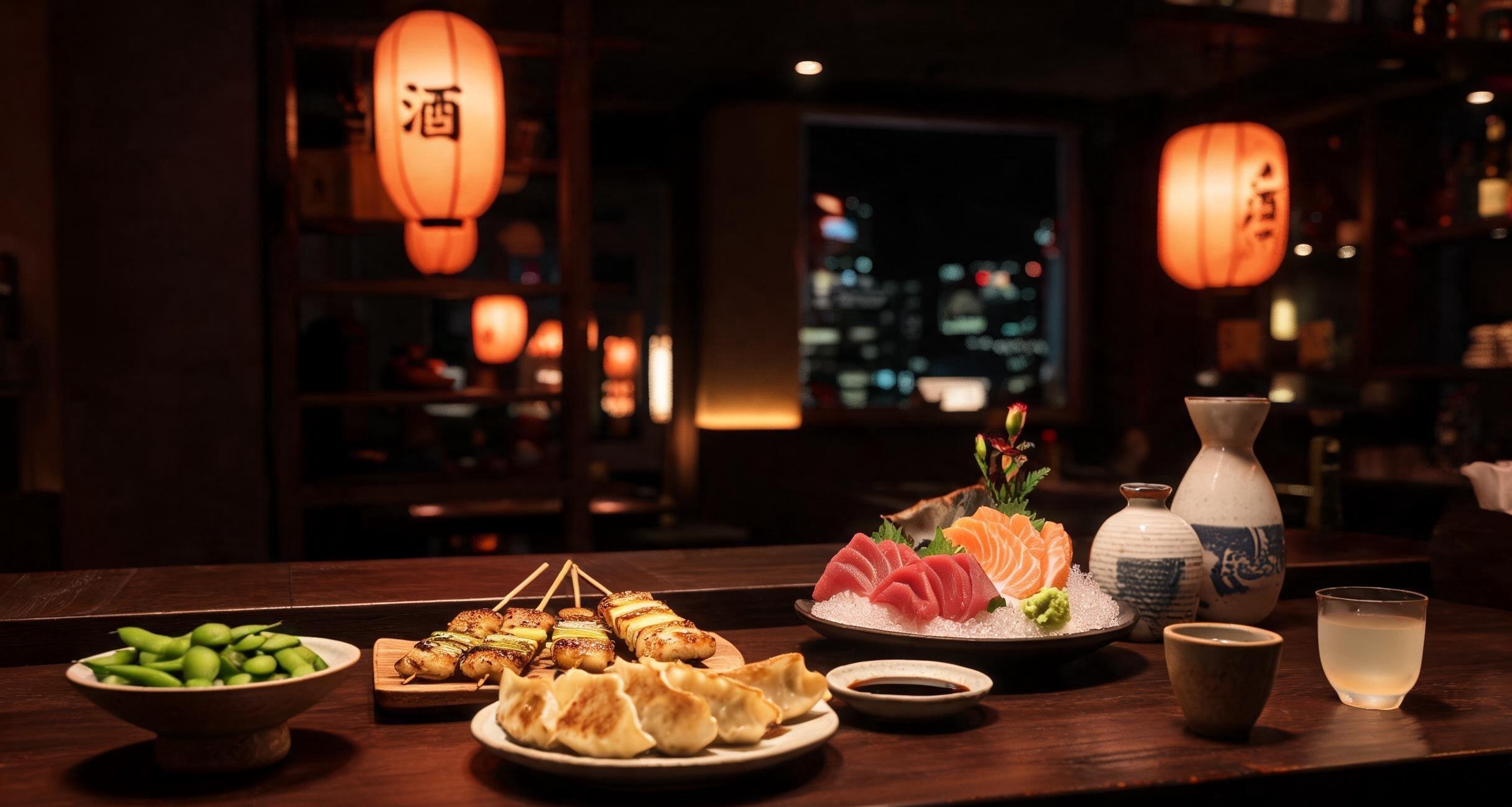
I walked into an izakaya in Shinjuku at eleven o'clock on a Thursday night and the place was full. Not the crowded-full of a weekend, but the steady-full of a neighborhood spot where regulars have claimed their usual seats at the counter. The bartender, a man in his sixties with a towel over his shoulder, acknowledged me with a nod and pointed to an open stool at the end of the bar. There was no menu on the counter, just a laminated sheet hanging from a hook on the wall with photos of the dishes and prices. Everything was under a thousand yen. I ordered a hi-ball, which in Japan means Suntory whisky with soda water and a single ice cube, and a plate of edamame, which cost three hundred yen and came in a small ceramic bowl with a sprinkle of coarse salt. The edamame were hot, which caught me off guard. Most places serve them cold or at room temperature, but this izakaya steamed them and brought them out still warm. The salt stuck to the pods better that way. I sat there eating edamame and sipping my whisky and watching the bartender pour drinks for the regulars, and within ten minutes I felt like I had been coming here for years. That is what a good izakaya does.
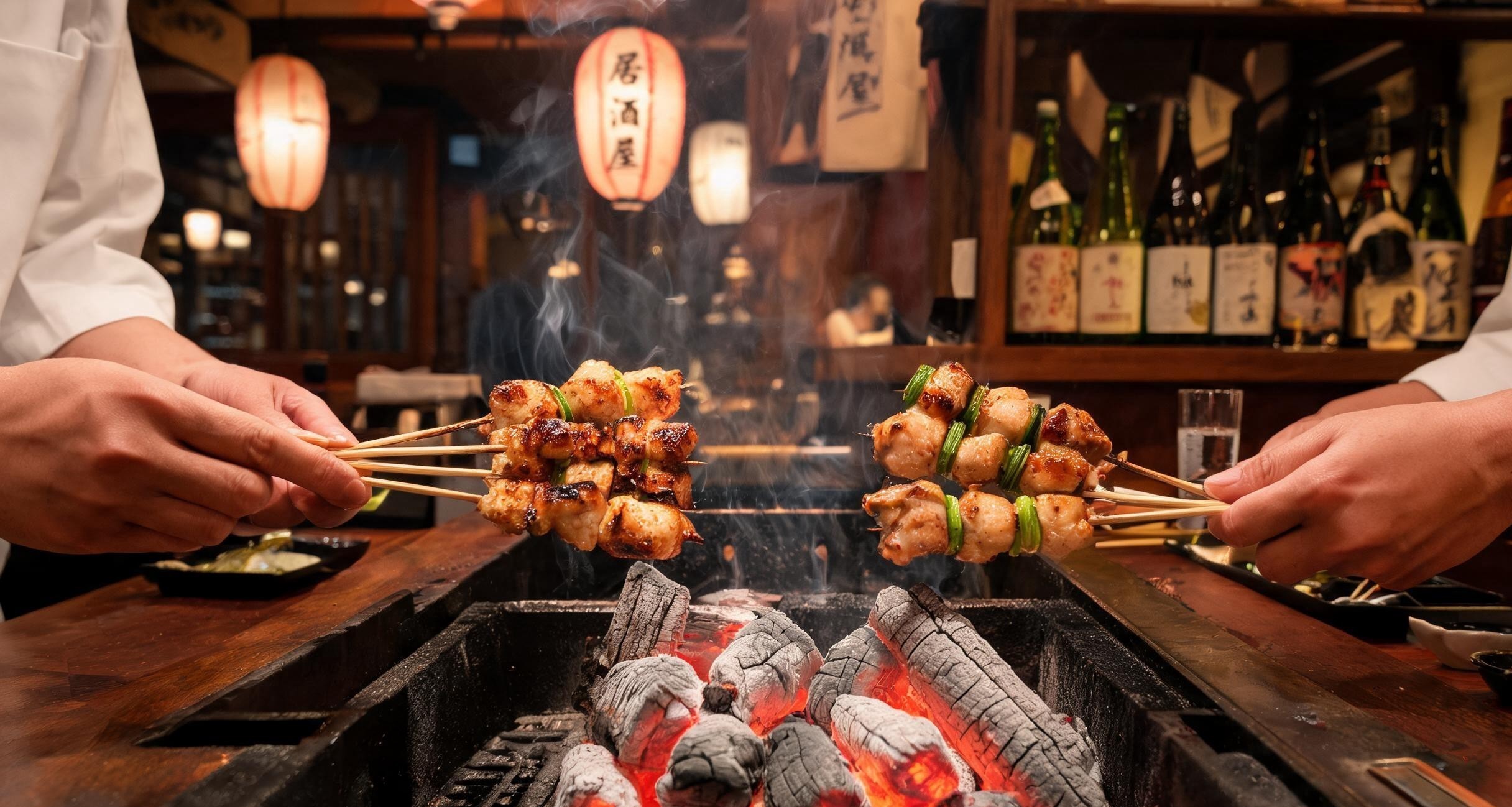
The food at an izakaya is not meant to be a meal. It is meant to be something you eat while you drink, which means it arrives in small portions, one or two plates at a time, and you order more as you go. The classic izakaya dishes are grilled things on sticks: yakitori, which is chicken skewers; kushikatsu, which is deep-fried skewers of meat and vegetables; and yakitori variations like tsukune, minced chicken meatballs glazed with tare sauce. I ordered a round of yakitori at the Shinjuku spot and the cook, a younger man working a small binchotan charcoal grill behind the bar, placed five skewers in front of me one at a time. Negima, thigh meat with leek. Momo, thigh meat only. Kawa, chicken skin, grilled until it shatters. Tebasaki, wing tips, charred and salty. Each one had been seasoned with either shio, which is just salt, or tare, a sweet soy glaze, and the binchotan charcoal gave them a clean, smoky edge that you cannot get from a gas grill. I ate them in order and drank my hi-ball between skewers, and the rhythm of the meal took shape without me thinking about it.
There are rules at an izakaya that nobody explains but everyone follows. You do not pour your own drink. You pour for the person next to you, and they pour for you. If you are drinking alone, the bartender will keep an eye on your glass and refill it when it gets low, and you acknowledge the refill with a small nod or a raised glass before taking a sip. You do not order everything at once. You order a drink and a small plate, and when the plate is nearly finished, you order another. The bartender keeps a running tab on a small piece of paper next to your glass, writing down each item in pencil as it arrives. You pay at the end of the night, and the bill is always lower than you expect because the prices are set for repeat visits, not for one-time tourists. The whole system is built around trust and regularity. The izakaya wants you to come back every week, not once a year, so they price accordingly and they pay attention to what you like.
The later it gets, the better an izakaya becomes. By midnight, the serious drinkers have settled in and the conversation gets louder and more honest. The food keeps coming: cold tofu with grated ginger and soy, a small plate of pickled vegetables, sashimi if they have it, grilled rice balls with miso paste spread on one side. I once stayed until 2:00 AM at an izakaya in Yurakucho, a neighborhood of small bars built under the train tracks, and the bartender kept bringing me things I did not order: a plate of stewed pork belly, a bowl of rice with raw egg and soy sauce, a single oyster on the half shell. He charged me for most of it but the pork belly was on the house because it was the last piece and he did not want it to go to waste. That kind of hospitality is not transactional. It is the economy of the regular. The bartender knew I was not going anywhere, so he fed me accordingly. I left feeling full and slightly drunk and oddly taken care of, the way you feel after a meal at someone's house.
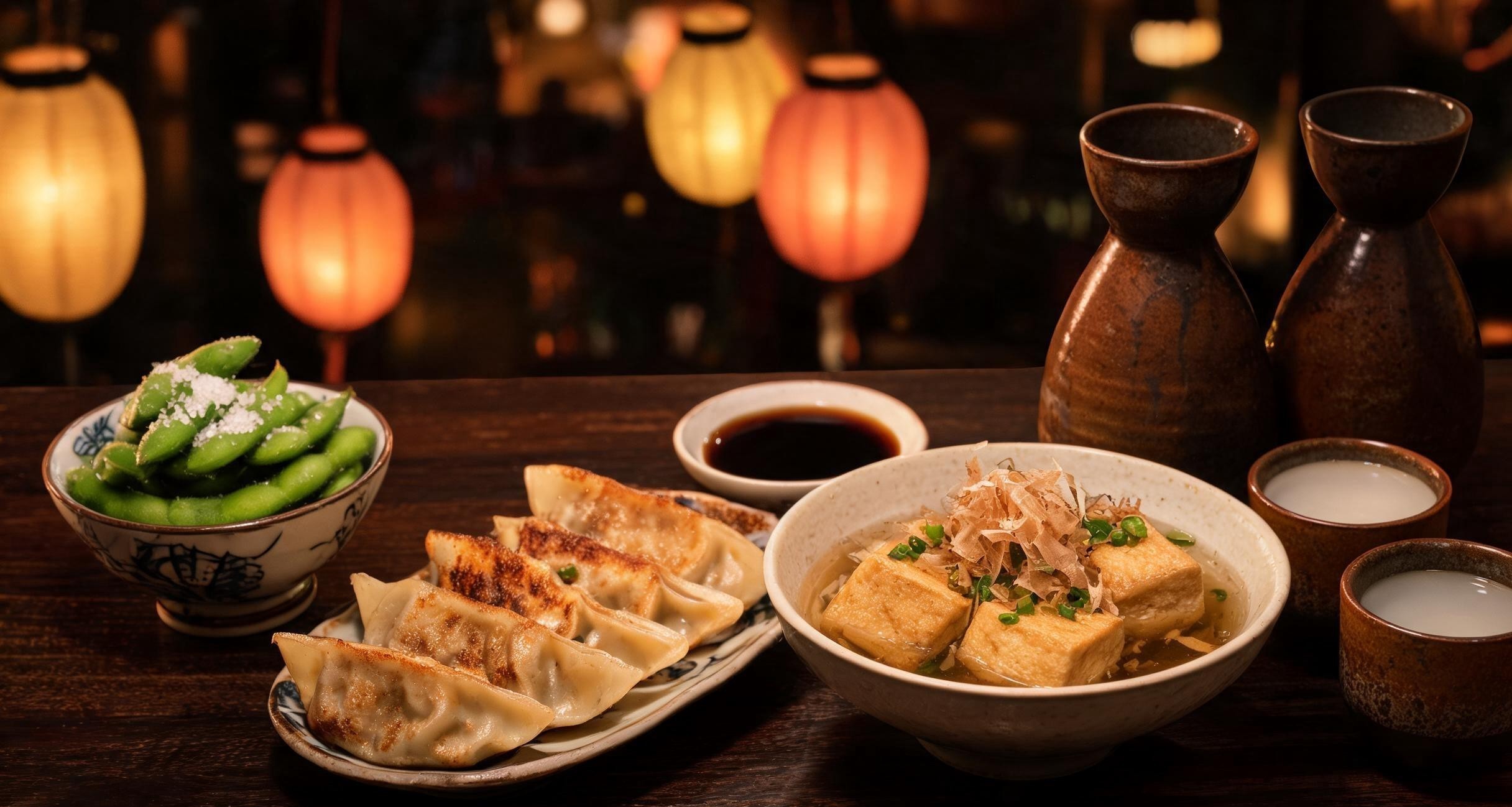
The izakaya is not a bar and it is not a restaurant. It occupies a space between the two, a place where the drinking is the point but the food is what makes the drinking sustainable. Without the edamame and the yakitori and the cold tofu, you would be sitting on a stool drinking whisky and getting drunk too fast. With the food, the evening stretches out. You eat, you talk, you drink, you eat again. Two hours pass without effort. Three is common. I have met people at izakaya counters who told me they come to the same place every Tuesday, sit in the same seat, and order the same three things. The bartender knows their drink. The cook knows how they like their yakitori. The other regulars know their name. This is not nightlife in the Western sense. This is a third place, a social space that exists between work and home, where the pressure is off and the only agenda is to have a few drinks and eat something good.
What makes the izakaya special is what it does not do. It does not try to impress you. The decor is minimal, the menu is short, the prices are low, and the staff does not hover. You are left alone until you need something, and when you need something, it arrives quickly and without fuss. There is no background music, or if there is, it is quiet enough to ignore. The focus is on the person across from you, or on the cook behind the counter, or on the train passing overhead. The izakaya is a place where nothing is demanded of you except that you sit, eat, drink, and eventually go home. In a city as loud and fast as Tokyo, that simplicity is a gift. It is the reason I keep going back.