The first tagine I ever cooked in was cracked. I bought it from a man at the weekly souk in Fez who assured me it was ready to use, no soaking necessary. He lied, or maybe he just did not know any better. I set it on the gas burner, added olive oil and onions, and within ten minutes I heard a sound like a gunshot. A hairline fracture ran from the base up the side, and steam was hissing out of it like a teakettle. I moved the contents to a Dutch oven and finished the dish that way. It tasted fine, but I knew something was missing, and it was not the clay. It was the cone-shaped lid, the tall conical top that sits on the base and catches condensation, dripping it back down onto the food as it cooks. That is the whole point of the tagine, and without it, you are just making a stew.
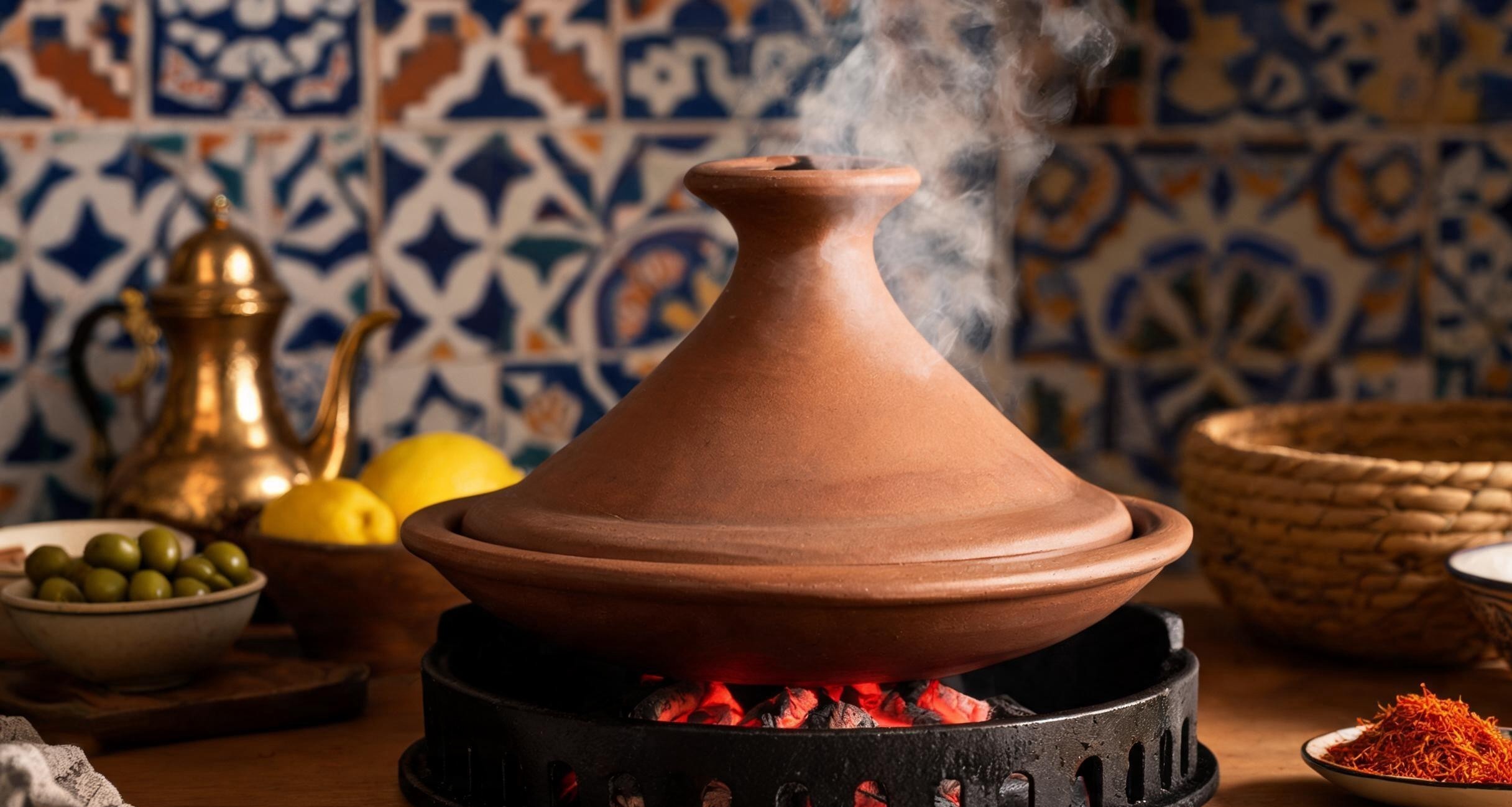
The tagine works on a principle that modern cookware mostly ignores. The conical lid creates a closed system where steam rises, hits the cool inside of the cone, condenses, and runs back down into the base. Nothing escapes. The food cooks in its own juices, with minimal added liquid, and the flavors concentrate slowly over low heat. This matters in a country like Morocco, where water has historically been scarce and fuel is expensive. The tagine is efficient. It uses very little water and can cook on the embers of a charcoal fire, which is how most Moroccan families cooked before gas stoves became common. Even now, in rural areas outside Marrakech and Fez, you will see tagines set over small charcoal braziers called kanouns, the clay bases blackened from years of use.
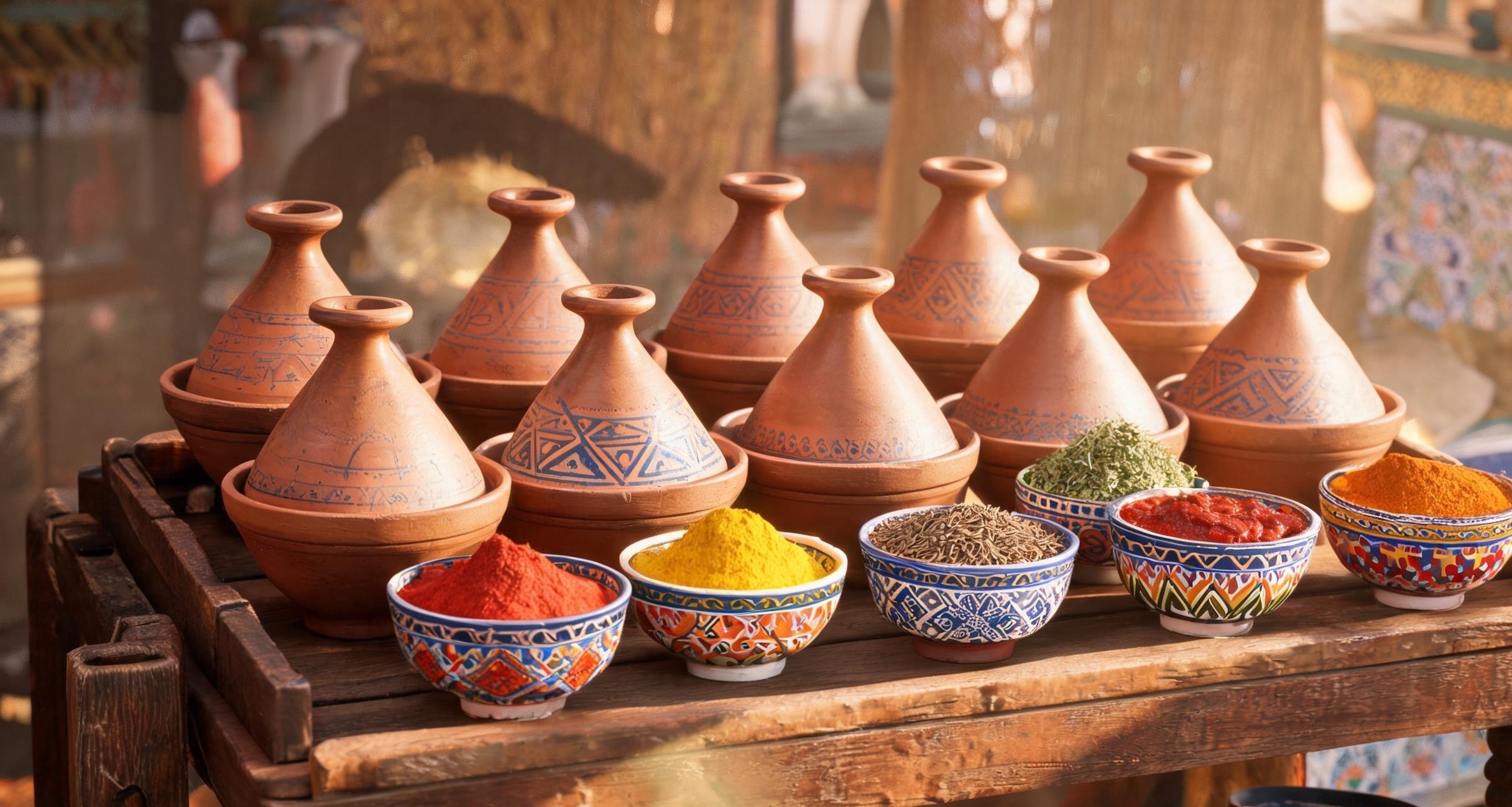
In Moroccan homes, the tagine is not a special occasion dish. It is Tuesday dinner. Every family has at least two, often more, and the size and decoration of the tagine says something about the household. Plain, unglazed tagines are the workhorses, used for daily cooking. Decorated ones, with hand-painted patterns in blue and white or green and yellow, come out for guests. I visited a family in the medina of Marrakech whose grandmother had a collection of fourteen tagines in different sizes, and she used a different one depending on what she was cooking and who was eating. A small tagine for two people, a large one for a family gathering, a shallow wide one for fish, and a deep narrow one for the long-simmered meat dishes that define special occasions.
The food that comes out of a tagine is different from what you get in a metal pot, though I would not have believed that before I started using one regularly. The slow, moist heat breaks down tough cuts of meat without drying them out. A lamb shoulder cooked in a tagine for two hours falls apart into shreds that are still juicy, surrounded by a thick sauce made from onions, tomatoes, and spices that has reduced to something intense and glossy. Chicken tagines with preserved lemons and olives take on a silky quality, the chicken skin soft and almost dissolved into the sauce. Vegetable tagines, which are the most common everyday version, turn humble ingredients like potatoes, carrots, and chickpeas into something that feels more complete than the sum of its parts. The key is patience. A tagine cooked on low heat for an hour and a half will always be better than one rushed on higher heat for forty-five minutes.
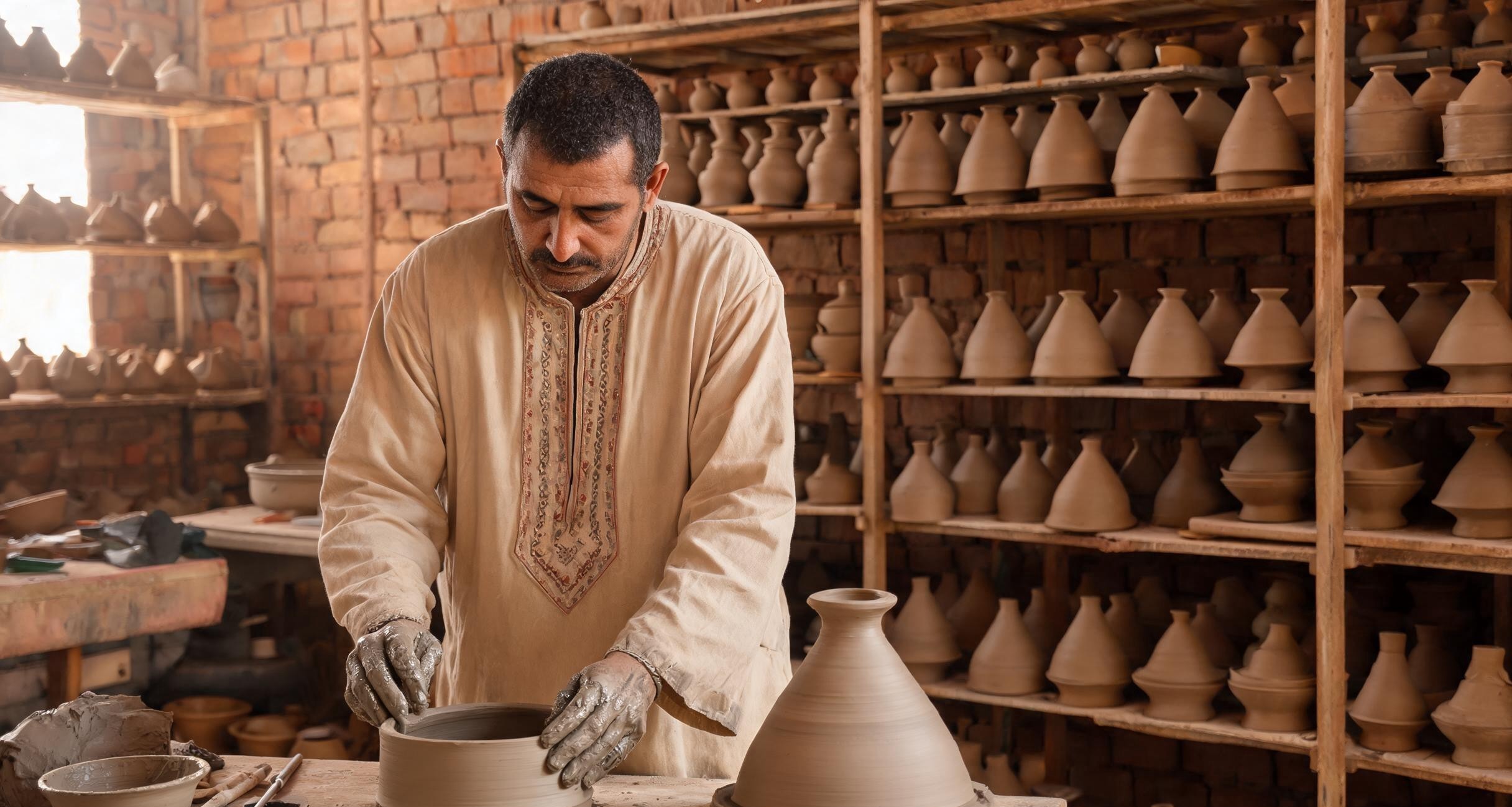
Buying a tagine outside of Morocco requires some care. The ones sold in Western kitchen stores are often glazed and decorated, which looks nice but affects how the clay behaves. Unglazed clay is porous, which means it absorbs moisture and seasonings over time, contributing to the flavor of the food cooked in it. Glazed clay is easier to clean but does not develop that same patina. I bought an unglazed tagine from a Moroccan importer online and cured it by soaking it in water for twenty-four hours, then placing it in a cold oven, heating it to 300 degrees for two hours, and letting it cool slowly. This process strengthens the clay and reduces the chance of cracking. The first few times I cooked in it, I kept the heat low and added a little extra liquid to be safe. After a dozen uses, the tagine had darkened slightly and the surface had a smooth, seasoned quality that it did not have when it was new. It is still not the same as my cracked one from Fez, but it is getting closer.
What stays with me about the tagine is not just the food. It is the fact that this single piece of cookware, made from clay and shaped like a volcano, has been used in basically the same form for centuries across North Africa. The design has not changed because it does not need to. It solves the problem of cooking tough meat and vegetables with limited water and fuel, and it does it better than most modern alternatives. You can buy an electric tagine, and some people do, but the results are not the same. The clay absorbs heat differently than metal, releasing it slowly and evenly. The conical lid works because the clay stays cool enough to condense steam. Swap out those materials and the physics change. I now own three tagines, including the cracked one that I repaired with a flour-and-water paste. It is ugly and it leaks a little, but it still works, and I like cooking in it more than the new ones. It has character, or maybe I just like the story.