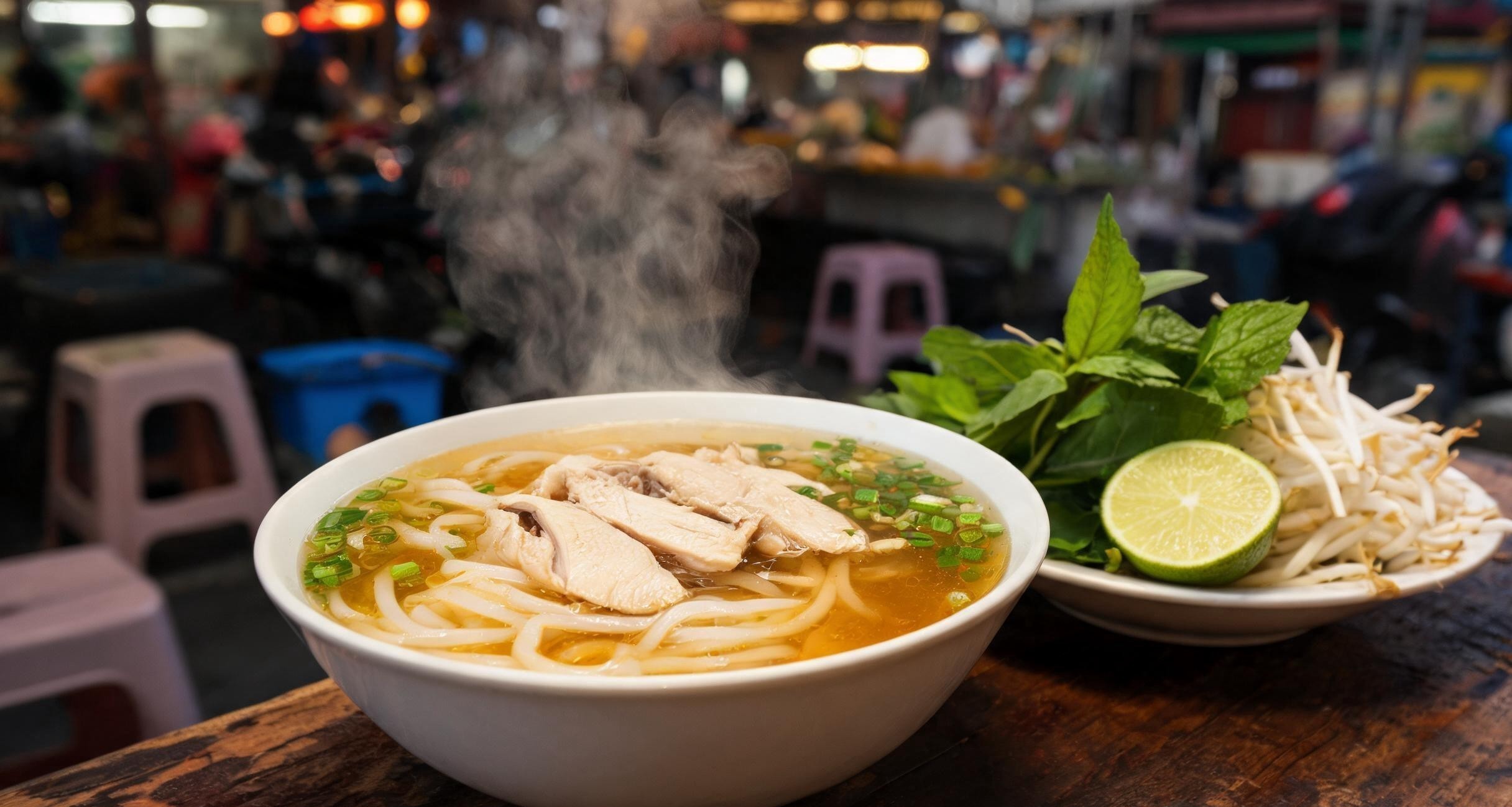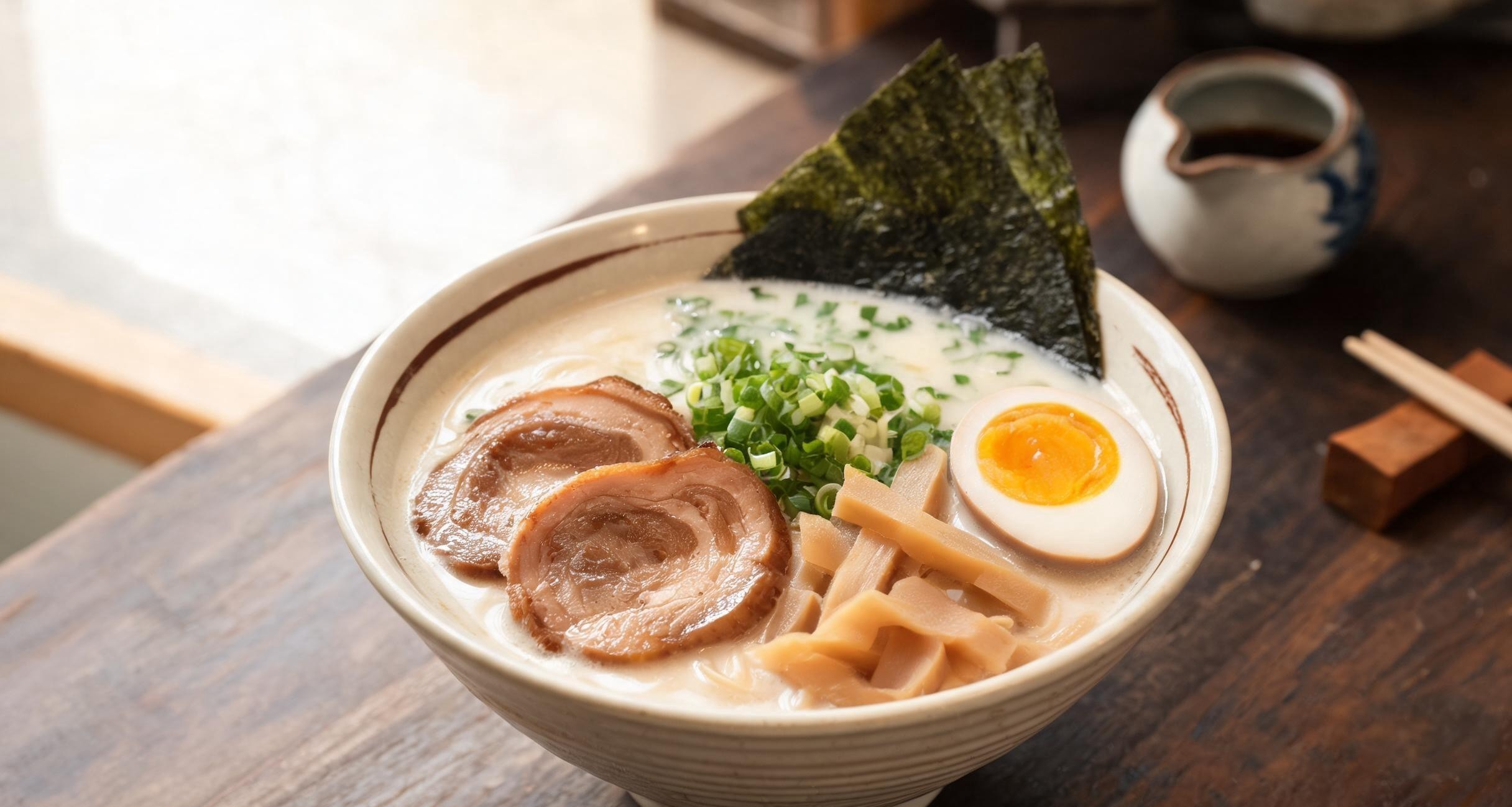
I started making tonkotsu broth at seven in the morning and I did not finish until three in the afternoon. Eight hours of boiling pork bones, skimming the foam, adding more water when the level dropped, and waiting for the broth to turn from clear to cloudy to the milky white that tells you the collagen has broken down and the fat has emulsified into the liquid. My apartment smelled like a pork shop for three days afterward, and my roommate threatened to move out. The broth was worth it. It was thick, creamy, rich, and deeply porky, with a mouthfeel that coated the tongue and a flavor that was savory without being salty. I have eaten tonkotsu ramen at restaurants in Tokyo, New York, and Los Angeles, and the broth I made at home was as good as any of them. The difference was the time. Restaurant broths are often made with pressure cookers or commercial equipment that accelerates the process, but the traditional method is a long, rolling boil, and the texture you get from eight hours cannot be replicated in two.
The bones are the starting point, and the type of bone matters more than most recipes acknowledge. I used a mix of pork femur bones and neck bones, which I got from a Korean butcher who was confused about why I wanted so many bones and no meat. The femur bones are dense and marrow-rich, and when they boil for hours, the marrow renders into the broth and contributes to the creamy texture. The neck bones have more connective tissue and collagen, which breaks down into gelatin and gives the broth body. I also added a few pork trotters, which are collagen bombs and add a silky richness that you cannot get from femur bones alone. The total weight of bones was about four kilos, and I covered them with roughly six liters of cold water in a stockpot that was large enough to maintain a rolling boil without boiling over. The water-to-bone ratio is important. Too much water and the broth will be thin. Too little and it will be too concentrated and salty.
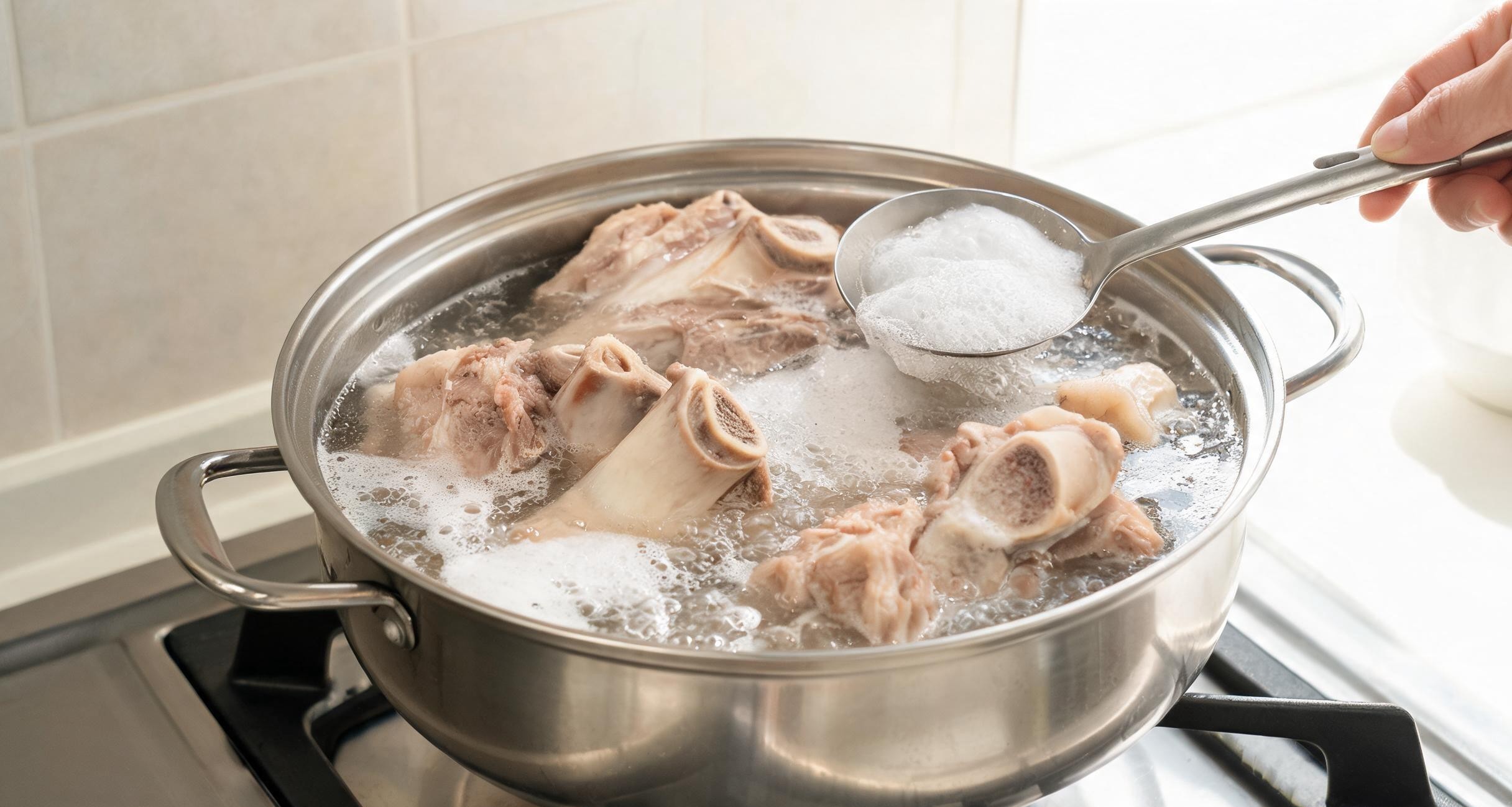
The first four hours are about cleaning the bones and getting the initial extraction. I brought the pot to a boil, then reduced the heat to a rolling simmer, and skimmed the foam and impurities that rose to the surface every fifteen minutes for the first two hours. This skimming is tedious but essential. The foam contains blood, bone fragments, and impurities that will make the broth cloudy in a bad way if you leave them in. The goal is a white cloudiness that comes from emulsified fat and collagen, not a grey murkiness that comes from debris. After the first two hours, the skimming becomes less frequent because most of the impurities have already been removed. At the four-hour mark, I added the aromatics: a halved head of garlic, a thumb-sized piece of ginger, smashed, and a few scallion whites. These are the only aromatics in a traditional tonkotsu broth. No soy sauce, no mirin, no miso. Those are added later, at the bowl stage, not during the broth-making process.
The broth at the six-hour mark was where the magic started. The color had shifted from pale gold to a deep, opaque white, and the surface was covered with tiny bubbles that made it look like boiling milk. The fat from the bones had emulsified into the liquid, creating that characteristic creamy texture that distinguishes tonkotsu from other ramen broths. The smell was intense: porky, meaty, and slightly sweet from the rendered collagen. I kept the boil going, maintaining a steady rolling simmer that was vigorous enough to keep the broth moving but not so aggressive that it boiled over. I checked the water level every thirty minutes and added hot water as needed to keep the bones submerged. At the seven-hour mark, I removed the trotters and the larger bones with a slotted spoon, leaving only the smaller pieces to continue breaking down. The broth at this point was thick enough to coat the back of a spoon, and the color was a consistent, creamy white from edge to edge.
The final hour was about finishing and seasoning. At the eight-hour mark, I strained the broth through a fine-mesh strainer, then through a clean kitchen towel to remove any remaining particles. The strained broth was thick and smooth, with a consistency closer to light cream than to traditional stock. I seasoned it with salt to taste, and then I added a few tablespoons of tare, a concentrated seasoning base made from soy sauce, mirin, and sake that had been simmered separately for about twenty minutes. The tare is what gives tonkotsu ramen its savory depth, and it is added to the broth at the last minute, just before serving, so that the flavor is fresh and sharp. The ratio is roughly one tablespoon of tare per bowl of broth, adjusted to taste. Without the tare, the broth is just pork stock. With it, it becomes ramen.
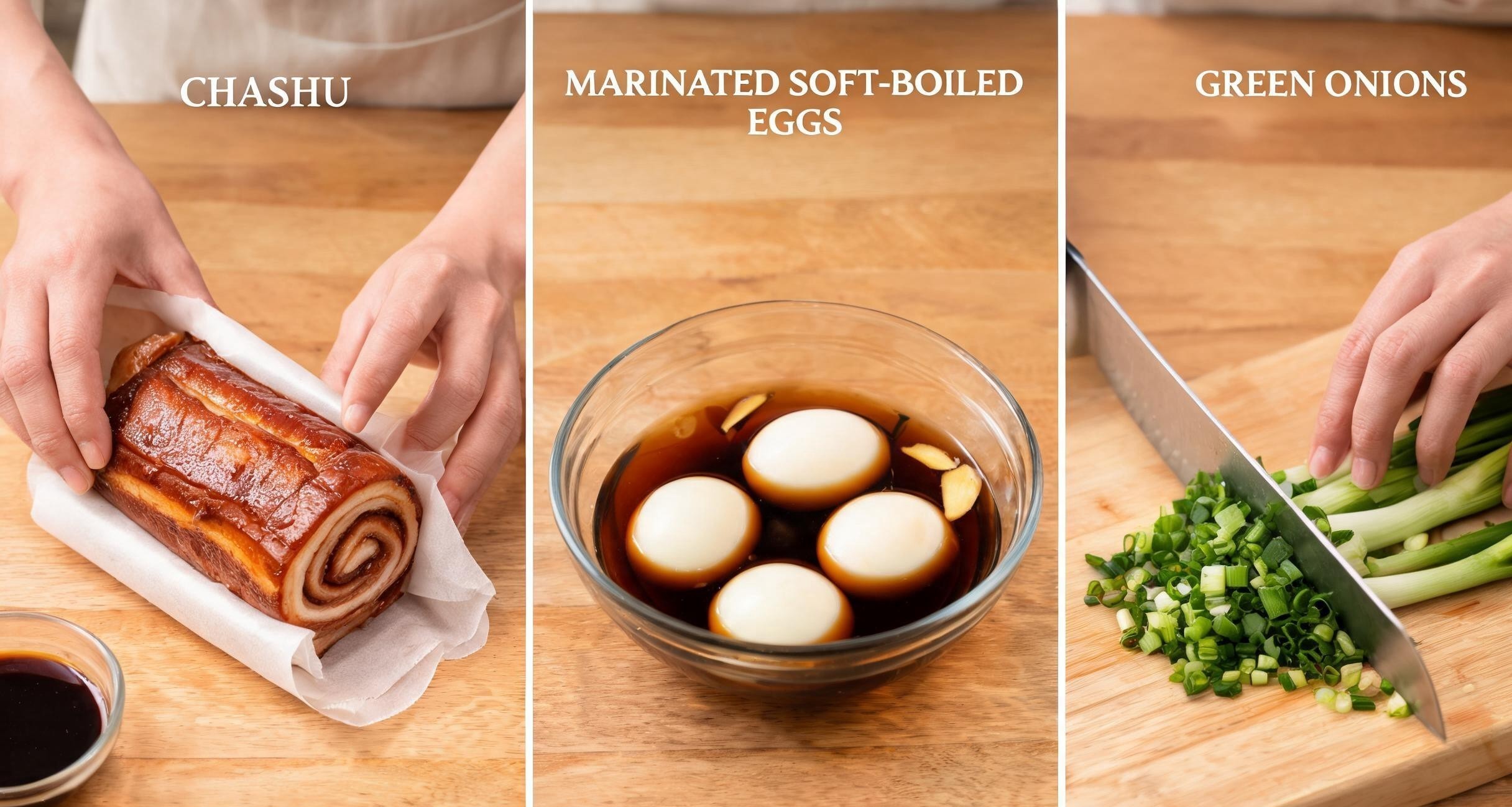
The bowl assembly goes fast after the broth is done. Cook the noodles in a separate pot of boiling water for sixty seconds, drain, and place them in the serving bowl. Ladle the hot broth over the noodles. Arrange the toppings: chashu pork, sliced thin and warmed in the broth; a soft-boiled egg, marinated in soy sauce and mirin for four hours and cut in half; sliced green onions; a sheet of nori; and a few pieces of pickled ginger. The whole process, from noodle to bowl, takes about two minutes. I made four bowls that night and ate two of them, sitting at my kitchen counter while my roommate sat across from me with his bowl, not speaking, just eating. The broth was hot and rich and the noodles were firm and the egg was perfect, with a yolk that broke open and mixed into the broth, thickening it slightly and adding a creamy sweetness. The whole production had taken eight hours, most of it passive, and the result was better than anything I could have ordered at a restaurant for three times the price. Making tonkotsu at home is not practical for every week. But for a Sunday when you have nowhere to be and the patience to let a pot of bones boil all day, it is one of the most rewarding things you can do in a kitchen.