I watched a man cook paella over an open fire in a field outside Valencia, and it was the most controlled act of cooking I have ever witnessed. The fire was built from dried orange wood, which burns hot and steady without producing large flames, and it had been burning for two hours before he placed the wide, shallow paella pan over the embers. The pan, called a paella, was sixty centimeters across, and he had positioned it so that the heat from the embers was distributed evenly across the entire bottom surface. He checked the heat by holding his hand a few inches above the pan, the way a baker checks an oven. Too hot, and he pulled the pan back. Too cool, and he pushed it forward. The adjustment was constant and subtle, and he made it without looking, the way you drive a familiar road without thinking about the turns. I asked him how he knew when the heat was right and he said, you feel it. I pressed further and he said, after you make a thousand paellas, you do not think about it anymore. The heat just is what it is, and you respond to it.
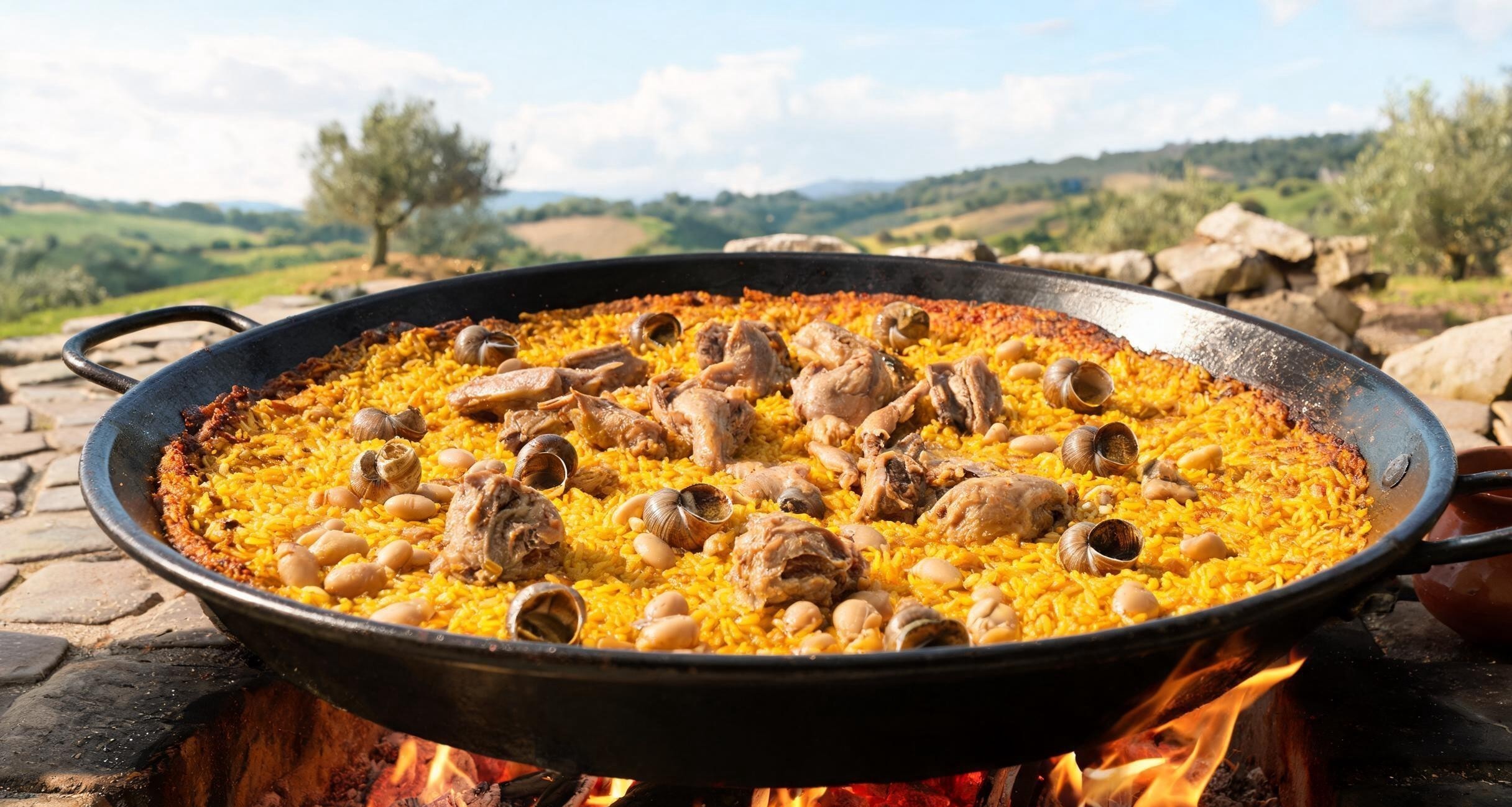
The sofrito for a traditional Valencian paella is made in the paella pan itself, over the same fire that will cook the rice. Olive oil goes in first, then the chicken and rabbit, browned on all sides and set aside. Then the vegetables: grated tomato, flat green beans called ferraura, large white beans called garrofo, and sometimes snails, which are a traditional ingredient in rural Valencia. The sofrito cooks in the oil and the rendered fat from the meat, building a base of flavor that the rice will absorb. The man I watched grated the tomato directly into the pan with a coarse grater, pressing the flesh through and leaving the skin behind. He cooked the grated tomato until it darkened and the water evaporated, about fifteen minutes, stirring occasionally. Then he added the paprika, a local smoked variety called pimenton de la Vera, and stirred for thirty seconds to bloom the spice without burning it. The room smelled like roasted tomatoes and wood smoke, and I understood why paella is cooked outdoors. You do not want this smell inside your house. You want it in the air, in your hair, on your clothes, and in the memory.
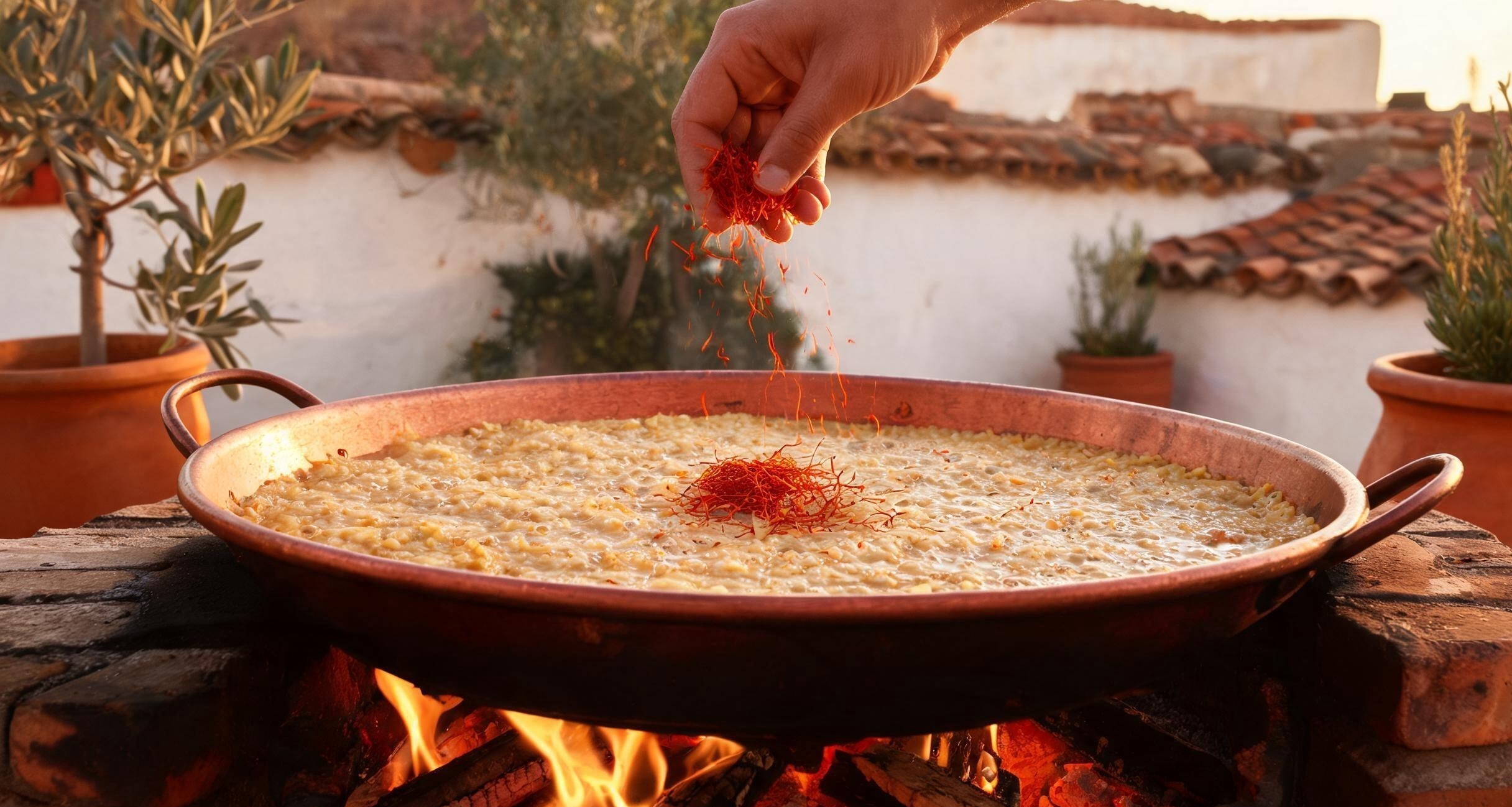
The rice is the critical ingredient, and in Valencia the only acceptable variety is bomba, a short-grain rice that absorbs liquid without losing its shape. Bomba rice can absorb three times its volume in liquid, which is why a paella can cook in a thin layer of liquid and still come out perfectly done. The man poured the rice into the pan and stirred it briefly to distribute it evenly, then he added the hot stock, a mixture of water and the liquid from cooking the meat and vegetables, plus a sachet of saffron threads that he had been toasting in a small foil packet over the embers. The saffron went in as a whole thread, not ground, because he believed that grinding saffron releases the flavor too quickly and it gets lost in the cooking. The whole threads steeped in the hot liquid and released their color and aroma gradually. Within a minute, the liquid in the pan had turned a warm gold, and the rice grains were visible on the surface, evenly spaced, floating in the stock.
Once the stock is added, you do not stir a paella. This is the rule that beginners find hardest to follow. Stirring a paella releases starch and creates a creamy texture, which is the goal in risotto but the enemy in paella. A proper paella should have individual grains of rice, each one separate and distinct, with a thin layer of cooked crust on the bottom called the socarrat. The socarrat is the best part, the layer of rice that caramelizes against the hot pan and develops a nutty, slightly charred flavor. To achieve it, you let the liquid cook down until the rice is done and the pan is dry, then you increase the heat for the last minute or two to crisp the bottom. The man I watched did this by pushing more embers under the pan with a metal rod, listening to the pan. When he heard the rice start to crackle and pop against the metal, he knew the socarrat was forming. He let it go for another thirty seconds, then pulled the pan off the fire entirely and covered it with a clean cloth. The paella rested for five minutes, during which the rice finished cooking in its own residual heat.
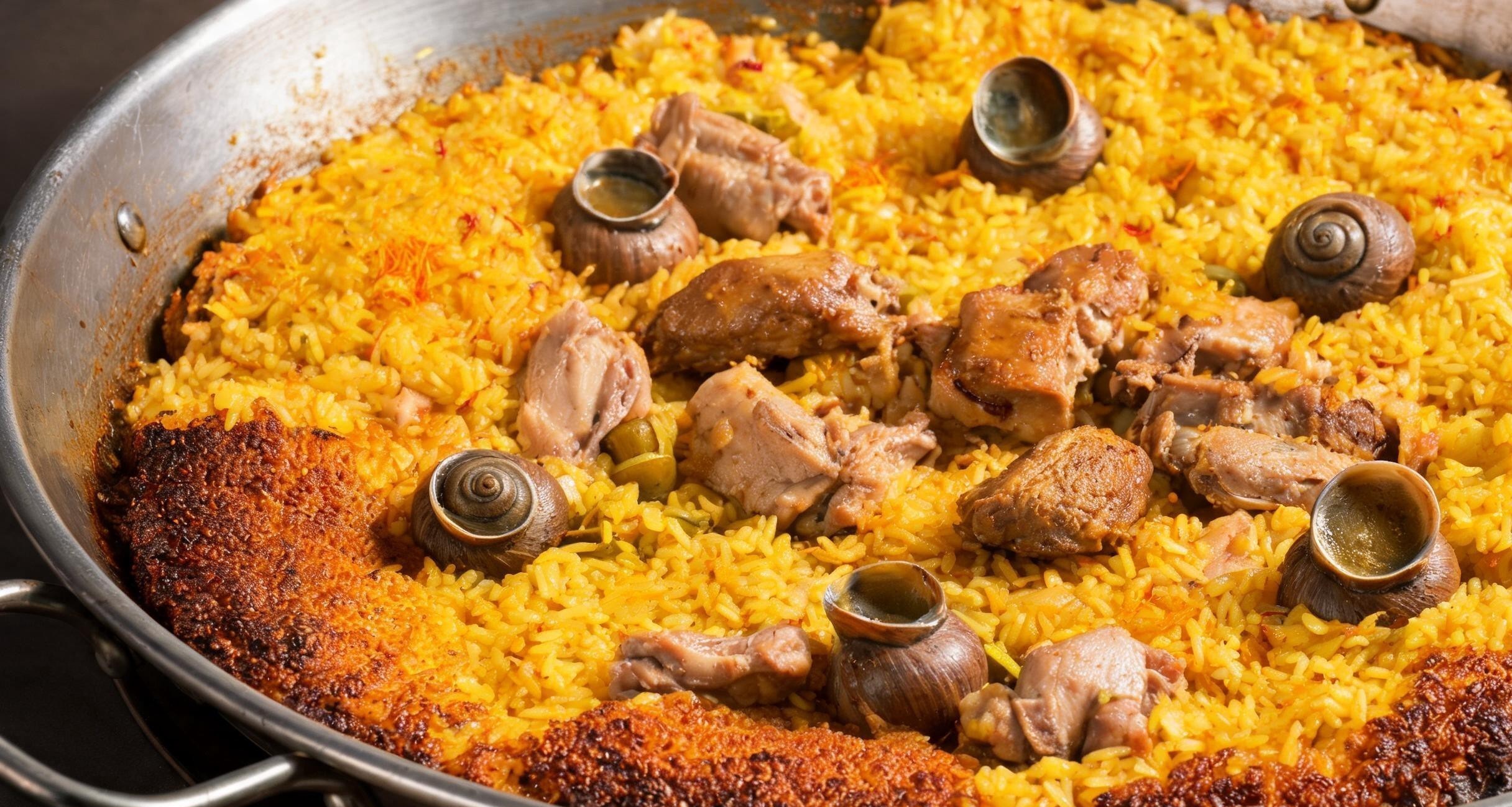
The snails are the ingredient that makes most non-Valencians uncomfortable, and I include myself in that group. In rural Valencia, snails are a standard paella ingredient, gathered from the fields after rain and kept alive in a wire cage until cooking day. They are added to the paella in the last ten minutes of cooking, along with a sprig of rosemary that is briefly steeped in the hot liquid and then removed. The rosemary adds an herbal, aromatic note that cuts through the richness of the meat and the saffron. I ate the snails because refusing seemed rude, and they were not bad. They tasted like the sauce they were cooked in, with a chewy texture that was somewhere between clam and mushroom. I would not go out of my way to eat them, but in the context of the paella, surrounded by the rice and the meat and the beans, they belonged. The man told me that some paella purists in Valencia consider a paella without snails to be incomplete, and that serving paella without snails to a Valencian from the countryside is like serving a barbecue without sauce in Texas. It might be technically acceptable, but something is missing.
The paella is eaten from the pan, not from individual plates. Everyone sits or stands around the paella and eats directly from it, scraping the rice toward themselves with a spoon or a piece of bread. There is no second serving. What is in the pan is what there is, and when it is gone, it is gone. The man I watched served twelve people from one sixty-centimeter pan, and the rice was about three grains thick in the center and thinner at the edges, where the socarrat was thickest. I ate from the edge, where the crust was darkest, and the combination of crispy rice, tender rabbit, salty beans, and saffron-scented broth was one of the best things I have ever put in my mouth. The man watched us eat with the quiet satisfaction of someone who has done this a thousand times and knows it is good. He did not need compliments. The empty pan was enough.