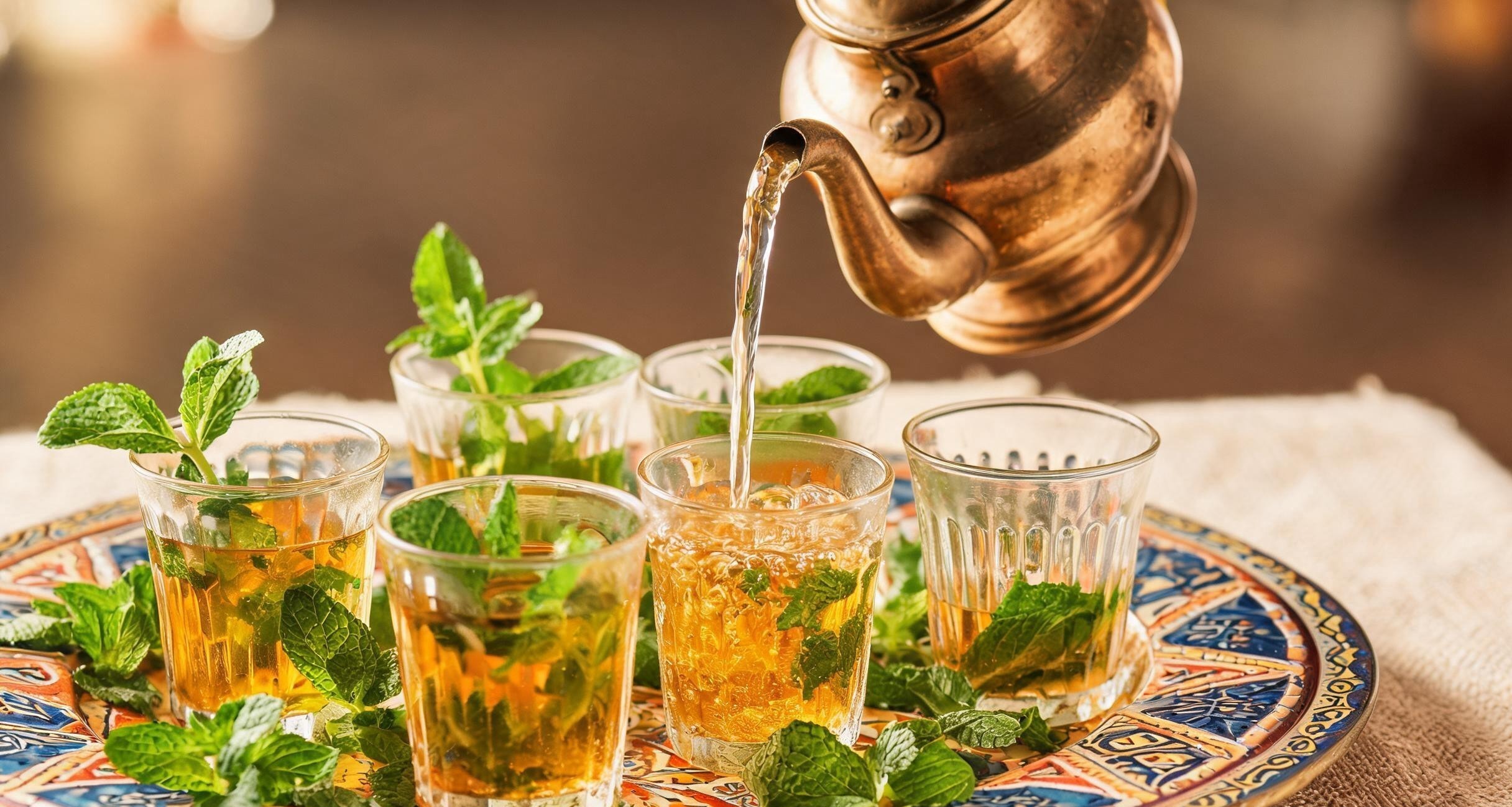
The first time I saw someone pour Moroccan mint tea, I was sitting on a rooftop in Marrakech and the man across from me lifted a small glass pot about two feet above his head and let a thin stream of green tea fall into a glass below. The stream was steady and precise, and not a single drop missed the glass. He did this three times, pouring back and forth between two glasses, each time from a higher angle, until a thick layer of foam formed on top. The whole thing took about twenty seconds. He handed me the glass, and I drank it without understanding why any of that was necessary. By the second glass, I understood. The pouring aerates the tea, cools it slightly, and blends the sugar and mint into the liquid in a way that stirring cannot replicate.
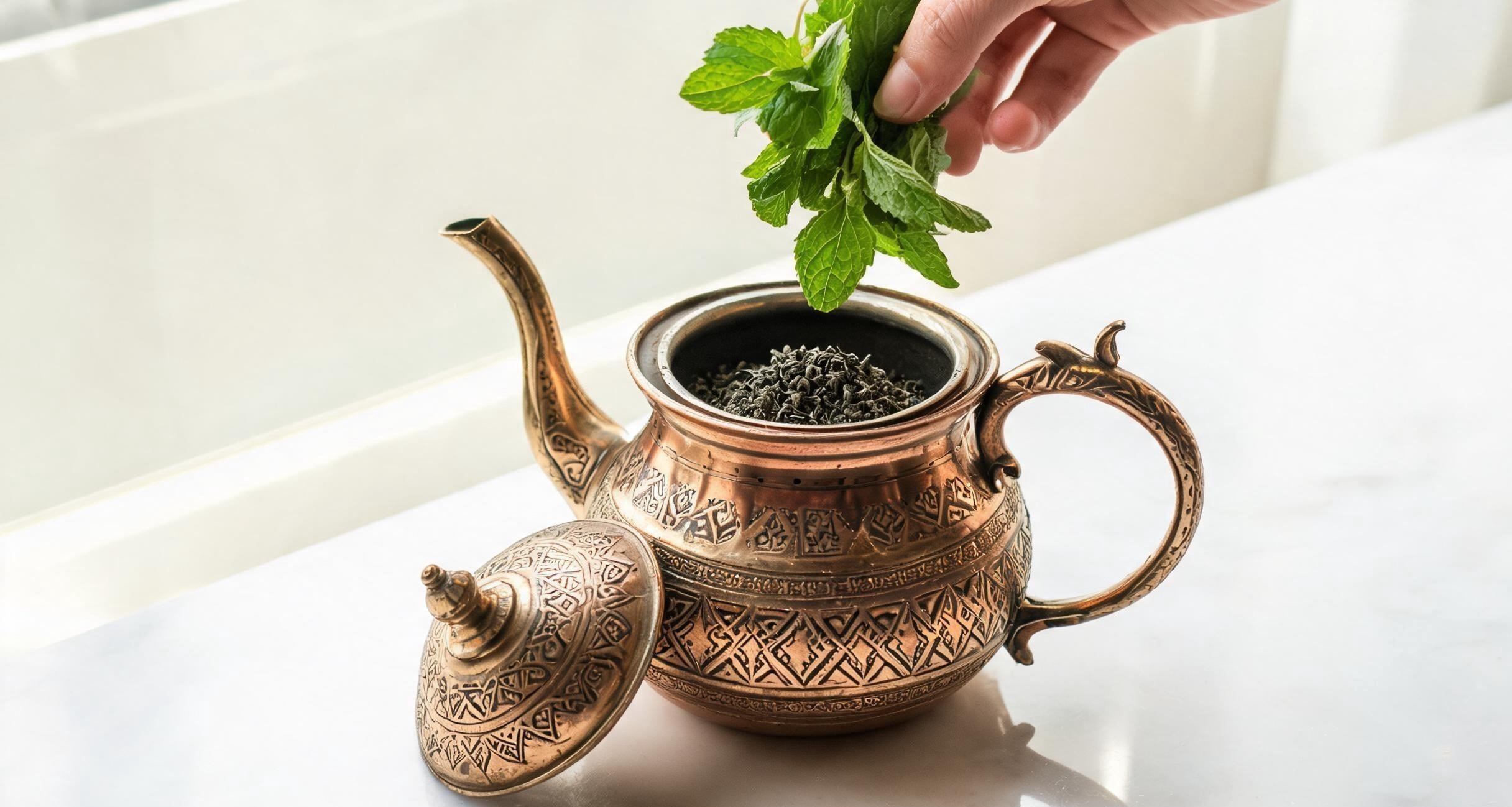
The tea itself is not what most Americans think of when they hear green tea. It is made from gunpowder green tea, which is a Chinese tea rolled into small pellets that look like, well, gunpowder. The pellets are dense and keep well, which is why they became the base for Moroccan tea after being imported through the port of Essaouira in the eighteenth century. The tea is strong, slightly bitter, and astringent on its own, which is why it needs the sugar and the mint to become what Moroccans call berber whiskey. The gunpowder tea is brewed loose in the pot, not in a bag or infuser, and the mint is added fresh, whole stems and leaves, right before the first pour.
Sugar in Morocco is not measured in teaspoons. It is measured in cones. The traditional sugar used for mint tea comes in a hard, crystalline cone about the size of a grapefruit, and you chip pieces off it with a small knife or the back of a spoon. How much sugar you use depends on who you are serving and where you are in the country. In the south, near the Sahara, the tea is extremely sweet, sometimes with three or four times the sugar you would use in the north. I was told that the sweetness is practical in hot climates, as it provides energy and encourages you to drink more fluids. In Fes and Rabat, the tea is noticeably less sweet.
The ritual of serving the tea is as important as the tea itself. In a Moroccan home, the head of the household or the youngest person in the room pours. You pour from a height to show hospitality and to demonstrate that you are paying attention to your guest. The foam on top, called the crown, is a point of pride. A proper pour produces a thick layer of foam without any large bubbles. If the foam is thin or nonexistent, it is considered a sign of carelessness. I tried pouring from a height myself at a tea shop in the medina and made a mess of it, tea running down the side of the glass and pooling on the table.
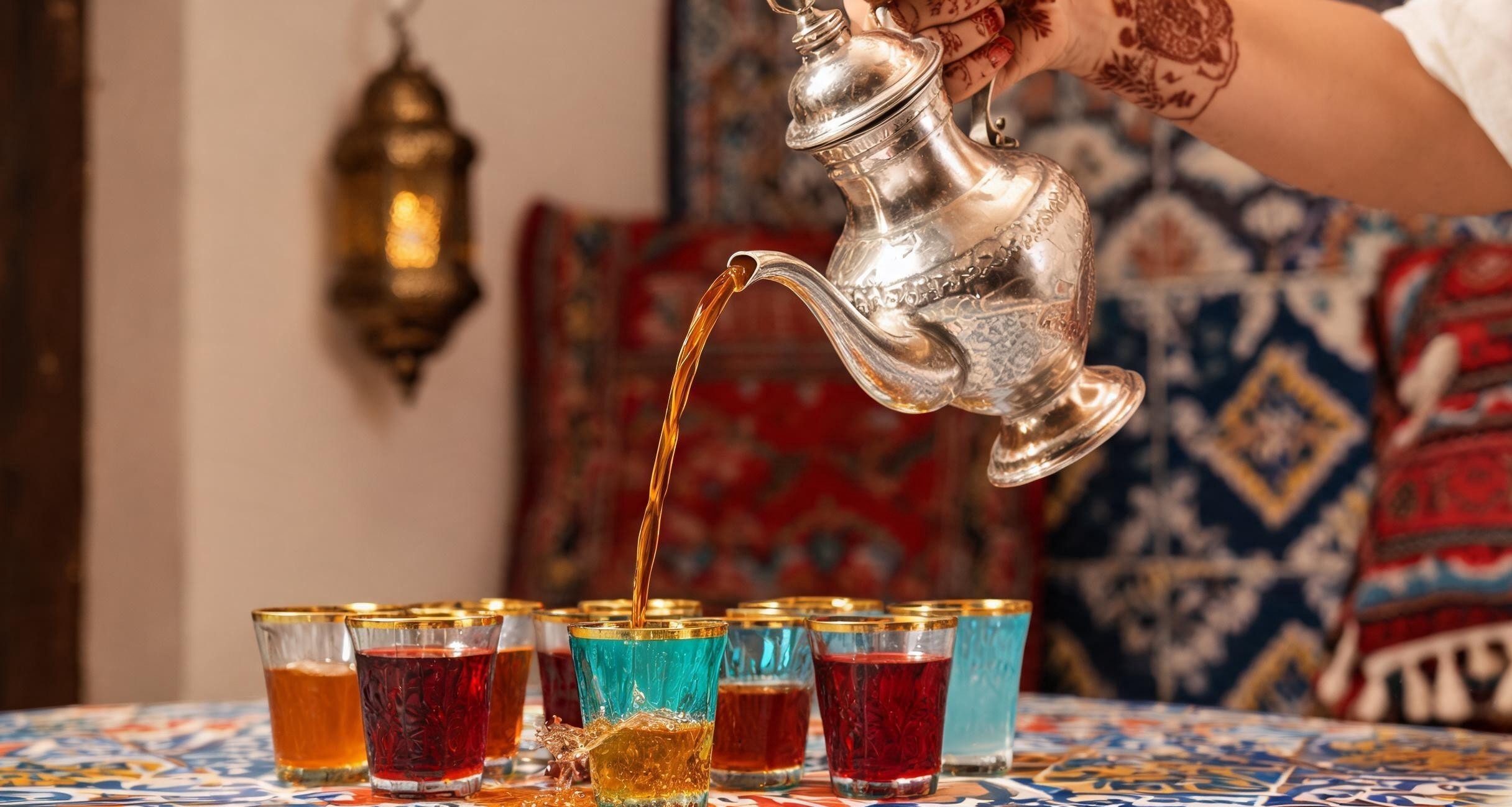
I brought a bag of gunpowder green tea and a box of Moroccan mint back home, and I make the tea most afternoons. It does not taste the same as it did in Marrakech, and I am certain that is partly because I am pouring from six inches instead of two feet, and partly because the water is different, and partly because I am sitting in my kitchen and not on a rooftop with the call to prayer echoing across the medina. But the ritual of it, the boiling water, the fresh mint, the sugar, the three pours, even done badly, makes the afternoon feel slightly more intentional than it would otherwise.
There is a social code around Moroccan tea that I did not fully grasp during my two weeks in the country but picked up enough to avoid causing offense. You always accept tea when it is offered. You always drink at least one glass. You hold the glass at the top, not the bottom, which is considered more refined. You do not add milk, ever. You do not ask for less sugar, because the sweetness is part of the tradition and requesting a change implies the host has done something wrong. And you never, ever pour your own tea if someone else is present who can do it for you. The tea is hospitality made visible.
I visited three different tea shops in Marrakech, and each one made the tea slightly differently. The first shop used more sugar and less mint, producing a very sweet, almost syrupy cup. The second shop used dried mint instead of fresh, which gave the tea a flatter, less lively flavor. The third shop, a small place in the medina near the Ben Youssef Madrasa, made what I considered the best version: strong gunpowder tea with a generous handful of fresh spearmint, moderate sugar, and a pour from about eighteen inches that produced a foam about a quarter inch thick. The owner, an elderly man named Hassan, told me he had been making tea in the same shop for forty years. He said the key to good tea is the same as the key to anything worth doing: repetition. You make it every day, you pay attention to the small details, and eventually your hands know what to do without you thinking about it.
I visited three different tea shops in Marrakech, and each one made the tea slightly differently. The first shop used more sugar and less mint, producing a very sweet, almost syrupy cup. The second shop used dried mint instead of fresh, which gave the tea a flatter, less lively flavor. The third shop, a small place in the medina near the Ben Youssef Madrasa, made what I considered the best version: strong gunpowder tea with a generous handful of fresh spearmint, moderate sugar, and a pour from about eighteen inches that produced a foam about a quarter inch thick. The owner, an elderly man named Hassan, told me he had been making tea in the same shop for forty years. He said the key to good tea is the same as the key to anything worth doing: repetition. You make it every day, you pay attention to the small details, and eventually your hands know what to do without you thinking about it.