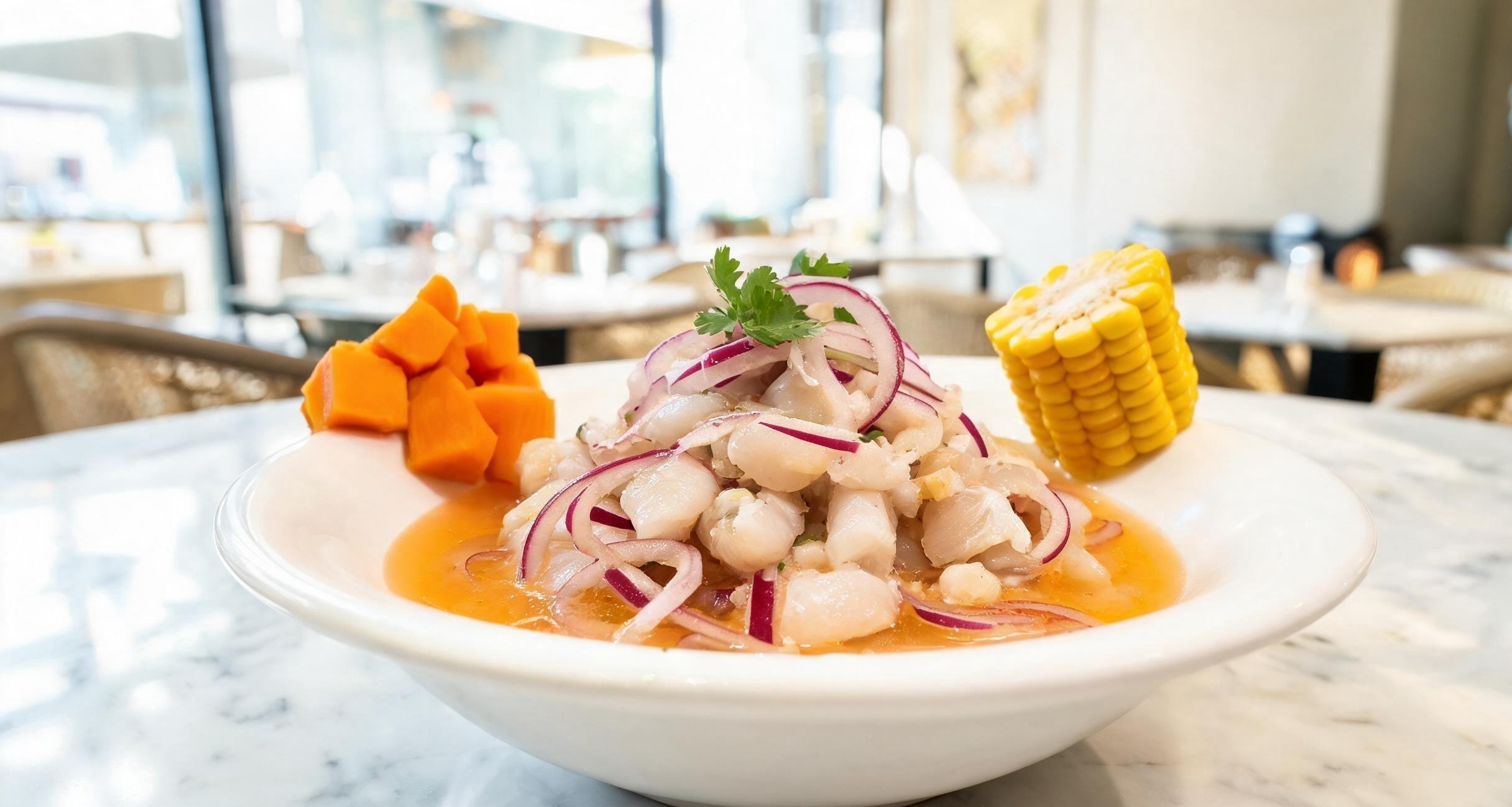
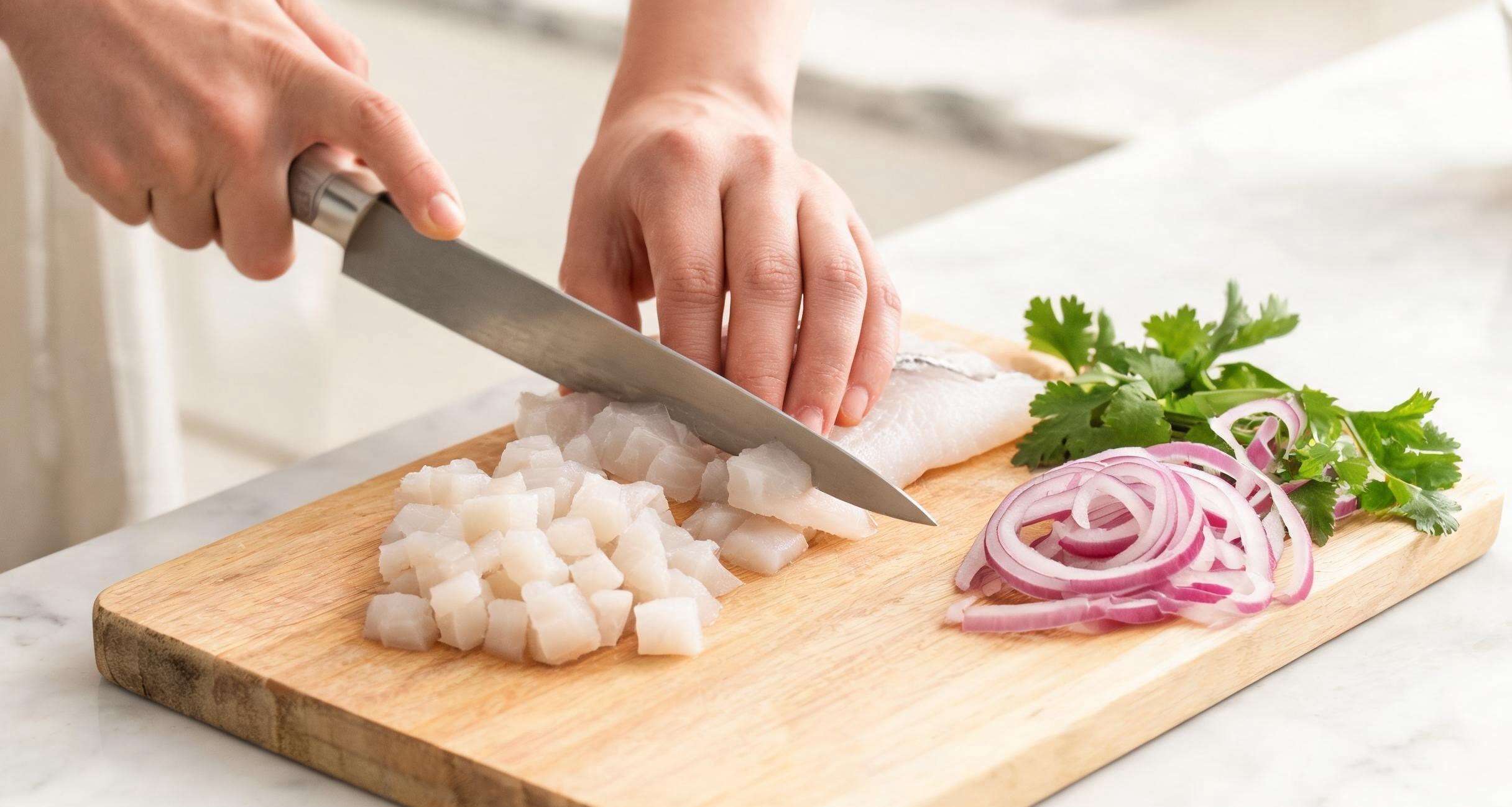
I arrived at Cevicheria La Mar in the Miraflores neighborhood of Lima at 11:15 on a Friday morning, and the place was already half full. In Lima, ceviche is a morning food. The cevicherias open early and close by two or three in the afternoon, because the fish has to be fresh from the morning market and ceviche does not keep. The idea of eating ceviche at dinner is, to most Peruvians, slightly wrong. I sat at a counter facing the open kitchen, where a cevichero in a white apron was fileting corvina with a long knife, his movements quick and precise. A waiter brought me a glass of chicha morada, a sweet purple-corn drink, and a small plate of cancha, roasted corn nuts that are salty and crunchy and impossible to stop eating. I ordered the ceviche clasico: corvina marinated in leche de tigre, with red onion, aji amarillo, and cilantro, served with a side of sweet potato and a small portion of corn. The fish arrived within five minutes of my order, and it was still firm, almost crunchy, with a bright acidity from the leche de tigre and a heat from the aji that built slowly. It was the freshest fish I had ever eaten, and I understood immediately why Peruvians insist on having it in the morning.
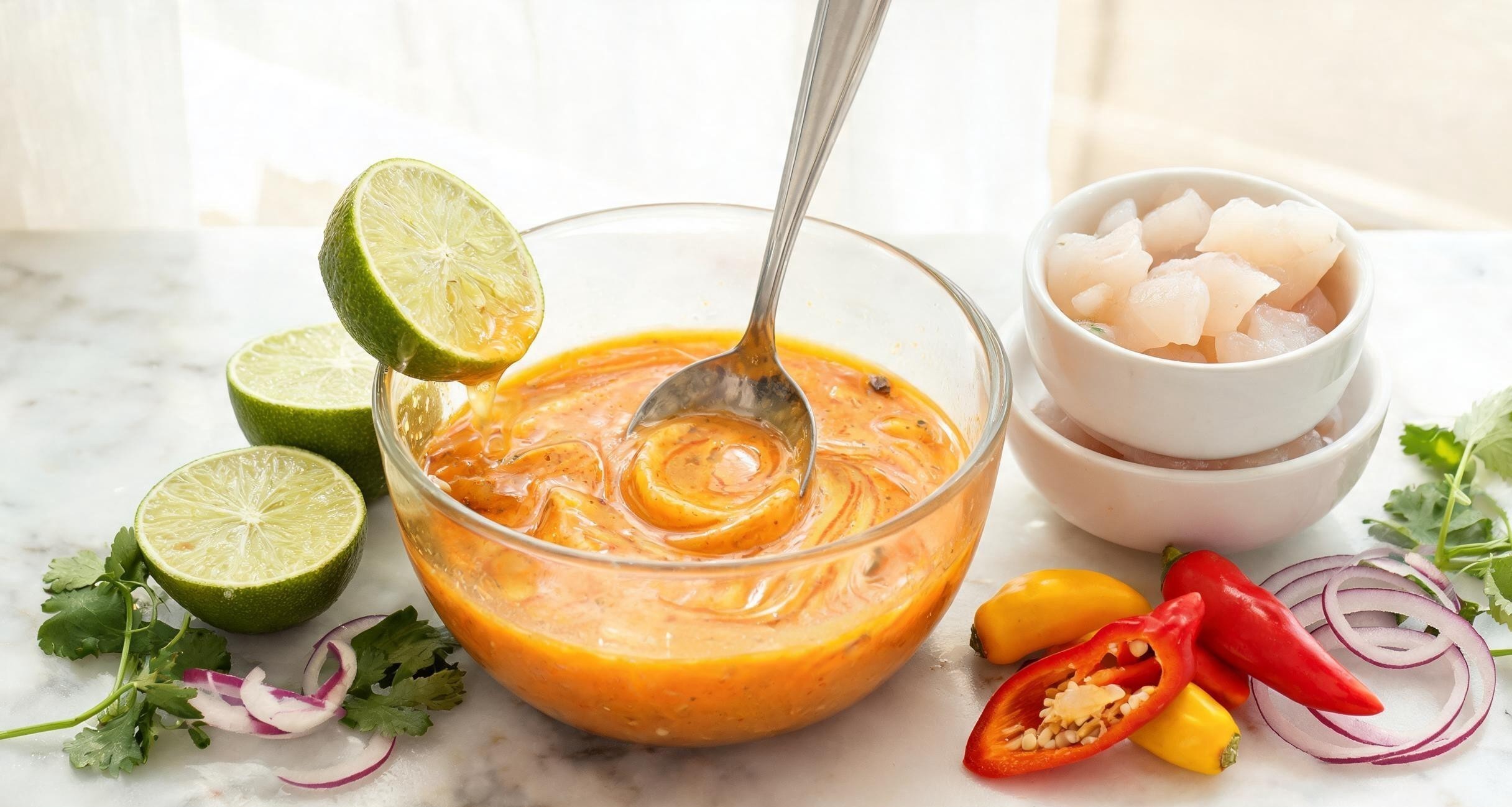
Leche de tigre, which translates to tiger's milk, is the marinade that gives Peruvian ceviche its identity. It is made from fresh lime juice, blended fish scraps, aji amarillo paste, garlic, ginger, and a small amount of celery. The mixture is strained and used both to marinate the fish and as a drinking broth on the side. Every cevicheria in Lima serves a small glass of leche de tigre alongside the ceviche, and regulars drink it down in one gulp before touching their food. I asked the cevichero at La Mar why it was called tiger's milk and he laughed. Because it gives you strength, he said. It is also considered a hangover cure in Peru, and the morning timing of ceviche is partly explained by the fact that a cold, acidic, spicy fish dish with a side of restorative broth is exactly what you want after a night of drinking pisco sours. Whether the leche de tigre actually cures anything is debatable. What is not debatable is that it tastes like nothing else: briny, sharp, spicy, and faintly sweet, with a viscosity that coats the mouth and a kick that wakes you up faster than coffee.
The ceviche at El Mercado, another Miraflores institution run by chef Rafael Piqueras, takes a more modern approach. The fish is cut into larger pieces and marinated for less time, leaving the center almost raw and the edges just barely cooked by the acid. The leche de tigre here has a foam on top, which sounds pretentious but actually adds a lightness that keeps the dish from feeling heavy. The aji amarillo is present but restrained, giving warmth without overwhelming the delicate flavor of the fish. The sweet potato is sliced thin and fried, a textural contrast to the soft fish that works better than the boiled sweet potato served at traditional spots. I also ordered a tiradito, which is a Peruvian dish related to ceviche but cut into thin sashimi-style slices and dressed with the leche de tigre after plating, rather than marinated beforehand. The tiradito at El Mercado was beautiful, the fish arranged in overlapping slices on a long plate, drizzled with a bright yellow aji paste and dotted with crispy sweet potato threads. It was a dish that showed how Peruvian chefs are pushing the ceviche tradition forward without losing the essence of what makes it work.
Not all cevicherias in Lima are fancy. Some of the best are humble stalls in the Surquillo market, where plastic stools line the counter and the fish is whatever was cheapest that morning. I visited one called Ceviche Don Tito, run by a man who has been making ceviche in the same market stall for twenty-six years. His ceviche was rougher than what I had at La Mar or El Mercado: the fish was cut into uneven chunks, the onion was sliced too thick, and the leche de tigre had a raw, aggressive acidity that bordered on harsh. But the fish was fresh and the portion was generous and the whole plate cost about four dollars. Don Tito served it with a wedge of lettuce, a boiled sweet potato the size of a baseball, and a fistful of cancha. There was no chicha morada on the menu. Just water or Inca Kola. I ate it standing up, fork in one hand, cancha in the other, and it was as satisfying as any restaurant ceviche I had in Lima. Maybe more so, because it felt unfiltered and honest, without the polish that sometimes smooths out the character of a dish.
The passion Peruvians have for ceviche is not performative. It is genuine, and it is daily. The cevicherias fill up at 11:00 AM on weekdays because office workers come on their lunch break. The markets are busy because people buy the ingredients and make ceviche at home on weekends. Every Peruvian household has a ceviche recipe, and every family member has an opinion about it. I stayed with a family in Barranco who made ceviche on a Saturday afternoon, and the husband and wife disagreed about how long to marinate the fish. He liked it almost raw, with thirty seconds in the leche de tigre. She liked it with two minutes, so the acid penetrated all the way through. They made two batches, and the rest of us ate both and picked a side. These are the arguments that matter in Peru. Not politics, not sports. How long to marinate the fish.
Ceviche is often described as raw fish, but that is not accurate. The lime juice denatures the proteins on the surface of the fish, which means it is cooked, just not with heat. The texture changes from translucent to opaque, the flesh firms up, and the flavor shifts from mild to sharp. The timing of this process is the central challenge of ceviche, and it is why the dish is made to order and served immediately. You cannot prep it in advance. You cannot hold it in a warmer. You cut the fish, mix the leche de tigre, combine them, and serve. That immediacy is what makes ceviche feel alive in a way that many dishes do not. It is food that exists in a narrow window of time, and you have to be there when it happens. In Lima, that window is every morning, and the city stops what it is doing to show up.