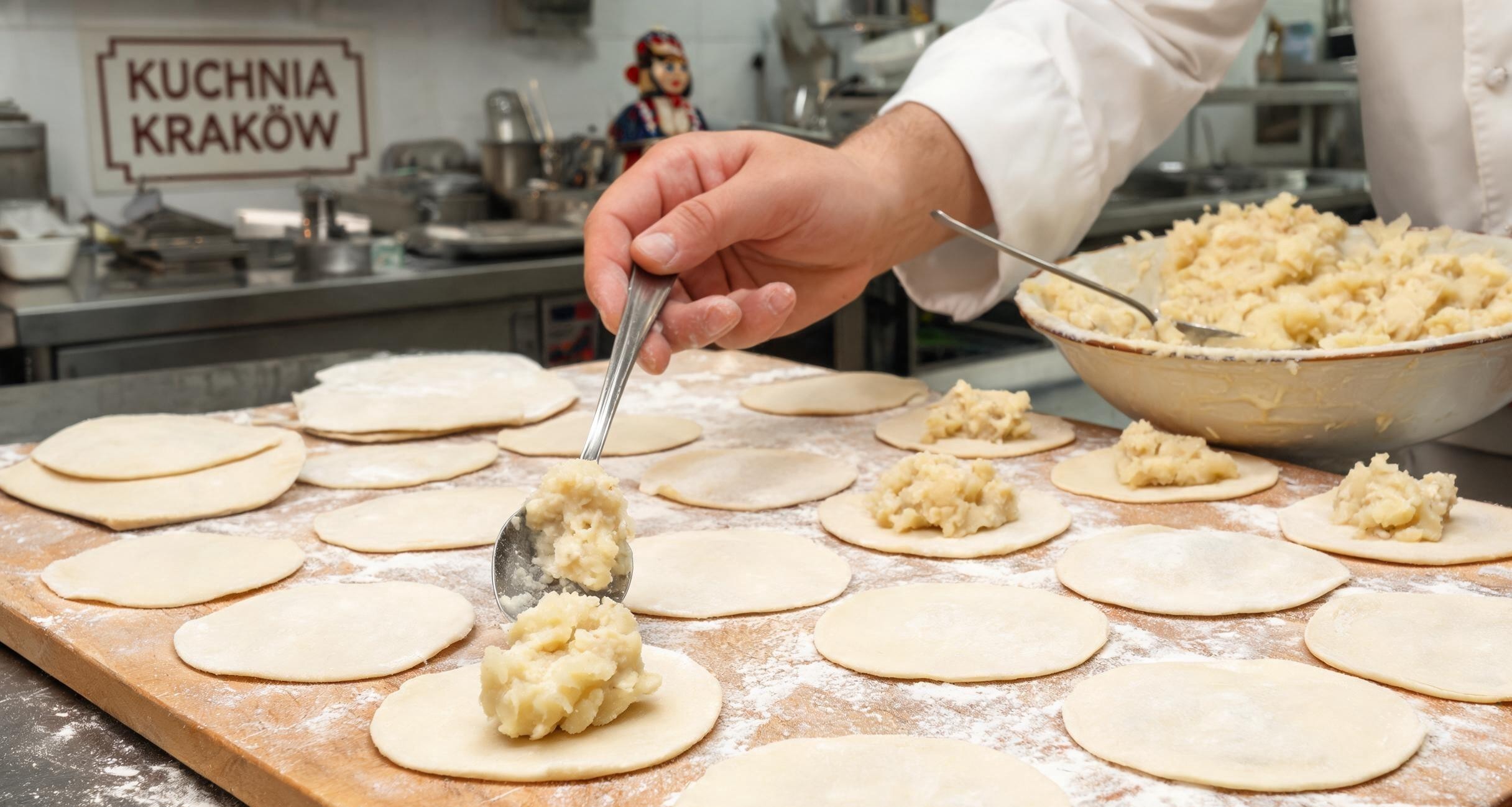
Krakow does not have a bad pierogi restaurant. I am sure one exists somewhere, hidden behind a tourist trap on the main square, but I did not find it in a week of eating my way through the city's old town and the Kazimierz district. What I did find were three places that locals kept returning to, each with a different approach to the same basic concept: dough stuffed with filling, boiled, then usually pan-fried in butter. Simple food. The kind of thing that sounds easy to make at home and absolutely is not, at least not the way these places make it. The dough is the tricky part. It needs to be thin enough to be pleasant but sturdy enough to hold the filling without tearing during boiling. Getting that balance right, consistently, hundreds of times a day, is a skill that takes years.
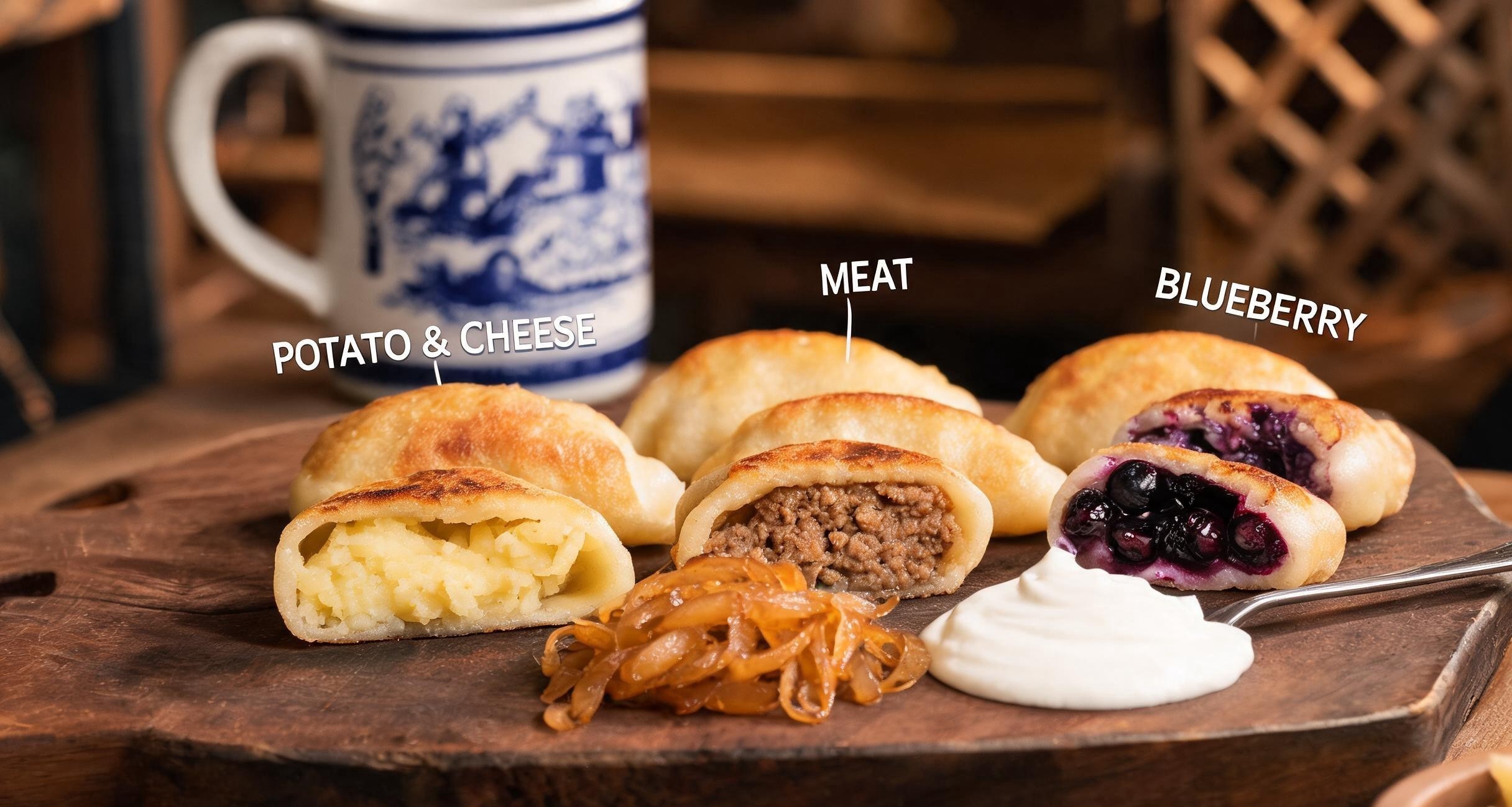
Pierogi u Heleny, on a narrow street in Kazimierz, is the kind of place that has no website and does not need one. There are eight tables and a handwritten menu on the wall. I ordered the ruskie pierogi, filled with mashed potatoes and farmer's cheese, which is the standard order and the one every Polish grandmother will judge you on. They arrived golden-brown on both sides, the dough thin enough to see the filling through, with a crisp edge from the pan and a soft, pillowy center. The farmer's cheese, called twarog, is drier and less salty than any American cream cheese or ricotta, which keeps the filling light. The butter they were fried in had a few crispy onion pieces mixed in.
Przysmak, a few blocks from the Wawel Castle, takes a different approach. Their pierogi are larger, the dough slightly thicker, and they offer more unusual fillings: spinach and feta, wild mushroom with truffle oil, and a seasonal version with duck confit that I arrived too late in the day to try. I settled for the meat pierogi, filled with a mix of pork and beef that was deeply savory in the way that only slow-cooked meat with plenty of onion can be. The sauce was just melted butter with a handful of crispy fried onions on top. Nothing fancy. But the combination of rich meat filling, soft dough, and sweet caramelized onions on top makes you stop eating so quickly and start paying attention.
The third place is technically not a pierogi restaurant at all. They serve zapiekanki, which is a long open-faced baguette with toppings, a Polish street food staple. But on weekends, the owner's mother makes pierogi in the back kitchen, and they sell out by early afternoon. I got there at eleven and had the sweet pierogi, filled with fresh strawberries and topped with sour cream and powdered sugar. In Poland, sweet pierogi are not dessert. They are a meal, served at lunch or dinner, treated with the same seriousness as the savory versions. The strawberries were local, in season, and so sweet that the sour cream was barely necessary.
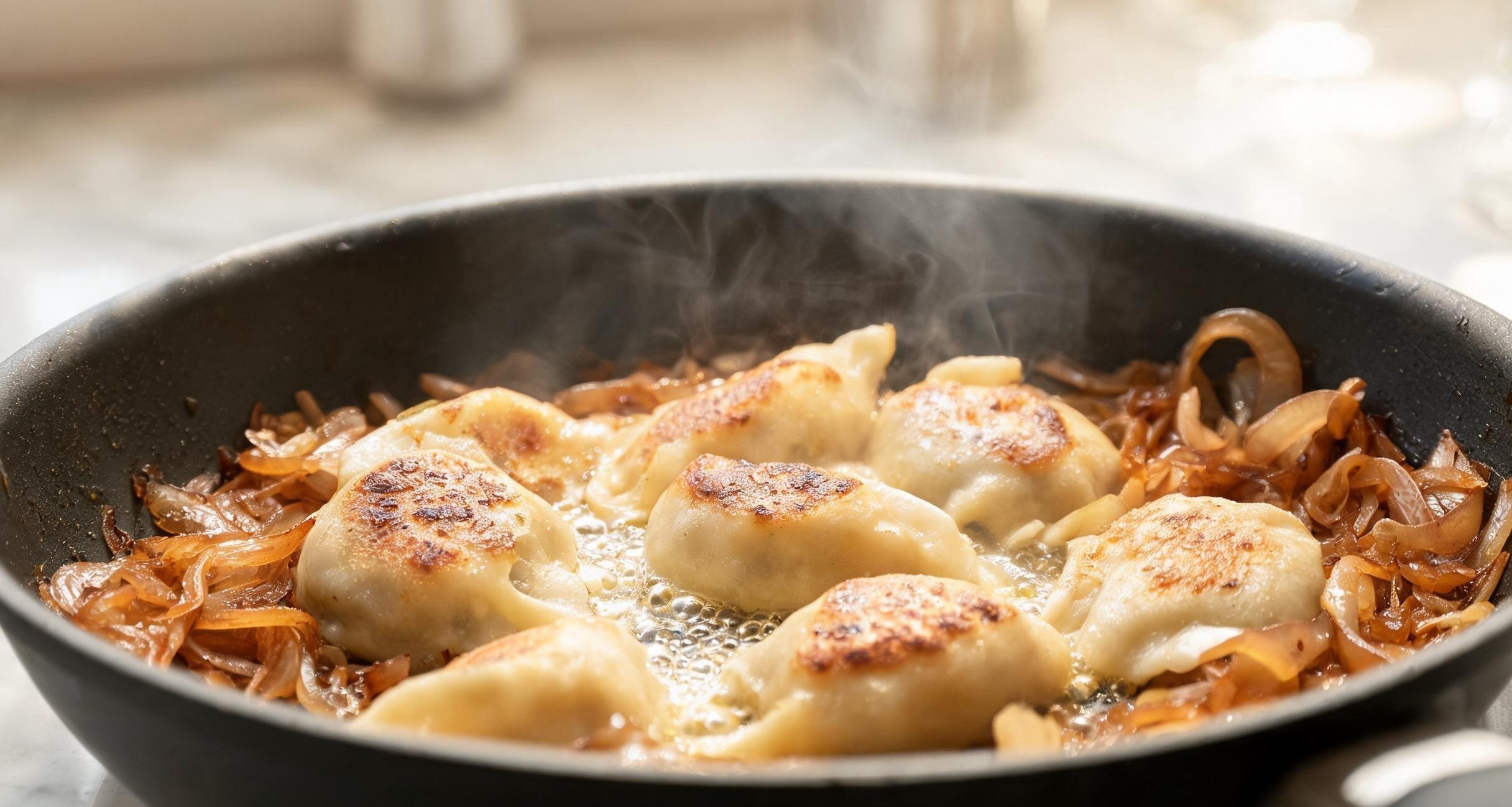
What struck me about all three places was the lack of pretense. Nobody was trying to reinvent the pierogi. Nobody was serving a deconstructed version or a fusion interpretation. The dough was flour, water, and sometimes an egg. The fillings were potatoes, cheese, meat, cabbage, or fruit. The cooking method was boiling, then butter. The entire tradition is built on doing something simple, over and over, until you cannot do it wrong. That is harder than it sounds, and it is why the pierogi in Krakow taste better than any version I have had anywhere else. They are not trying to impress you. They are just making pierogi, the same way they have been made for generations.
The price of pierogi in Krakow is another thing worth noting. At Pierogi u Heleny, a plate of ten cost about twenty zloty, which is roughly five dollars. At Przysmak, a plate of eight slightly larger pierogi was about twenty-five zloty. The weekend sweet pierogi at the third place were fifteen zloty for six. These are not fancy restaurant prices or even casual dining prices. They are working-class food prices, and they reflect the fact that pierogi is everyday food in Poland, not something you save for a special occasion. The fact that you can eat this well for five dollars is part of what makes Krakow such a rewarding city for a food-obsessed visitor.
The experience of eating in these pierogi restaurants reinforced something I have been thinking about for a while, which is that the best food in any country is often the cheapest food and the food with the longest history. Pierogi in Poland are not a trend or a concept restaurant. They are daily sustenance, and the people who make them have been doing it for decades, often in the same location. That continuity produces a quality that cannot be replicated by a new restaurant with a talented chef and a big budget. The dough gets better with practice. The fillings are refined over years. The frying technique becomes automatic. The result is a plate of food that costs five dollars and tastes better than anything you will find in a twenty-dollar restaurant in the same city. It is a reminder that good food does not have to be complicated or expensive. It just has to be made by someone who has done it enough times to get it right every single time.
The experience of eating in these pierogi restaurants reinforced something I have been thinking about for a while, which is that the best food in any country is often the cheapest food and the food with the longest history. Pierogi in Poland are not a trend or a concept restaurant. They are daily sustenance, and the people who make them have been doing it for decades, often in the same location. That continuity produces a quality that cannot be replicated by a new restaurant with a talented chef and a big budget. The dough gets better with practice. The fillings are refined over years. The frying technique becomes automatic. The result is a plate of food that costs five dollars and tastes better than anything you will find in a twenty-dollar restaurant in the same city. It is a reminder that good food does not have to be complicated or expensive. It just has to be made by someone who has done it enough times to get it right every single time.