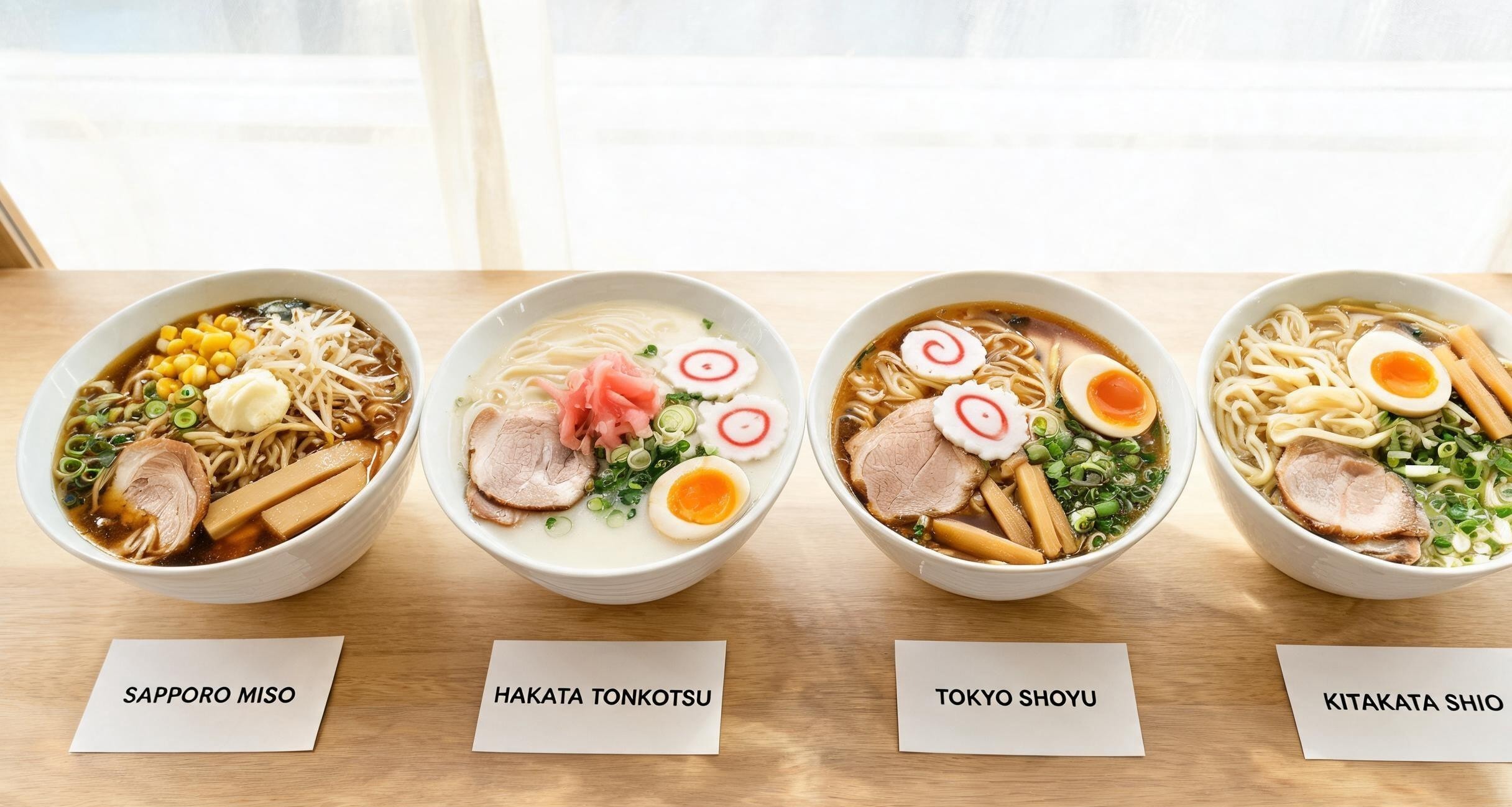
Ramen was not always Japanese. The dish originated in China, brought over in the late nineteenth century by Chinese immigrants who set up noodle stalls in Yokohama and Tokyo. The early versions were simple: wheat noodles in a meat or chicken broth, topped with roast pork and some vegetables. Over the course of a century, Japan took that basic idea and turned it into something entirely its own, developing regional styles so distinct that ordering ramen in Sapporo bears almost no resemblance to ordering it in Fukuoka. I spent three weeks traveling through Japan eating nothing but ramen, and by the end I had a working map of the country drawn entirely in broth.
Sapporo, in the far north of Hokkaido, is famous for miso ramen. The broth is thick, opaque, and deeply savory, made by blending pork or chicken stock with a paste of fermented soybeans. The noodles are thick, curly, and hearty, designed to hold up to the heavy broth without going limp. The standard toppings are butter, sweet corn, bean sprouts, and slices of chashu pork. I had my first bowl at a place called Aji no Sapporo, a small shop with a counter that seats eight, and the broth was so rich that I could feel it coating the inside of my mouth long after I finished. In a city where winter temperatures drop well below freezing, you understand why this style developed.
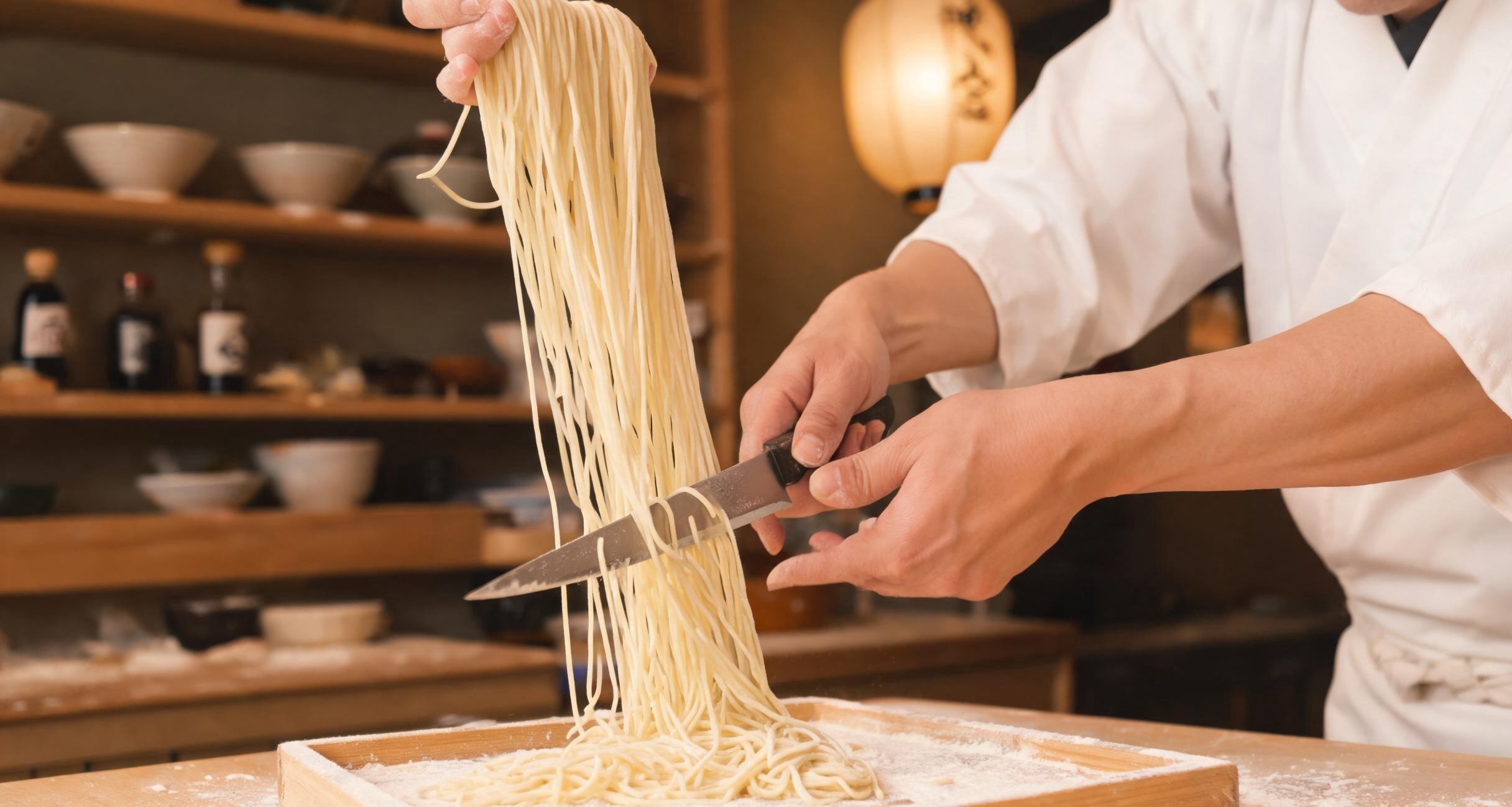
Tokyo is the home of shoyu ramen, which uses a soy sauce-based broth that is lighter and clearer than the miso or tonkotsu versions. The bowl I remember most was at a shop called Fuunji in Shinjuku, which specializes in tsukemen, a dipping style where the noodles and broth are served separately. You pull a thick bundle of cold noodles from the bowl, dip them into a concentrated, intensely flavored broth for a few seconds, and eat. The broth at Fuunji is made from dried fish, pork, and soy sauce, reduced until it is almost syrupy. Each dip coats the noodles with a layer of flavor that is almost overwhelming in the best possible way.
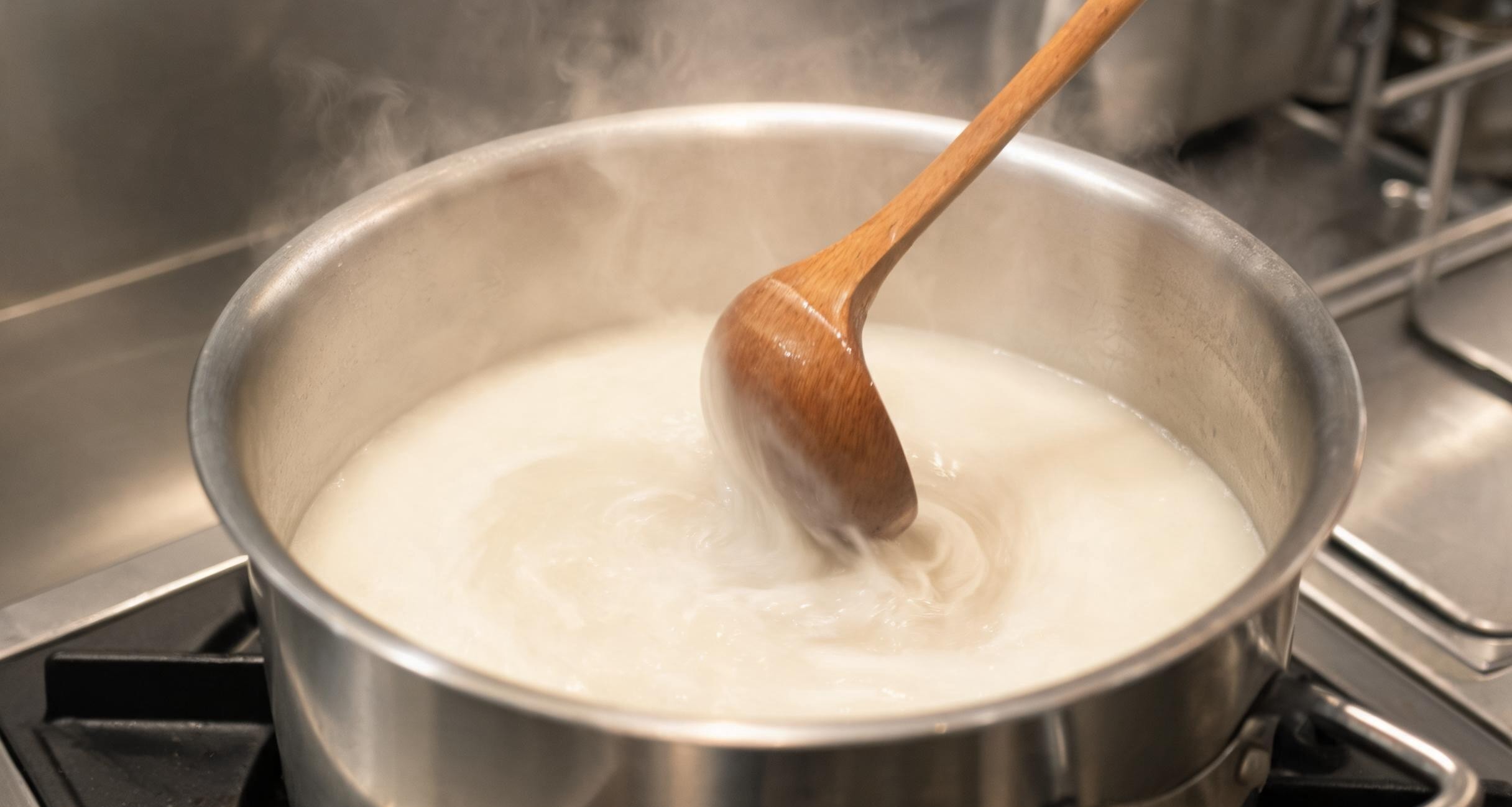
Hakata, in the south on the island of Kyushu, is the capital of tonkotsu ramen. The broth is made by boiling pork bones at a rolling boil for twelve to eighteen hours, which emulsifies the fat and collagen into a milky white liquid that is creamy, rich, and slightly funky. The noodles are thin and straight, designed to be eaten quickly before they soften in the hot broth. In Hakata, there is a custom called kaedama, where you can order a second serving of noodles for a small additional charge. I ordered kaedama at a place called Ippudo and had about ninety seconds to eat them before they started to break down.
There are other regional styles worth knowing about. Kyoto has a lighter chicken-based shoyu ramen that is almost delicate. Wakayama is known for a soy sauce and pork bone blend called shiro. Onomichi uses a flat, wide noodle in a shoyu broth with a hint of seafood. Each city has its own shops, its own loyal customers, and its own particular idea of what a bowl of ramen should be. There is no best style. There is only the one you want right now, and the one you will want tomorrow, and they will probably be different.
The price of ramen in Japan reinforces how seriously the food is taken despite its accessibility. Most bowls cost between eight and twelve dollars, and for that price you get a level of care and quality that would cost twenty-five dollars or more in an American restaurant. The broth is made by hand every day. The noodles are often made in-house. The chashu is braised for hours. The eggs are marinated in a soy-mirin mixture. None of this is expensive in Japan, because the ingredients are local and the labor model allows a ramen shop to produce high-quality food at low prices. The result is a food culture where the best bowl of ramen in the city might cost less than a sandwich at a deli in New York.
One of the things that surprised me most about the ramen culture in Japan was how specialized the shops are. Most ramen shops serve one style, maybe two, and they do it every day, all day, until they sell out. The chefs at these shops are not cooking a diverse menu. They are perfecting a single bowl of soup. At Fuunji, the chef had been making tsukemen for over twenty years, and the broth tasted like the product of two decades of daily refinement. At the miso ramen shop in Sapporo, the owner told me he had tried thousands of small variations on his broth over the years, adjusting the ratio of miso types, the cooking time of the pork bones, the blend of aromatics, always in tiny increments. This kind of single-minded focus on one dish is rare in Western cooking, where chefs are expected to be versatile. In Japan, a ramen chef who makes one bowl of noodles really well is considered a master.
One of the things that surprised me most about the ramen culture in Japan was how specialized the shops are. Most ramen shops serve one style, maybe two, and they do it every day, all day, until they sell out. The chefs at these shops are not cooking a diverse menu. They are perfecting a single bowl of soup. At Fuunji, the chef had been making tsukemen for over twenty years, and the broth tasted like the product of two decades of daily refinement. At the miso ramen shop in Sapporo, the owner told me he had tried thousands of small variations on his broth over the years, adjusting the ratio of miso types, the cooking time of the pork bones, the blend of aromatics, always in tiny increments. This kind of single-minded focus on one dish is rare in Western cooking, where chefs are expected to be versatile. In Japan, a ramen chef who makes one bowl of noodles really well is considered a master.