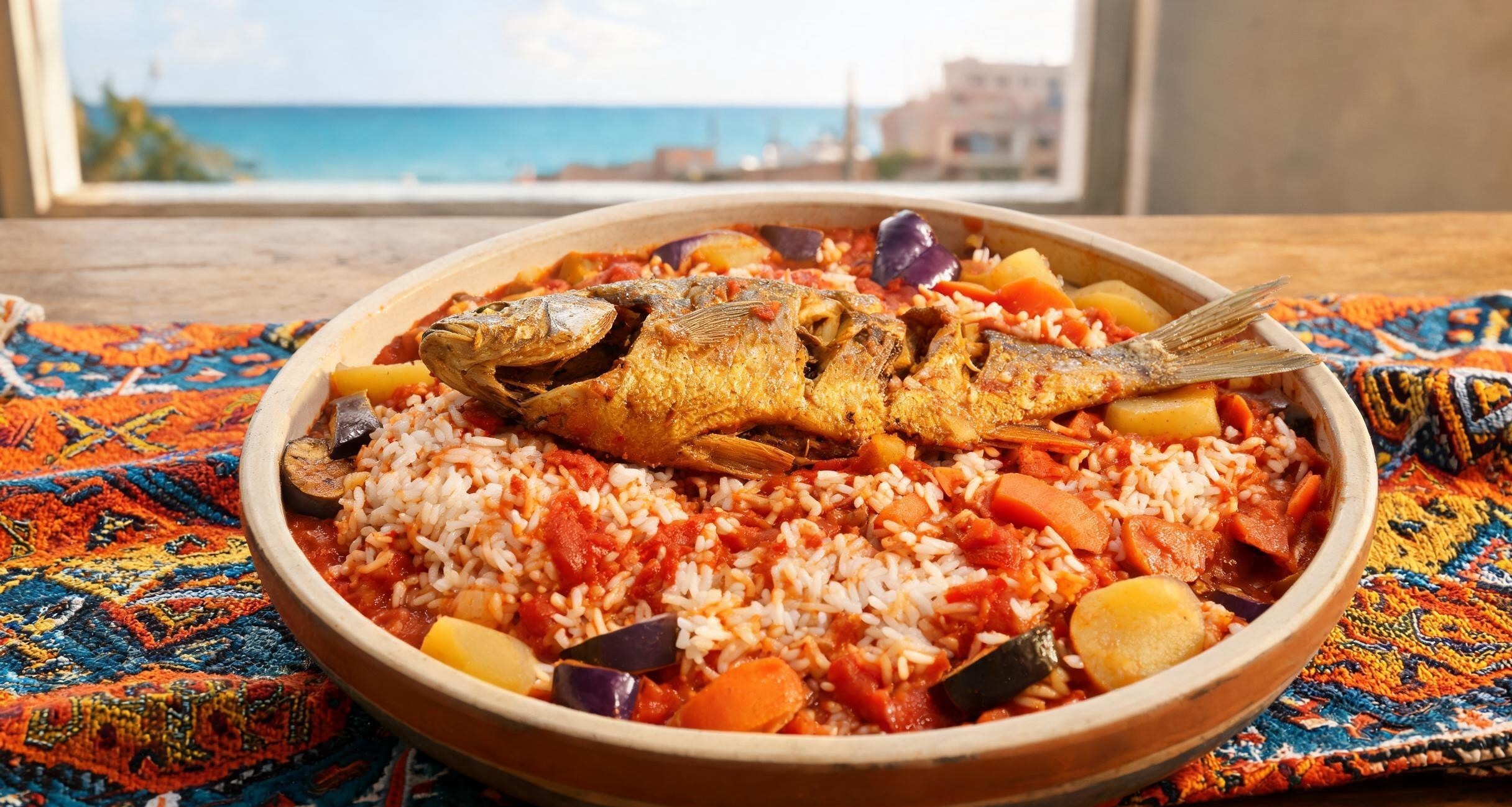
The first time I had thieboudienne, I was in Dakar, at a restaurant called Chez Loutcha, which is one of those places that has no sign outside and does not need one. A friend from the university had brought me there, and when I asked what was on the menu, she laughed and said the menu was thieboudienne, and if I wanted something else I could go somewhere else. The dish arrived in a wide shallow bowl: a mound of broken rice, which is rice that has been partially milled to remove some of the bran, colored a deep red-orange from the tomato-based sauce. On top of the rice sat a whole white fish, a grouper, that had been stuffed with a paste of parsley, garlic, scallions, and a spice blend called Lafleur. Around the rice were carrots, cassava, eggplant, cabbage, and a few pieces of sweet potato, all cooked in the same pot.
Thieboudienne is the national dish of Senegal, and the fact that it exists at all is a direct result of the country's history. The Wolof people, who make up the largest ethnic group in Senegal, have been cooking fish and rice along the coast for centuries. But the tomato-based sauce, the specific combination of vegetables, and the technique of cooking everything together in a single pot came from interactions with Portuguese and French traders who brought tomatoes, cassava, and other New World ingredients to West Africa starting in the fifteenth century. The dish is a product of trade, colonization, and adaptation, and it tells you more about Senegalese history than any textbook. The name itself is Wolof, combining thieb, which means rice, and dienne, which means fish.
The rice matters more than you would think. In Senegal, thieboudienne is made with broken rice, not long-grain rice. Broken rice is the fragments that fall off during milling, the pieces that are too small to sell as whole grains. It was originally considered a byproduct, the cheap option for people who could not afford whole rice. But broken rice has a quality that whole rice does not: it absorbs liquid more quickly and more thoroughly, which means the rice in thieboudienne takes on the flavor of the tomato sauce in a way that whole rice never could. The grains are small, slightly sticky, and intensely flavored. Finding broken rice outside of West Africa is difficult. I have used regular long-grain rice, and it works, but the texture is different and the flavor absorption is not the same.
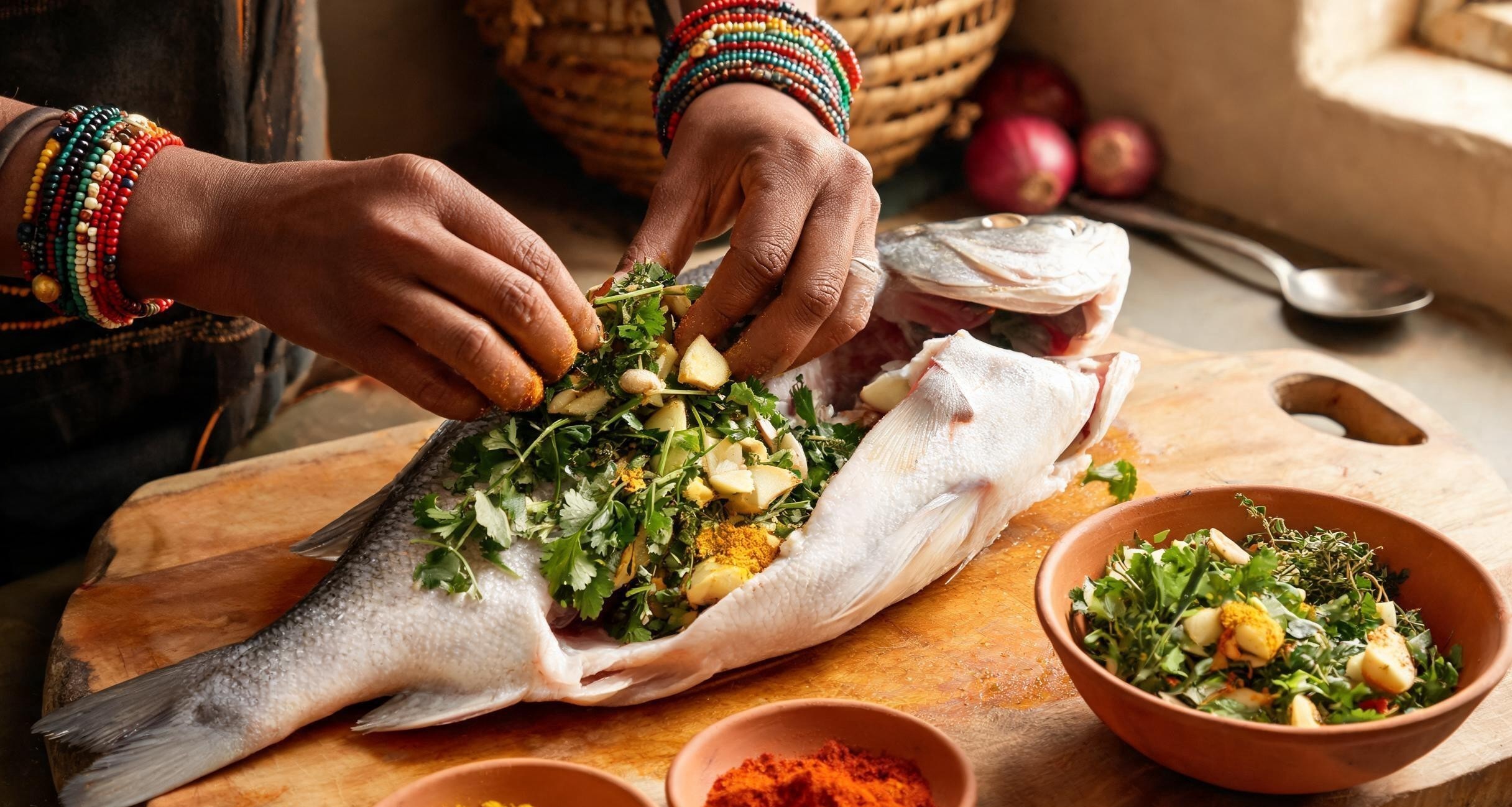
The fish is always local, usually a firm white fish from the Atlantic. In Dakar, grouper and sea bass are common. The fish is scored, rubbed with salt and lemon juice, and stuffed with a paste called rouyi, made from parsley, scallions, garlic, and sometimes tamarind or chili. The stuffed fish is placed on top of the rice and vegetables in the pot, and the whole thing cooks together. The fish steams in the vapor from the cooking liquid below, and the juices from the fish drip down into the rice, adding another layer of flavor. It is a one-pot cooking method that requires careful timing. The vegetables go in first, since they take longer. The rice goes in next. The fish goes in last, right on top, so it does not overcook.
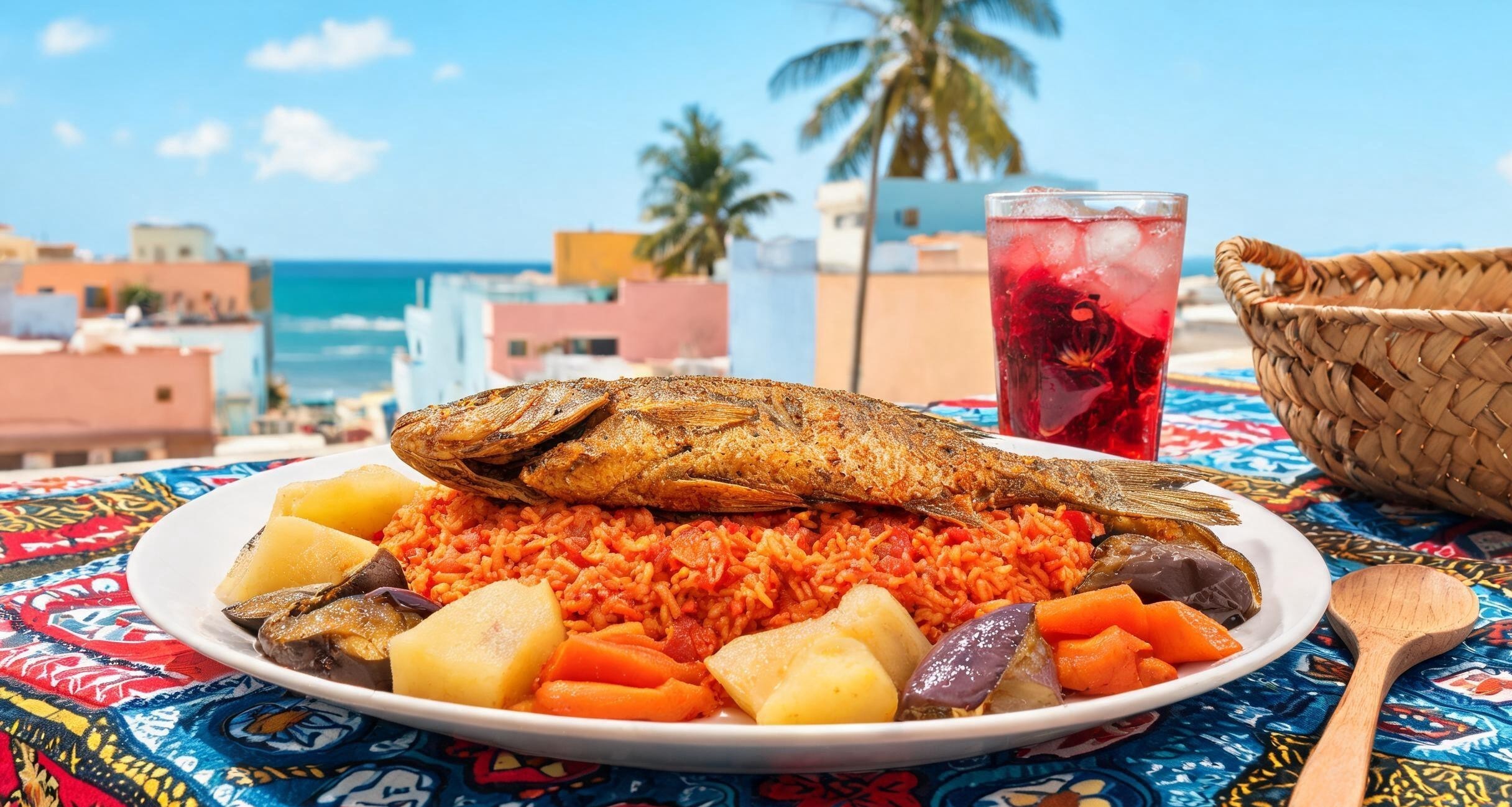
I spent an afternoon with a woman named Aissatou in her kitchen in the Medina district of Dakar, and she showed me how she makes thieboudienne for her family of eight. She uses a large aluminum pot, the kind you see in markets across West Africa, set over a gas burner. She makes the sauce by frying tomato paste in palm oil until it darkens, then adding water, stock cubes, dried fish, and a spice blend called netetou, which is made from fermented locust beans and gives the dish an earthy, umami depth. The smell of the sauce as it simmered filled the entire courtyard of her building. Her neighbors, she told me, always know when she is making thieboudienne because the aroma spreads through the shared ventilation system. She said she makes it twice a week, and her husband and children would complain if she made it less.
The dish is served communally, with everyone eating from the same large bowl. In Senegal, this is normal. You eat with your right hand, using pieces of rice to scoop up fish and vegetables. The best part, according to everyone I asked, is the bottom of the pot, where the rice has been sitting against the heat and has formed a slightly crispy, caramelized crust called the xoon. Getting a piece of the xoon is competitive. Aissatou told me that in her house, the person who gets to the bottom of the pot first claims the best xoon, and her youngest son always tries to position himself near the kitchen when he hears the pot being brought to the table. Thieboudienne is not a restaurant dish, not really. It is a home dish, a family dish, and the best version you will ever eat is the one that comes out of a home kitchen in Dakar on a Tuesday afternoon.