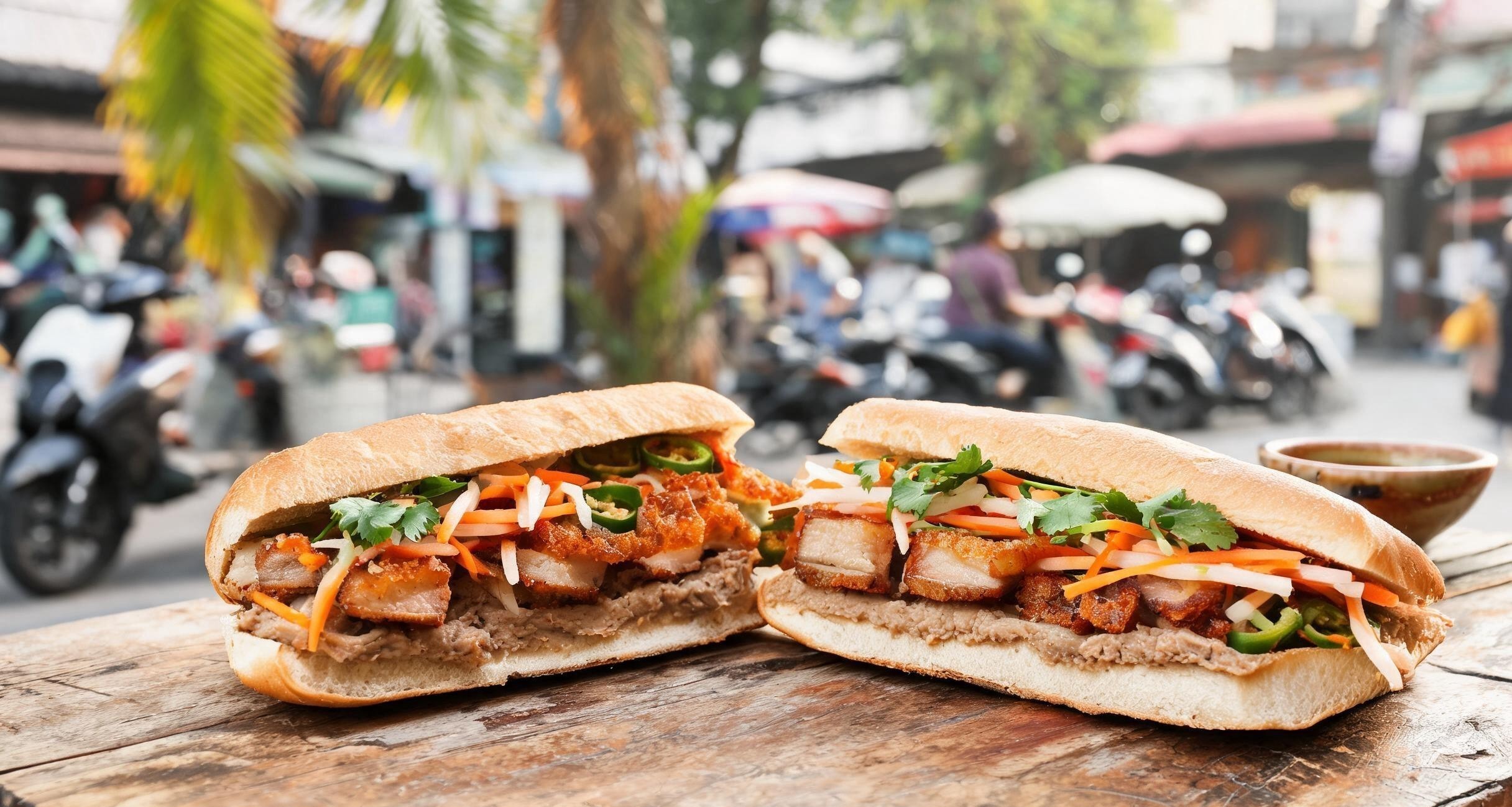
The banh mi cart was parked on a corner in District 3, near a market that sold nothing but flowers. The woman running it was in her fifties, maybe older, and she worked with a speed that made me feel like I was standing still. She split a baguette with a single motion of a cleaver, spread it with pate, laid in slices of pork belly that had been cooking on a small grill behind her, and topped it with pickled vegetables, cilantro, and a squeeze of chili sauce. The whole sandwich was assembled in about fifteen seconds. I bit into it while walking, and the combination of the crispy bread, the rich pork, the sharp pickles, and the fresh herbs was so perfectly balanced that I stopped walking and just stood there on the sidewalk eating. A motorbike honked at me. I did not care. I went back the next day and the day after, and eventually she gave me a small plastic stool to sit on while I ate. I have been trying to recreate that sandwich at home ever since.
The bread is critical. A proper banh mi uses a baguette that is different from the French original. It should have a thin, crackly crust and a light, airy interior. In Vietnam, the flour is often mixed with a small amount of rice flour, which gives the crumb a softer, slightly chewy quality. At home, the best substitute is a light bakery baguette, the kind with a thin crust and plenty of holes inside. A dense artisan baguette will be too heavy and will overpower the fillings. Cut the baguette lengthwise, leaving one side hinged, and scoop out a little of the soft interior to make room for the fillings. Toast it lightly under the broiler until the crust is warm but not hard.
The pork belly is the protein I remember from that cart, and it needs to be cooked in two stages. First, braise a piece of pork belly, about two pounds, in a mixture of soy sauce, five-spice powder, sugar, garlic, and a splash of fish sauce, with enough water to cover, for about two hours until the pork is completely tender. Then remove the pork, let it cool, and slice it thinly. When you are ready to make the sandwiches, pan-fry the slices in a hot skillet until the edges are crispy and caramelized. The combination of meltingly soft meat from the braise and crispy edges from the pan fry is exactly what makes banh mi pork so addictive.
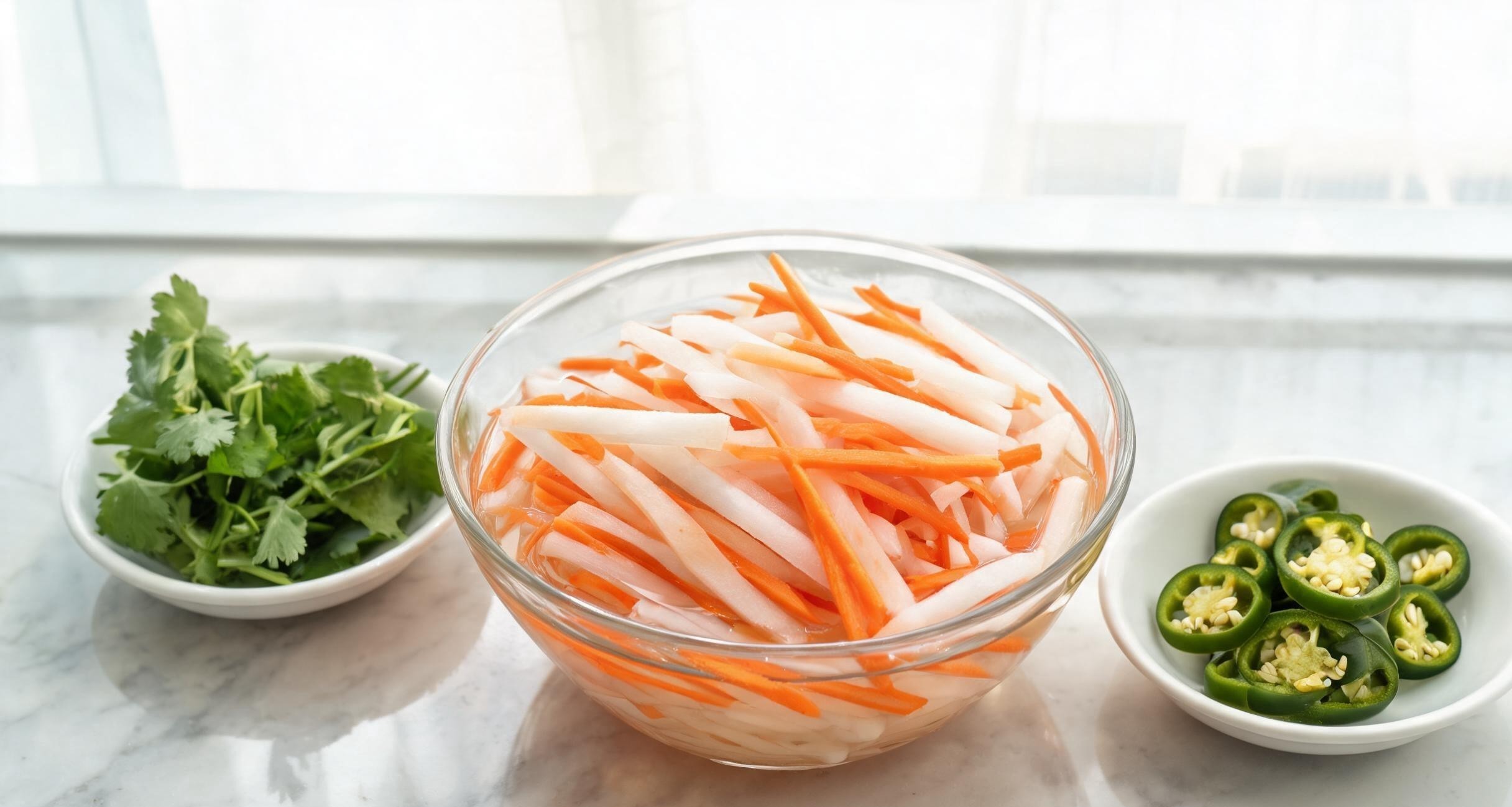
The pickled daikon and carrot, called do chua, are the sharp, acidic element that balances the richness of the pork. Julienne daikon and carrot into thin matchsticks, toss them with a mixture of rice vinegar, sugar, and a pinch of salt, and let them sit for at least an hour. Overnight is better. They should be crunchy and tangy, not mushy. Drain them well before assembling the sandwiches so they do not make the bread soggy.
Assembly is straightforward but the order matters. Spread the inside of the bread with pork liver pate, which adds a rich, earthy note. Then add a layer of the pan-fried pork belly slices. Pile on the pickled daikon and carrot. Add a handful of fresh cilantro sprigs and a few slices of fresh jalapeno. Squeeze a little soy sauce or Maggi seasoning over the top. Close the sandwich and press it gently to compress everything together. Cut it in half on a diagonal and eat it immediately, before the bread absorbs the moisture from the fillings.
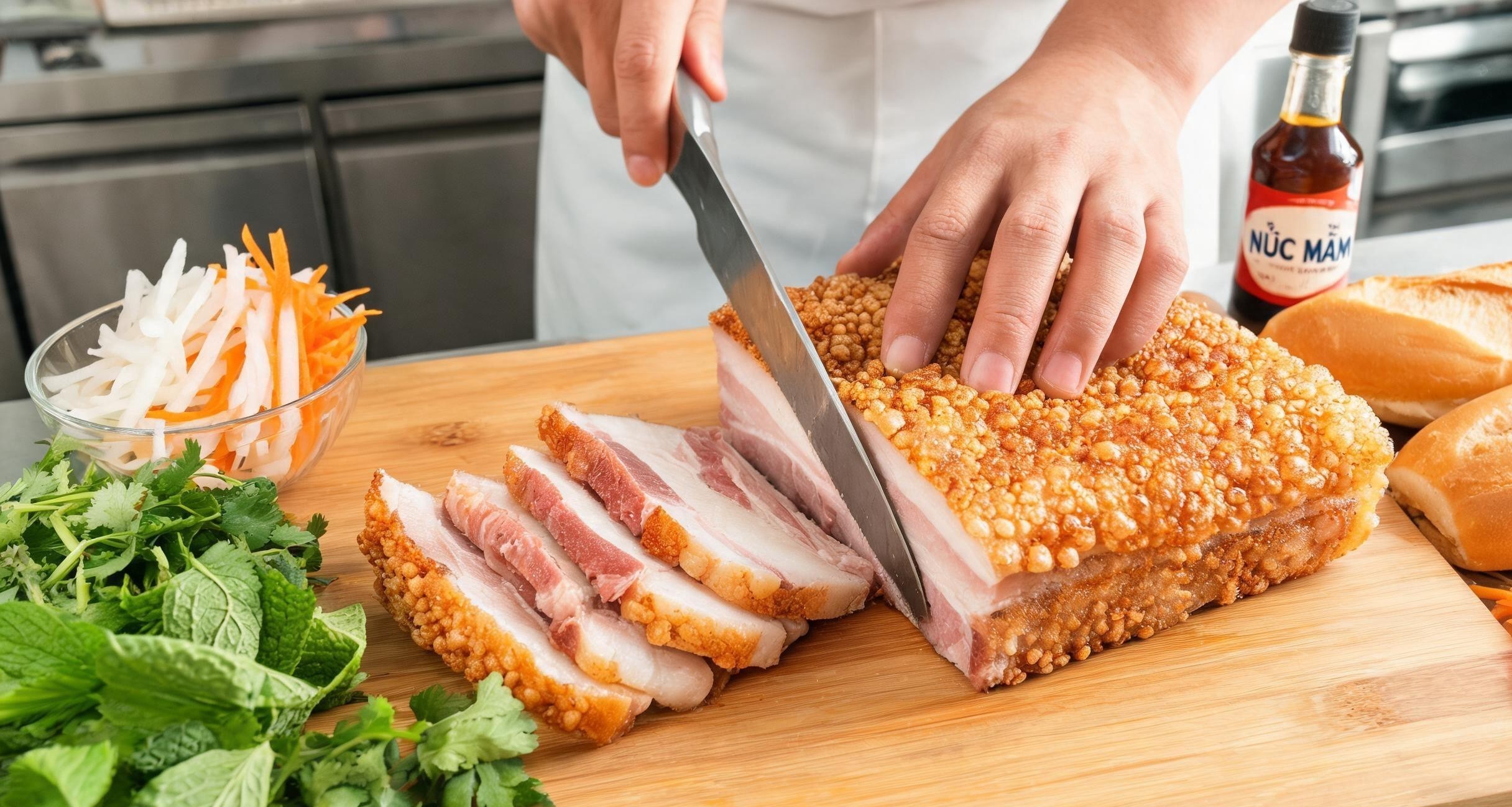
This is not a neat sandwich. It is messy, juicy, and the fillings will fall out. That is part of the experience. The contrast of temperatures and textures is what makes it work: hot crispy pork, cold crunchy pickles, cool herbs, warm bread, spicy jalapeno. Every bite is different. I have tried making these with grilled chicken, with tofu, with various cold cuts, and they all work to varying degrees. The key is the balance. Too much meat and the sandwich becomes heavy. Too much pickle and it turns sour. The right proportion, roughly equal parts meat, pickles, and vegetables with a thin spread of pate, creates something that feels like more than the sum of its parts. But the version that brings me back to that corner in District 3 is the one with pork belly, do chua, cilantro, and that perfectly light baguette. It is not a complicated sandwich, but every component needs to be right, and when they are, it is one of the best things you can eat with your hands.
The bread is what makes or breaks a banh mi, and the cart I kept returning to used a baguette that was baked twice that morning. The first bake sets the crust, and the second, just before service, makes it shatter when you bite through. Inside, the crumb is airy enough to absorb the pickled vegetable juices without falling apart. The woman running the cart told me she picks up bread from a neighbor's oven two streets over, and if they sell out, she closes early rather than use day-old loaves. That commitment to the bread is why her sandwiches cost fifty cents more than the place next door, and why there was always a line.