I drove to Lockhart, Texas on a Thursday because I wanted to understand brisket at the source. Lockhart is a small town about thirty miles south of Austin that calls itself the Barbecue Capital of Texas, and I am not here to argue the point. I spent the morning at one of the legendary pits talking to a pitmaster who has been cooking brisket for longer than I have been alive. He was generous with his time and surprisingly honest about the process. Most of it, he told me, is about controlling your fire and leaving the meat alone. He said the biggest mistake people make at home is touching the brisket too often. Every time you open the lid, you lose heat, and recovery takes longer than you think. I took that advice home and applied it to my kettle grill, and the results changed the way I think about what is possible without a dedicated smoker.
You need a full packer brisket, which is the whole cut including both the flat and the point, with the fat cap intact. This is a big piece of meat, usually 12 to 16 pounds. Do not trim the fat aggressively. Leave about a quarter inch of fat on the cap. This protects the meat during the long cook and renders down slowly, keeping the brisket moist. Season the brisket the night before with a simple rub: equal parts coarse black pepper and kosher salt. That is it. Some people add garlic powder or paprika, and those are fine additions, but the salt and pepper are what matter. The pitmaster in Lockhart used nothing else. Wrap the seasoned brisket in plastic and let it sit in the fridge overnight.
For the grill, I use the minion method on a standard 22-inch Weber kettle. Fill a chimney starter with charcoal, light it, and when the coals are ashed over, dump them into a bank on one side of the grill. Add five or six chunks of hardwood, either post oak or hickory, on top of the hot coals. Place a disposable aluminum drip pan on the opposite side of the grill, under where the brisket will go. Put the cooking grate back on, and position the brisket fat-side up on the side opposite the coals. Put the lid on with the vents over the meat. You want the air to draw across the coals and over the brisket before it exits. Your target temperature at the grate is 225 to 250 degrees.
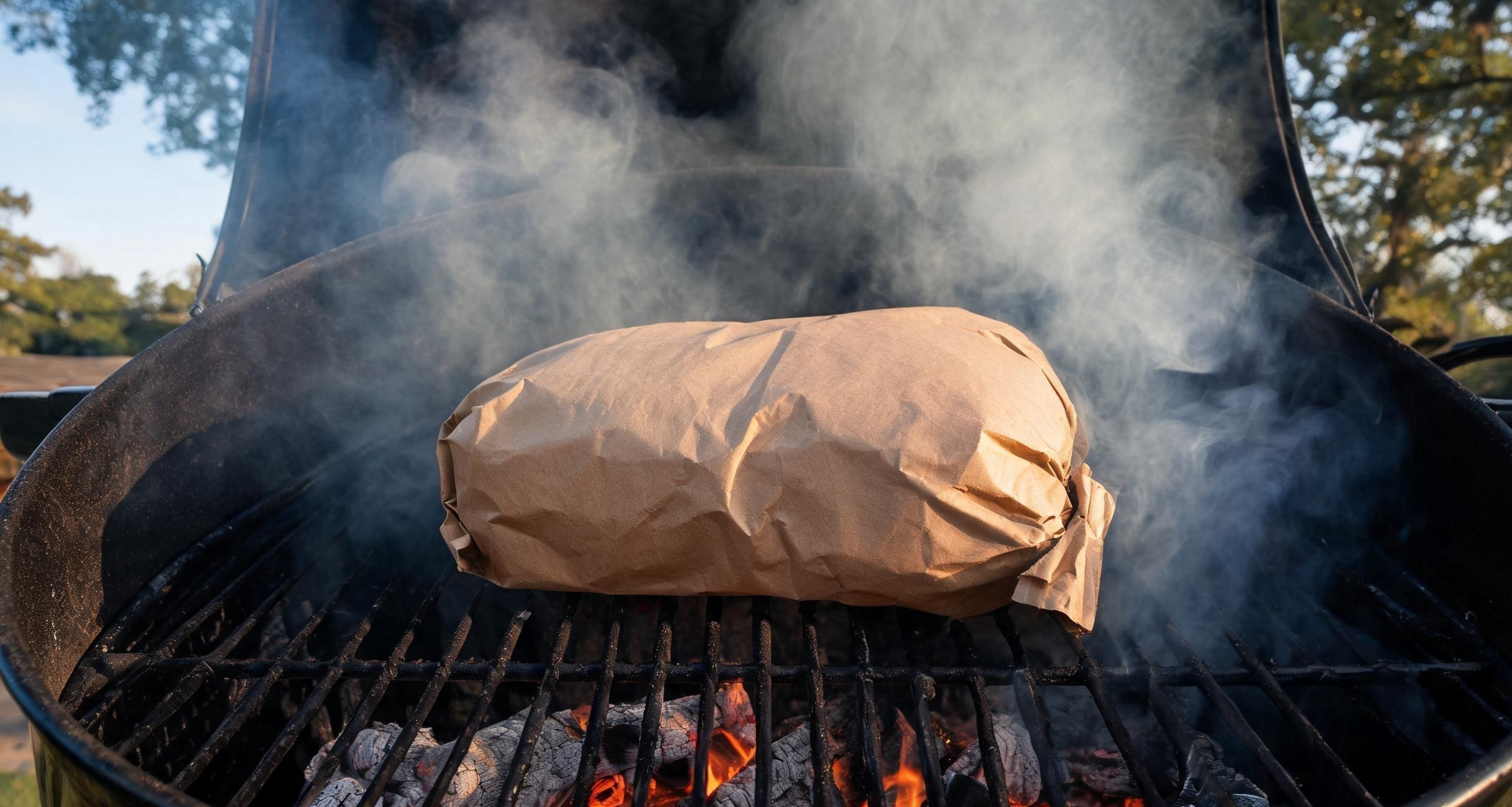
Maintaining temperature on a kettle grill requires attention, but it is not as difficult as people make it sound. I check the temperature every 45 minutes or so using a probe thermometer placed at grate level next to the brisket. If the temperature drops below 225, I add eight to ten unlit briquettes through the vent. If it climbs above 275, I close the bottom vent partially. The wood chunks will burn for about an hour each, and I add a new chunk every time the smoke stops being visible. You want thin, blue smoke, not thick white plumes. White smoke means the wood is smoldering and producing bitter compounds. You are looking for barely visible blue-gray smoke coming from the vent.
The brisket will take about 10 to 12 hours, depending on its size and the ambient temperature. Do not go by time alone. Use a meat thermometer and look for an internal temperature of about 203 degrees in the thickest part of the flat. The meat should feel soft when you probe it, like pushing a hot knife through soft butter. If it feels springy or resistant, it is not done yet, regardless of what the thermometer says. Somewhere around 165 degrees internal, the brisket will hit what is called the stall, where the temperature stops rising for several hours. This is normal. Do not increase the heat. Do not panic. Just wait.
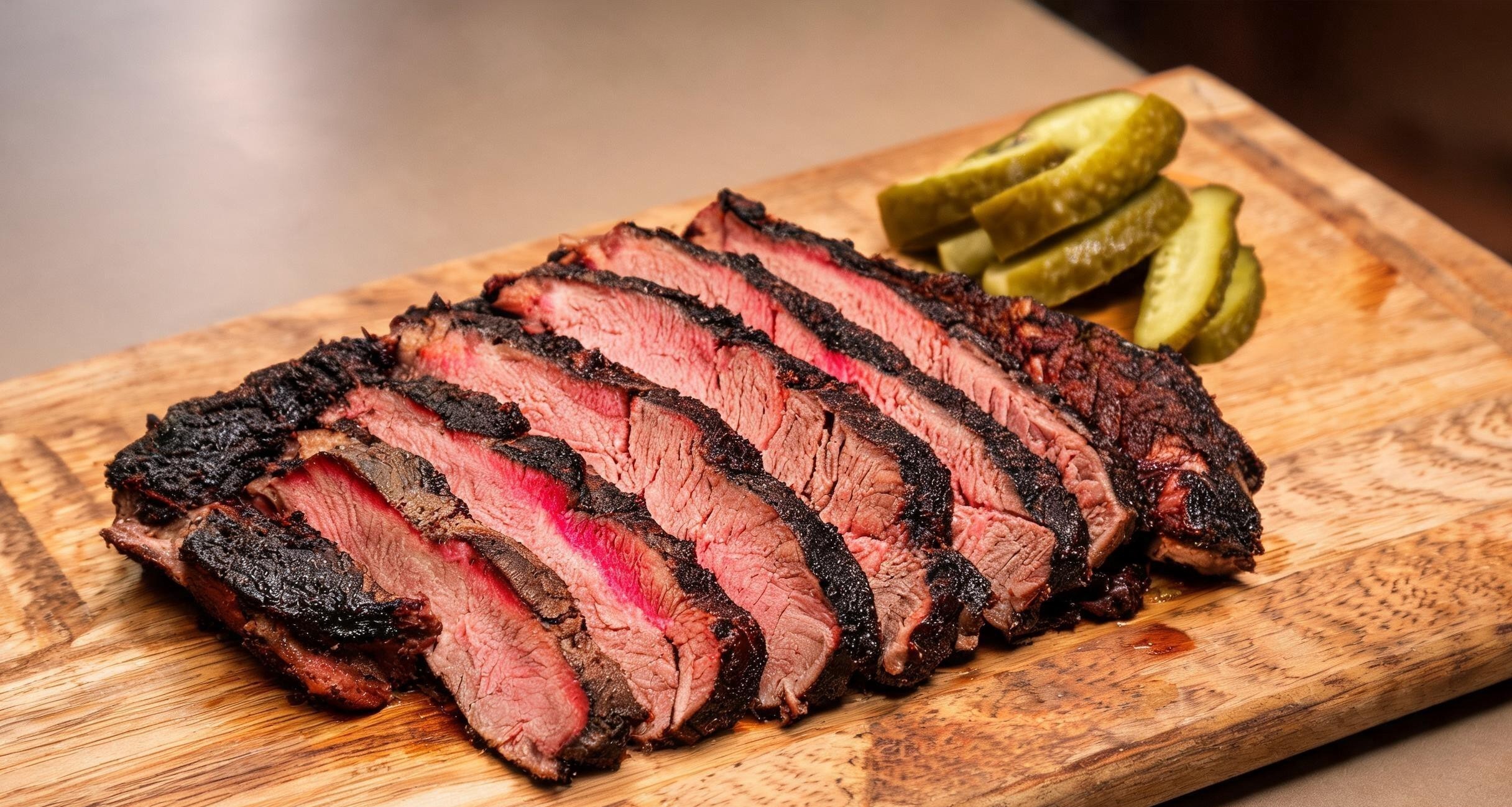
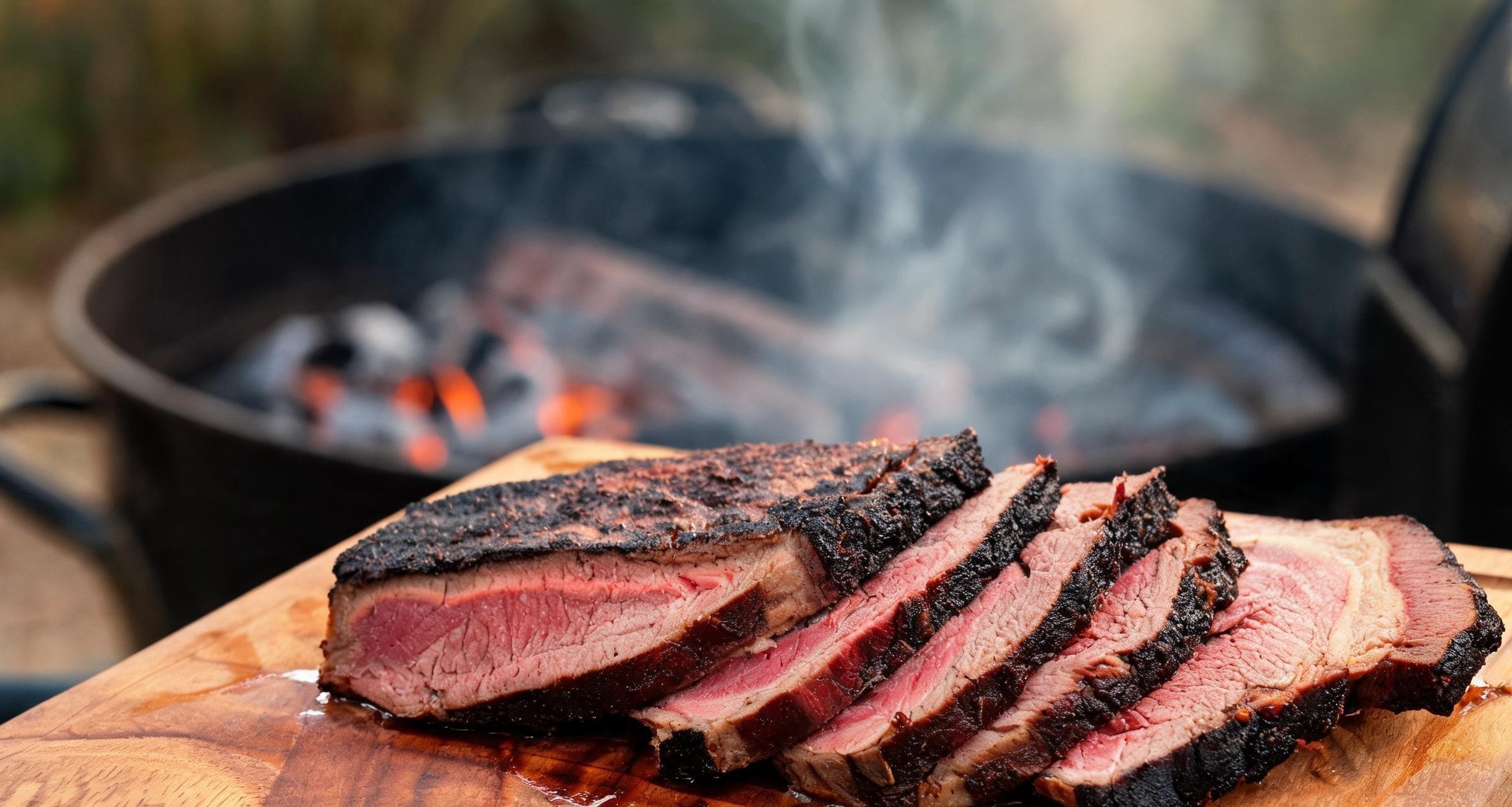
When the brisket is done, wrap it tightly in foil, then in a towel, and put it in a cooler with the lid closed for at least two hours. This resting step is not optional. The meat reabsorbs its juices during this time, and the carryover cooking finishes the tenderizing process. Slice the brisket against the grain, about a quarter inch thick. The flat should slice cleanly. The point can be chopped or sliced thicker. You should see a distinct pink smoke ring about an eighth of an inch thick just below the surface. The bark should be dark, almost black, with a peppery crust. The inside should be tender enough to pull apart with your fingers. It is a lot of work for a sandwich, but once you have made a brisket this way, you will understand why Texans treat this cut like a religion.