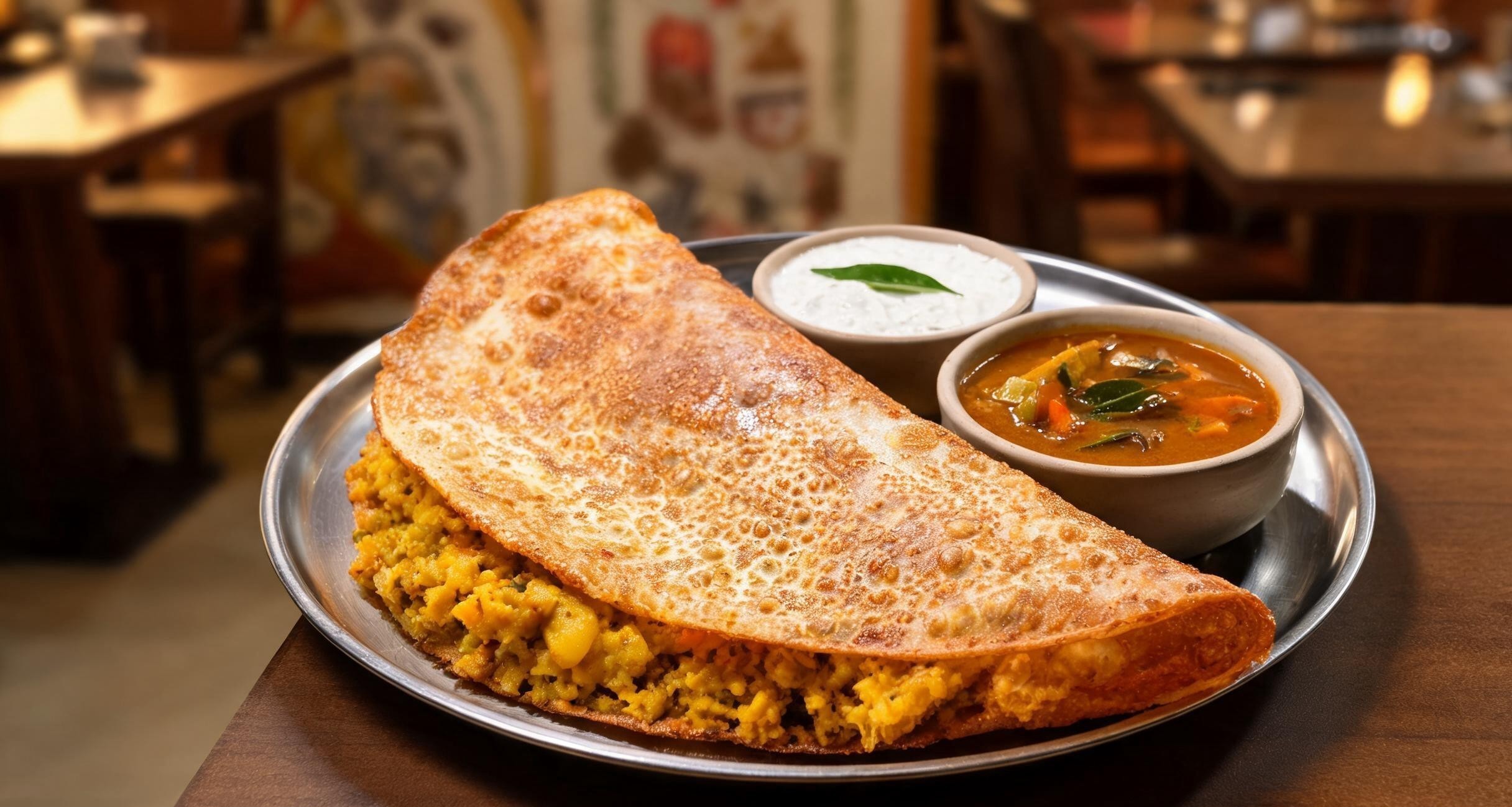
The dosa arrived at the table as large as a dinner plate, thin and crisp at the edges, with a golden-brown surface that had small darker spots where the batter had caramelized against the hot griddle. It was rolled into a loose cone and served with three small metal bowls of chutney: a bright green coconut chutney, a reddish-brown tomato and onion chutney, and a sambar, the soupy lentil stew that is served with almost every dosa in South India. The potato filling inside was spiced with mustard seeds, turmeric, and green chilies, and the whole thing cost sixty rupees, which was less than one dollar at the time. I was in Bangalore, at a restaurant called MTR, which is short for Mavalli Tiffin Room, and it has been serving dosas since 1924. The dosa I ate that day is the standard I measure every other dosa against.
A dosa is, at its most basic level, a crepe made from fermented batter. The batter is rice and urad dal, a type of split black lentil, soaked separately, ground, mixed together, and left to ferment overnight. The fermentation is what gives the dosa its characteristic tang and its airy, crisp texture. Without fermentation, you get something closer to a flat pancake, dense and bland. With proper fermentation, the batter develops bubbles and a slight sourness that makes the cooked dosa light and crispy. In South India, the batter ferments quickly because of the warm climate, usually eight to twelve hours. In cooler climates, home cooks sometimes add a pinch of yeast or leave the batter out for longer, up to twenty-four hours.
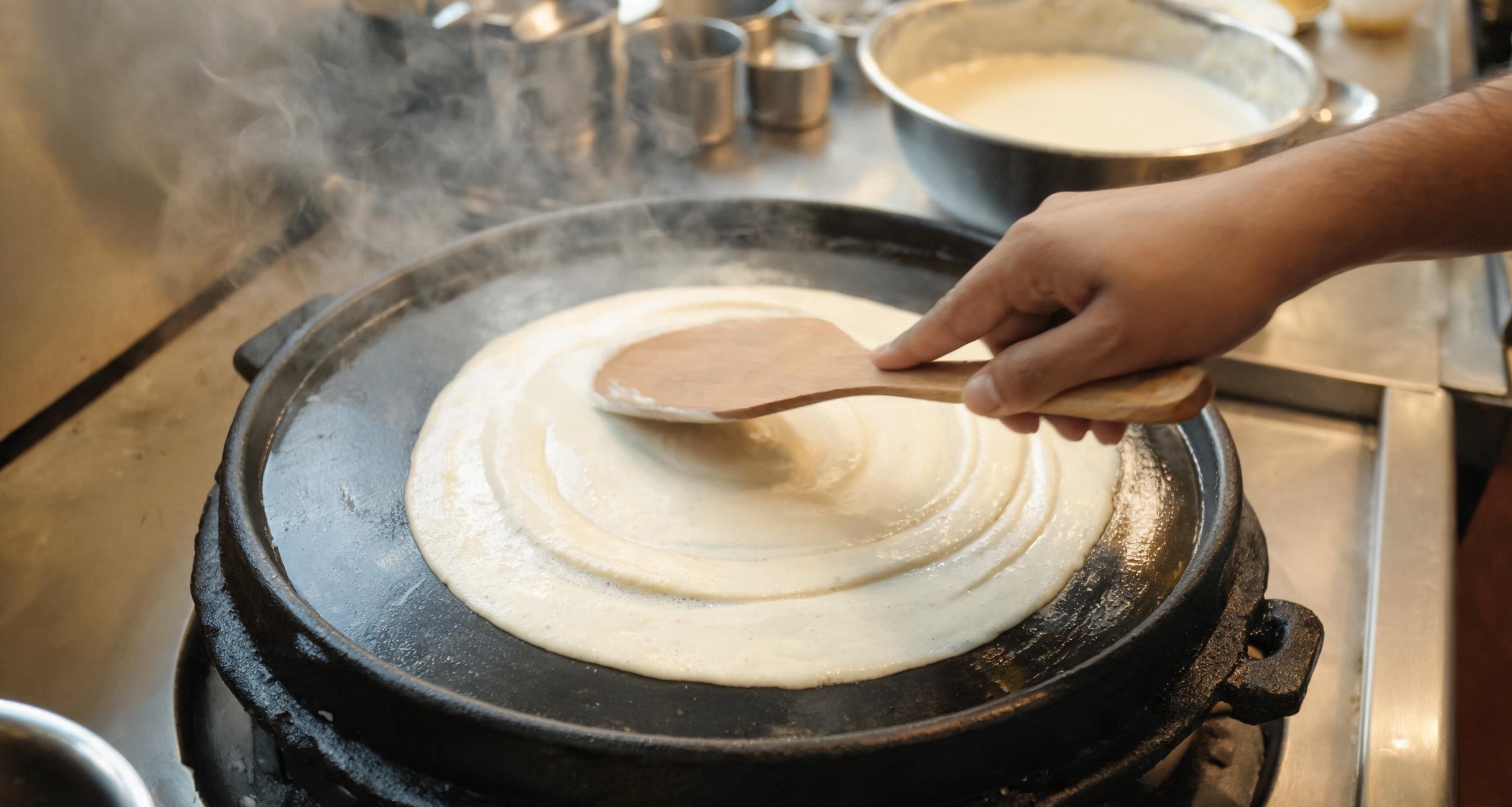
The cooking technique is harder than it looks. The batter is poured onto a hot flat griddle, called a tawa, and spread in a thin, even circle using the back of a ladle or a small bowl. The spreading is the part that takes practice. Too thick and the dosa is chewy. Too thin and it tears. The heat has to be high enough that the bottom crisps up but not so high that the top cooks before you can spread the batter. A good dosa cook can spread a twelve-inch dosa in about three seconds, moving the ladle in a tight spiral from the center outward. I tried it once, in a cooking class in Chennai, and my dosa looked like a map of Australia. The instructor, a patient woman named Lakshmi, told me that the motion comes from the wrist, not the arm, and that I was trying to force the batter instead of guiding it.
There are dozens of dosa varieties across South India. The masala dosa, the one with spiced potato filling, is the most well-known. The rava dosa is made with semolina instead of rice, which produces a crispier, lacy texture with small holes throughout. The neer dosa, from coastal Karnataka, is made with just rice and water, no lentils, and is soft and pliable rather than crisp. The set dosa, small and thick, is cooked on both sides like a pancake and served in stacks. The paper dosa, which is just a masala dosa stretched to be extremely thin and crispy, is more of a restaurant gimmick than a traditional preparation, but it is popular with tourists because it looks impressive. I ate all of these over three weeks in South India, and each one was worth ordering.
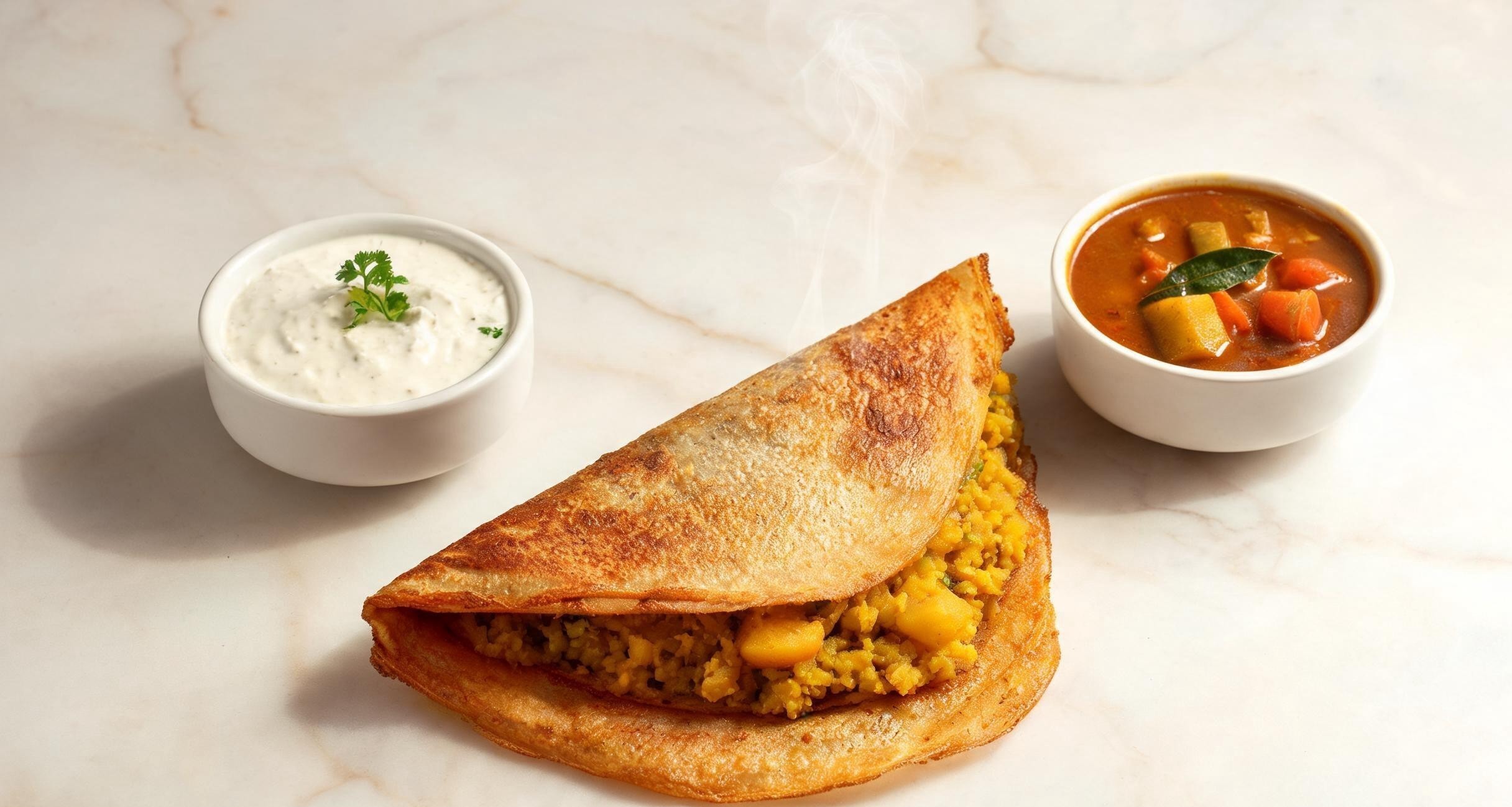
The chutneys are not optional, and they are not just garnishes. A dosa without coconut chutney is incomplete in the same way that a plate of fries without salt is incomplete. The coconut chutney is the simplest: fresh coconut, green chilies, a small amount of roasted lentils for body, and salt, ground to a paste. Some versions add tempered mustard seeds and curry leaves on top. The tomato chutney varies more, from chunky and sweet to smooth and spicy. The sambar is the third element, and in South India, every restaurant has its own sambar recipe. Some are thin and brothy. Some are thick and hearty. All of them are made with pigeon peas, tamarind, and a blend of spices that usually includes coriander, cumin, and fenugreek, tempered with mustard seeds, curry leaves, and dried red chilies in hot oil.
In Bangalore, dosas are eaten for breakfast, for lunch, and sometimes for a light dinner. They are not considered special occasion food. They are daily food, cheap enough that you can eat one every day without thinking about the cost. At MTR, the masala dosa has been the same price for years, adjusted only slightly for inflation, and the recipe has not changed since the restaurant opened. The same family has been running it for three generations. The batter is made fresh every day, and the fermentation happens overnight in the same room where the griddles are set up in the morning. I asked one of the cooks how long he had been making dosas, and he said twenty-two years, and that he still adjusts the batter slightly depending on the weather. Higher humidity means faster fermentation, which means the batter needs less time. Lower humidity means the opposite. He checks the batter by smell and consistency, not by a timer. That kind of knowledge, built up over two decades of daily repetition, is what makes a good dosa.