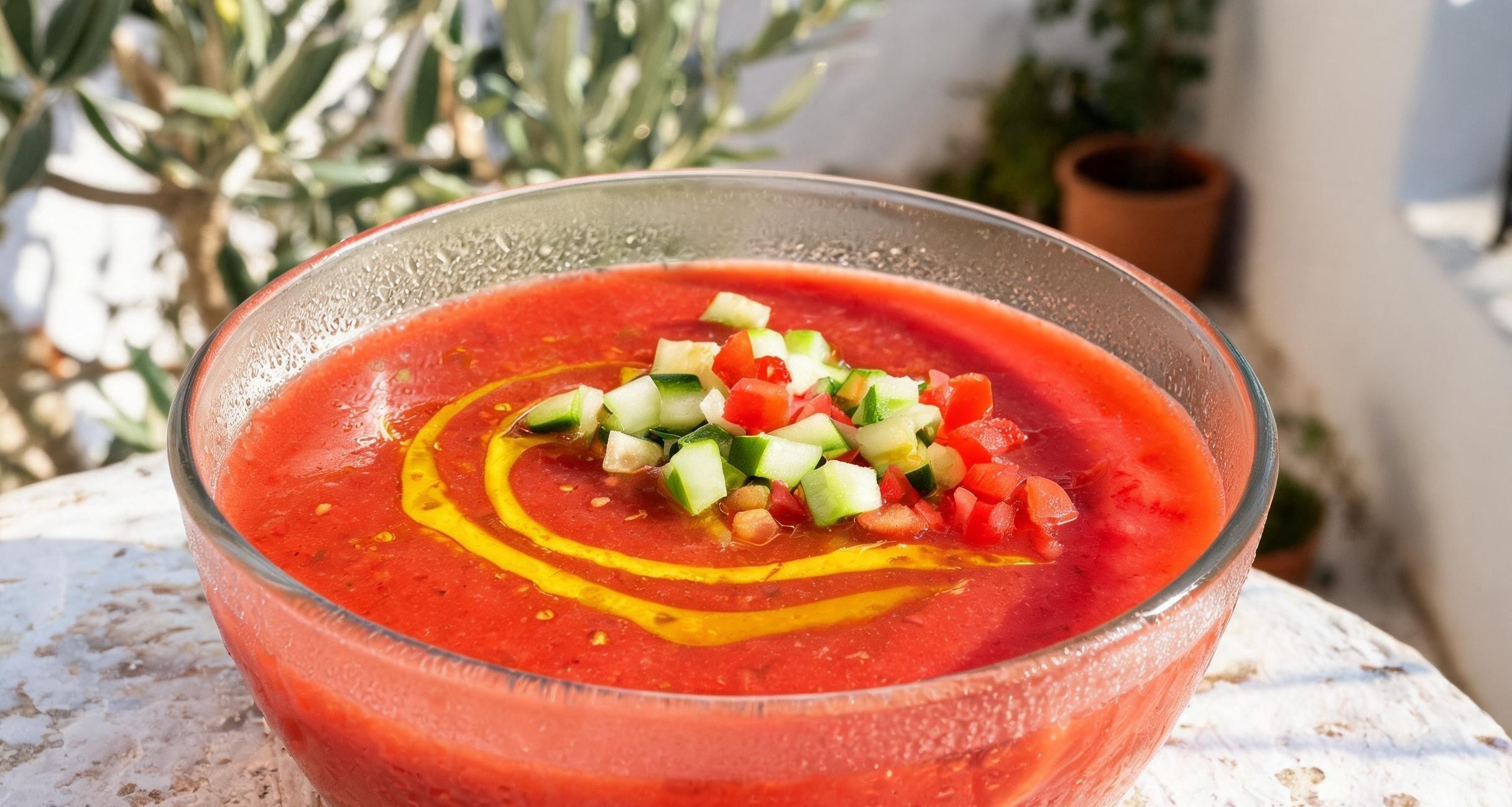
Gazpacho in Andalusia is not a fancy restaurant appetizer served in a chilled martini glass with a basil oil drizzle. It is a bowl of cold soup that a farmworker drinks at midday to survive the July heat, and it tastes like liquid summer. I had my first real gazpacho in a small town called Moron de la Frontera, about an hour east of Seville, at a bar that had no sign out front and no menu. The owner, a woman named Concha, poured it from a clay pitcher into a glass. It was bright orange, thick enough to coat the glass, and served with nothing more than a small plate of chopped cucumber, onion, and green pepper on the side for people who wanted to add crunch. It was cold, tangy, and so refreshing that I ordered a second glass before finishing the first. Concha told me she makes a batch every morning from June through September, and her family has been doing the same for as long as she can remember. It is not a special occasion dish in Andalusia. It is daily sustenance, the way iced tea is in the American South.
The ingredients for traditional gazpacho andaluz are simple: ripe tomatoes, olive oil, vinegar, garlic, salt, and bread. That is it. No cucumber, no bell pepper, no onion in the soup itself. Those ingredients are additions that vary by region and personal preference, but the classic version from the Cordoba and Seville area contains only those six things. The tomatoes need to be very ripe, the kind that are soft to the touch and deep red all the way through. In Andalusia, they use a variety called pera or tomate de colgar, which is slightly elongated and has more flesh and fewer seeds than standard round tomatoes. If you cannot find those, use the ripest tomatoes you can get at a farmers market. Supermarket tomatoes, which are bred for shipping durability rather than flavor, will produce a thin, watery soup regardless of how good your technique is. The tomatoes are the base, and if they are not good, nothing else matters.
The bread is the ingredient that surprises people. A slice of day-old white bread, soaked in water and squeezed dry, is added to the blender along with the tomatoes. It acts as a thickener and gives the gazpacho a smooth, creamy texture that it would not have otherwise. Some people skip the bread to make a lighter version, and that is fine, but it will not taste like the gazpacho I had in Moron. Concha used a dense, crumbly bread called pan de pueblo, the kind of rustic loaf that goes stale within a day and is perfect for this purpose. She tore off a chunk about the size of her fist, soaked it in a bowl of water for ten minutes, then squeezed it until it was almost dry before adding it to the blender. The bread absorbs some of the tomato liquid and blends into a smooth emulsion that gives the soup body.
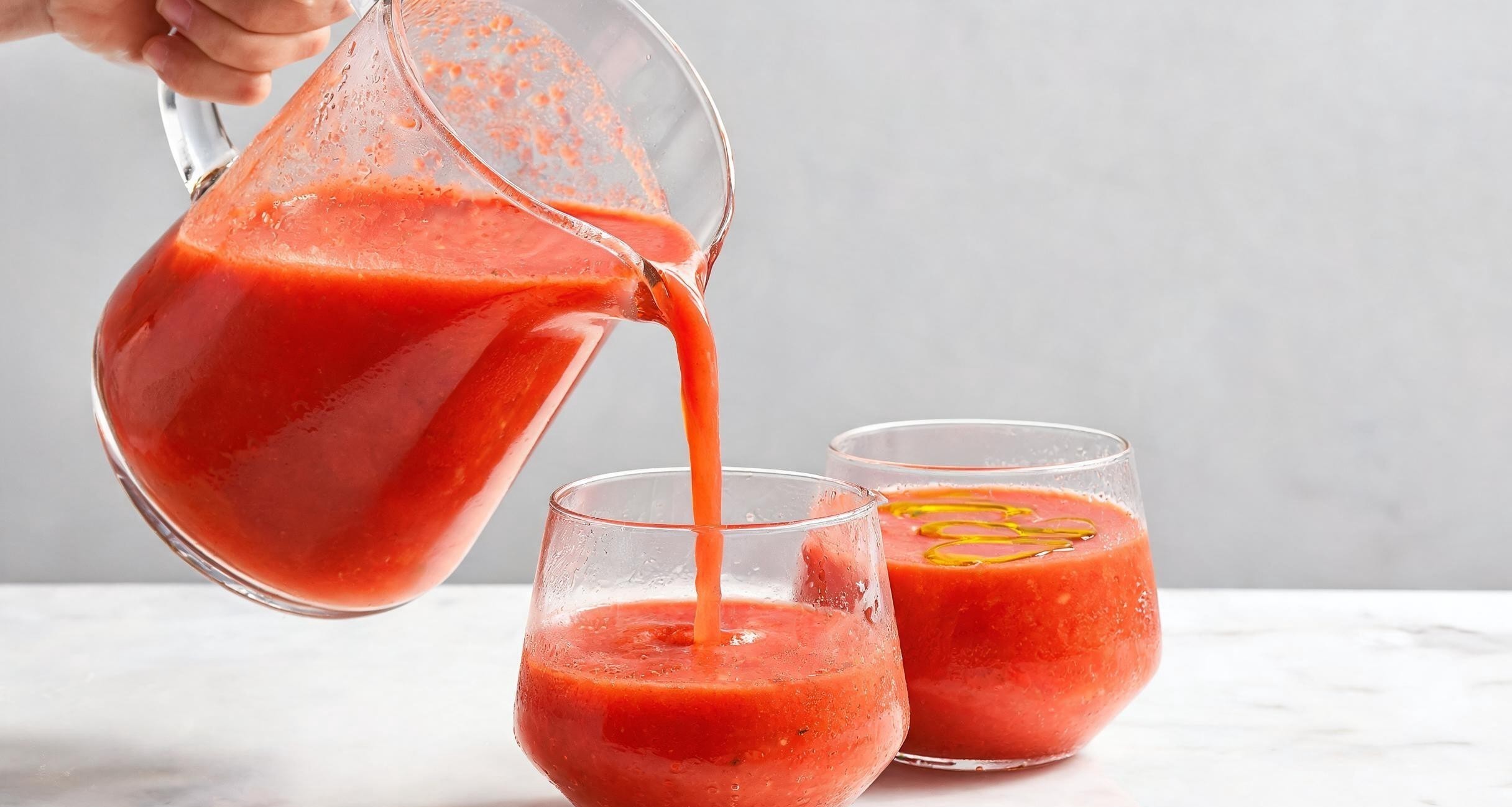
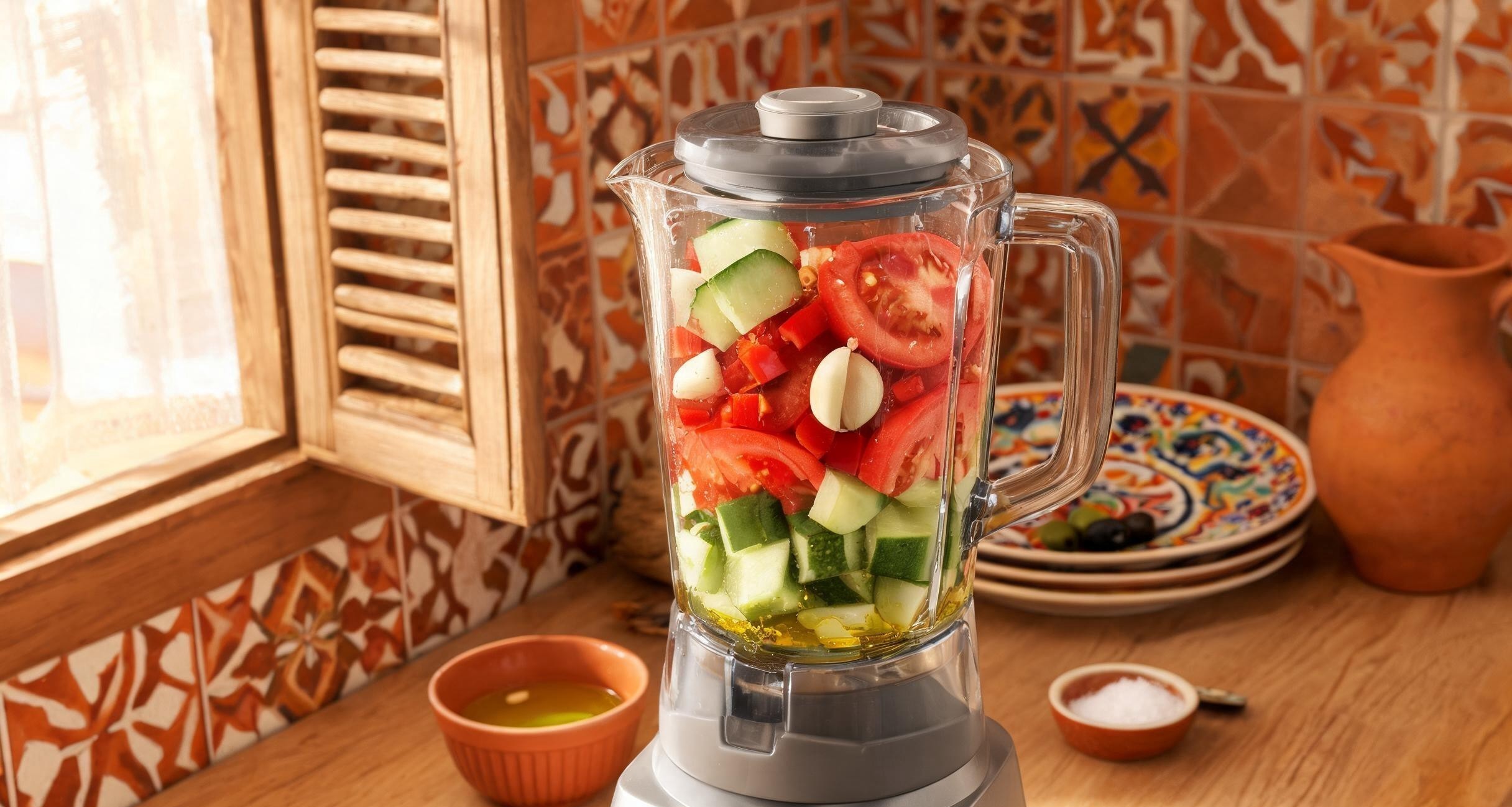
The blending process is simple but requires a good blender. Tomatoes, soaked bread, garlic, olive oil, vinegar, and salt go in, and you blend until the mixture is completely smooth. No chunks, no texture, no bits of tomato skin. It should be silky and homogeneous, the consistency of a thin smoothie. Concha told me she blends for at least three minutes, sometimes longer, until the soup has a slight sheen from the emulsified olive oil. She uses a generous amount of olive oil, about a quarter cup for a kilogram of tomatoes, and a good sherry vinegar, about two tablespoons. The oil and vinegar are what make the soup more than just cold tomato puree. They add richness, acidity, and a depth of flavor that turns a bowl of blended tomatoes into something you want to eat every day for three months.
Ajo blanco is the other cold soup of Andalusia, and it is the one most tourists have never heard of. It is a gazpacho made without tomatoes, using instead almonds, garlic, bread, olive oil, and vinegar, blended until smooth and served cold with green grapes on top. I had it at a restaurant in Malaga, and the combination of nutty almonds, sharp garlic, and sweet grapes is one of the most surprising flavor contrasts I have encountered. Ajo blanco predates the tomato gazpacho by centuries, since tomatoes did not arrive in Spain until after Columbus. It is the original cold soup of Andalusia, born from the same impulse: how do you make something cold and filling enough to eat when it is too hot to cook? The answer, whether it involves tomatoes or almonds, is always olive oil, garlic, bread, and vinegar. Everything else is regional variation, and all of it is worth trying if you find yourself in southern Spain during the summer.