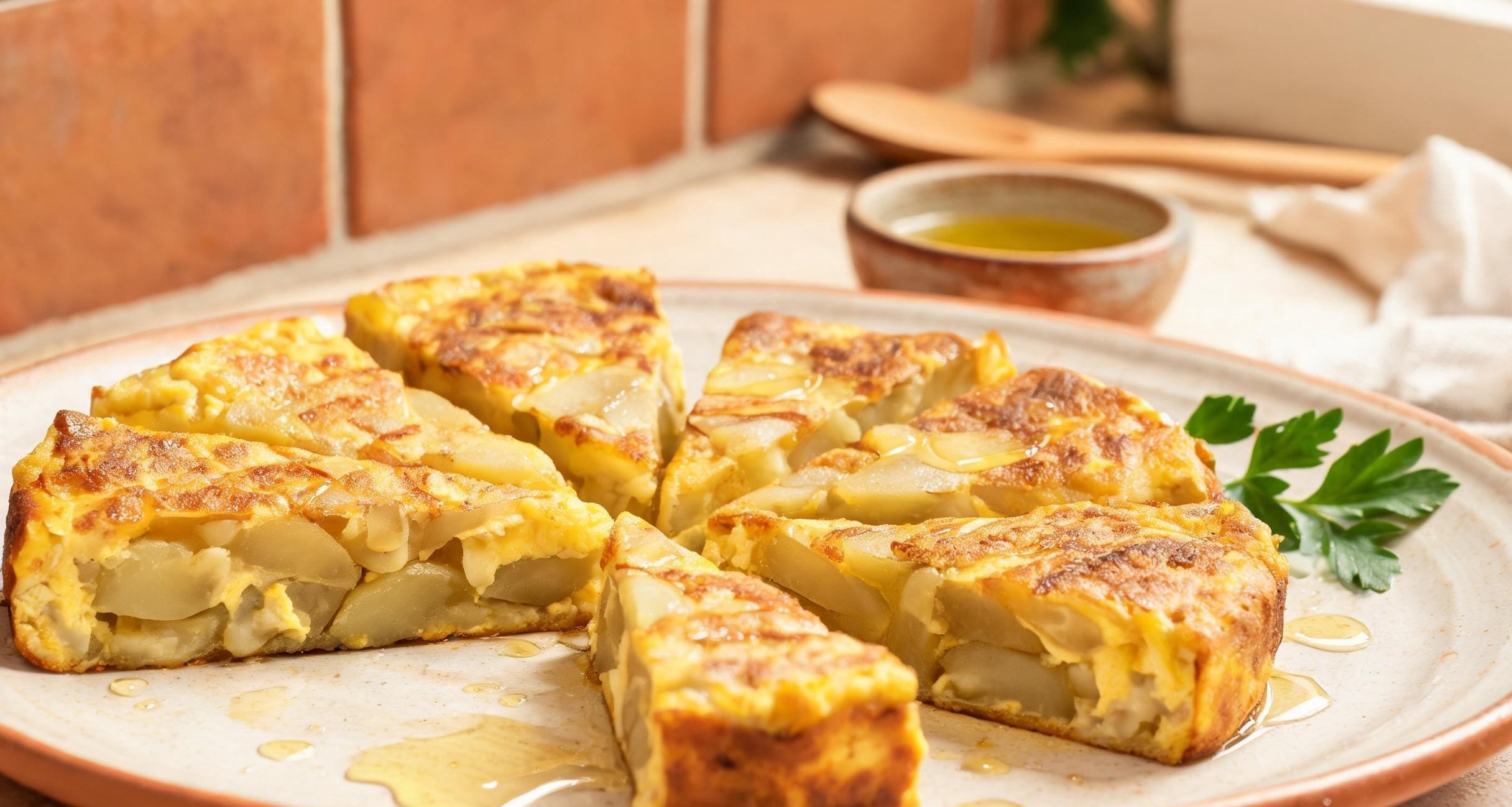
I ate Spanish tortilla almost every day for a month when I lived in Madrid, and I assumed it was a simple dish. Potatoes, eggs, olive oil. How hard could it be? The answer, for me, was very hard. My first attempt resulted in a half-cooked mess that I had to scrape out of the pan in chunks. My second attempt was burnt on the outside and raw in the center. The third was better but fell apart when I tried to flip it. The fourth tasted right but looked like it had been dropped. On the fifth attempt, something clicked. The potatoes were silky. The eggs were just set. The flip worked. I stood in my kitchen at midnight holding a plate with a perfect golden disc of tortilla and wondered why nobody had explained the key points more clearly. So here they are, the things that actually matter.
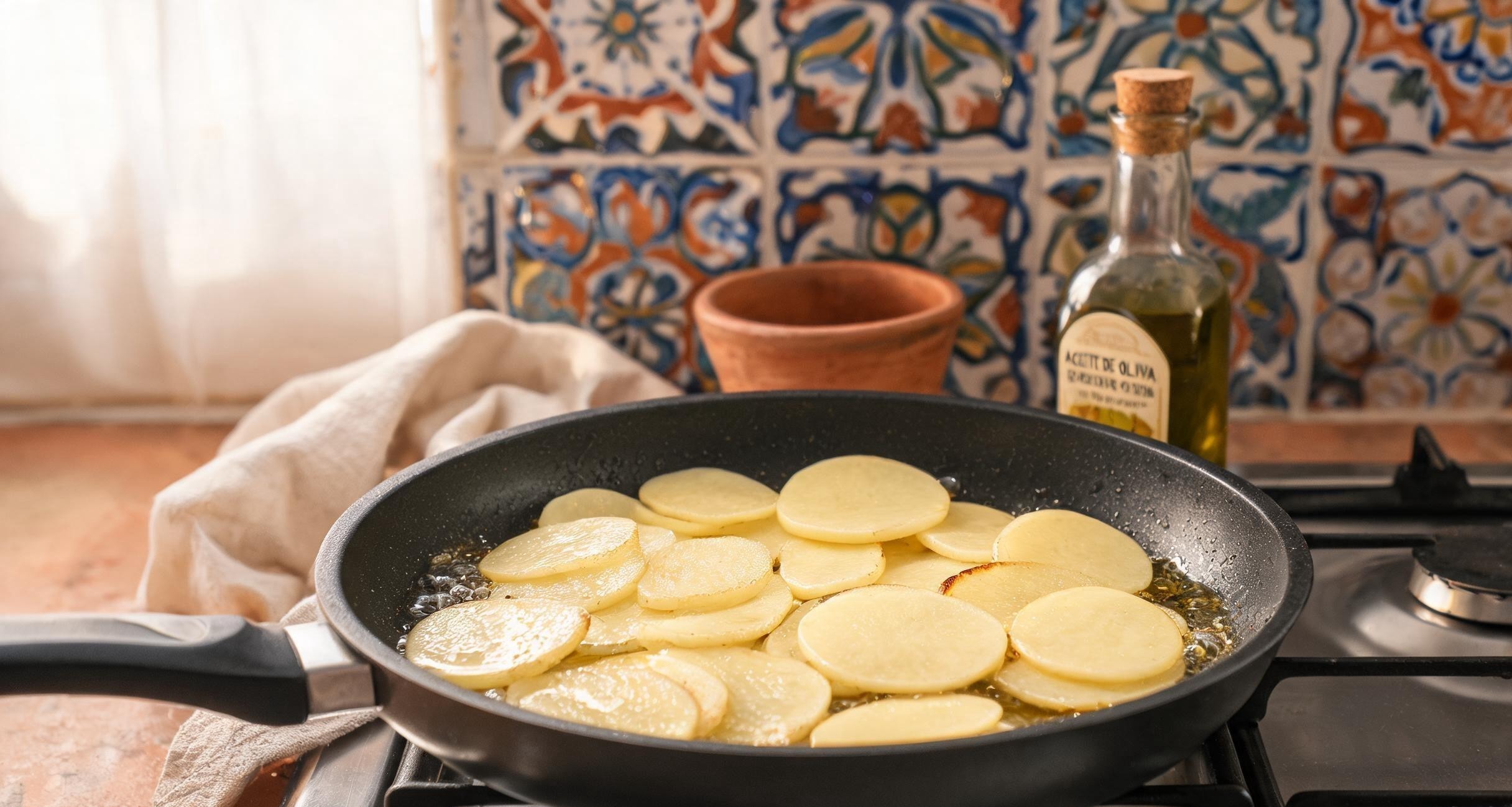
The potatoes must be cooked slowly in a generous amount of olive oil. This is the step that most recipes gloss over and the one that makes the biggest difference. Use a non-stick skillet, about 10 inches in diameter. Pour in enough olive oil to come about halfway up the sides of the potato slices. The potatoes are not frying. They are poaching in oil, cooking gently until they are completely soft and yielding. This takes about 20 to 25 minutes over medium-low heat. If the oil is too hot, the potatoes will brown and crisp, and you will end up with something closer to hash browns. You want them translucent, tender, and barely colored. Drain them well before adding them to the eggs.
The ratio matters. For a 10-inch pan, use about 2 pounds of waxy potatoes, like Yukon Gold, peeled and sliced into thin rounds, about an eighth of an inch thick. Crack six large eggs into a bowl, season with salt, and beat them lightly. When the potatoes are done, drain them thoroughly and add them to the beaten eggs while they are still warm. Let this mixture sit for about 15 minutes. The potatoes will soften further in the eggs, and the egg mixture will absorb some of the oil from the potatoes. This resting step is not optional. It is what gives the tortilla its custardy texture.
Wipe out the pan and add a tablespoon of the reserved olive oil. Heat it over medium heat and pour in the potato and egg mixture. Spread it evenly. Cook for about 4 to 5 minutes on the first side, gently shaking the pan occasionally to loosen the edges. The bottom should be set and lightly golden. Now comes the part that terrifies everyone: the flip. Place a plate that is slightly wider than the pan directly on top of the tortilla. Put one hand flat on the plate, grab the pan handle with the other, and in one quick motion, flip the whole thing over so the tortilla is on the plate, cooked-side up. Slide the tortilla back into the pan, uncooked-side down.
The flip sounds dramatic but it is mostly a matter of confidence. Hesitate, and the tortilla will slide off at an angle. Move quickly and decisively, and it works. If a little bit breaks around the edges, do not worry. The tortilla should still be fairly wet on top when you return it to the pan. Cook the second side for about 3 to 4 minutes. The center should still be slightly soft, not dry. A good Spanish tortilla is cooked through but custardy in the middle, never dry and cakey. If you like it fully set, cook it a minute or two longer on each side, but know that in Spain, the preferred texture is juicy and slightly underdone in the center.
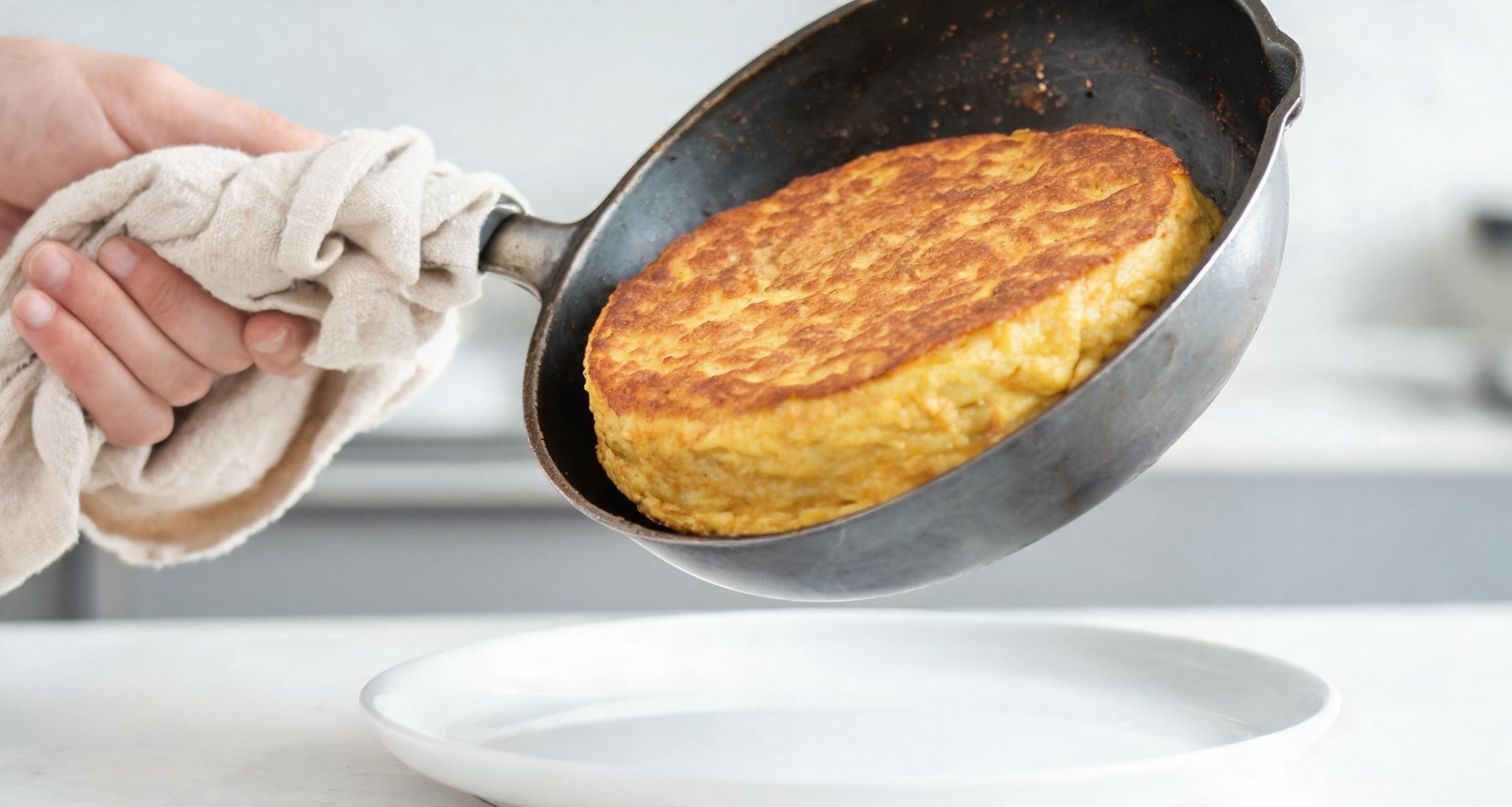
Slide the tortilla onto a clean plate and let it rest for at least 10 minutes before slicing. It should be served at room temperature, not hot. Cut it into wedges or squares. It works as a main dish with a green salad, or cut into smaller pieces as a tapa. Some people add sliced onions to the potatoes, cooked alongside them in the same oil. Some add chopped jamon or chorizo. I have made it both plain and with onions, and I prefer the plain version because it lets the texture of the potatoes and eggs speak for themselves. It is a dish that rewards repetition, and after five attempts I finally understand why the tortilla in Madrid was so much better than anything I had at home before that trip. It was not the ingredients. It was the care taken with every single step.
The flip is the moment that separates a tortilla from a mess of eggs and potatoes. You need a plate that fits exactly over the top of your pan, and you need to commit to the motion in one fluid movement. Hesitate halfway and the filling slides out onto the stove. I ruined two before getting it right, and the third one came out perfectly because I stopped thinking about it and just turned the pan over like I meant it. The second side cooks faster than the first, maybe ninety seconds, and the center should still be slightly soft when you slide it onto a plate.