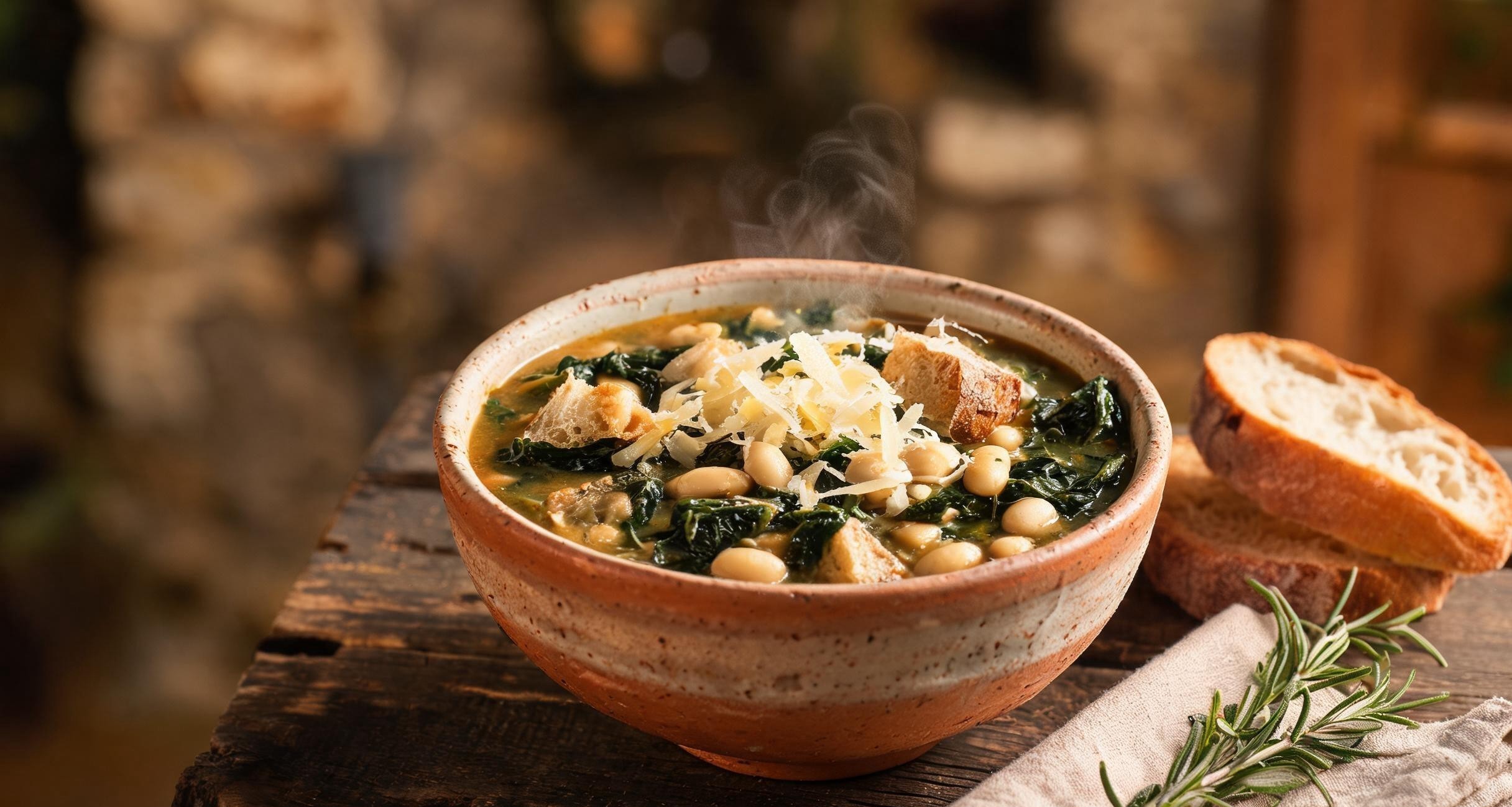
I did not understand ribollita until I ran out of fresh bread on a Tuesday in Florence and a friend told me to stop at the bakery on the corner for pane raffermo, which translates roughly to stiff bread. The baker sold me a day-old loaf for one euro, half the price of a fresh one, and my friend explained that this was the bread for ribollita, the thick Tuscan soup that is more bread than liquid by the time it reaches the table. I had eaten ribollita in restaurants before, but it always tasted like a vegetable stew with some bread floating in it. The version I made that night, following my friend's instructions rather than a recipe, was something else entirely. The bread dissolved into the broth until the whole thing became a thick, porridge-like mass, and when I baked it in the oven with a drizzle of olive oil on top, the surface crisped up while the interior stayed soft and almost creamy. It was one of the best things I have ever made from ingredients that were, in every meaningful sense, leftovers.
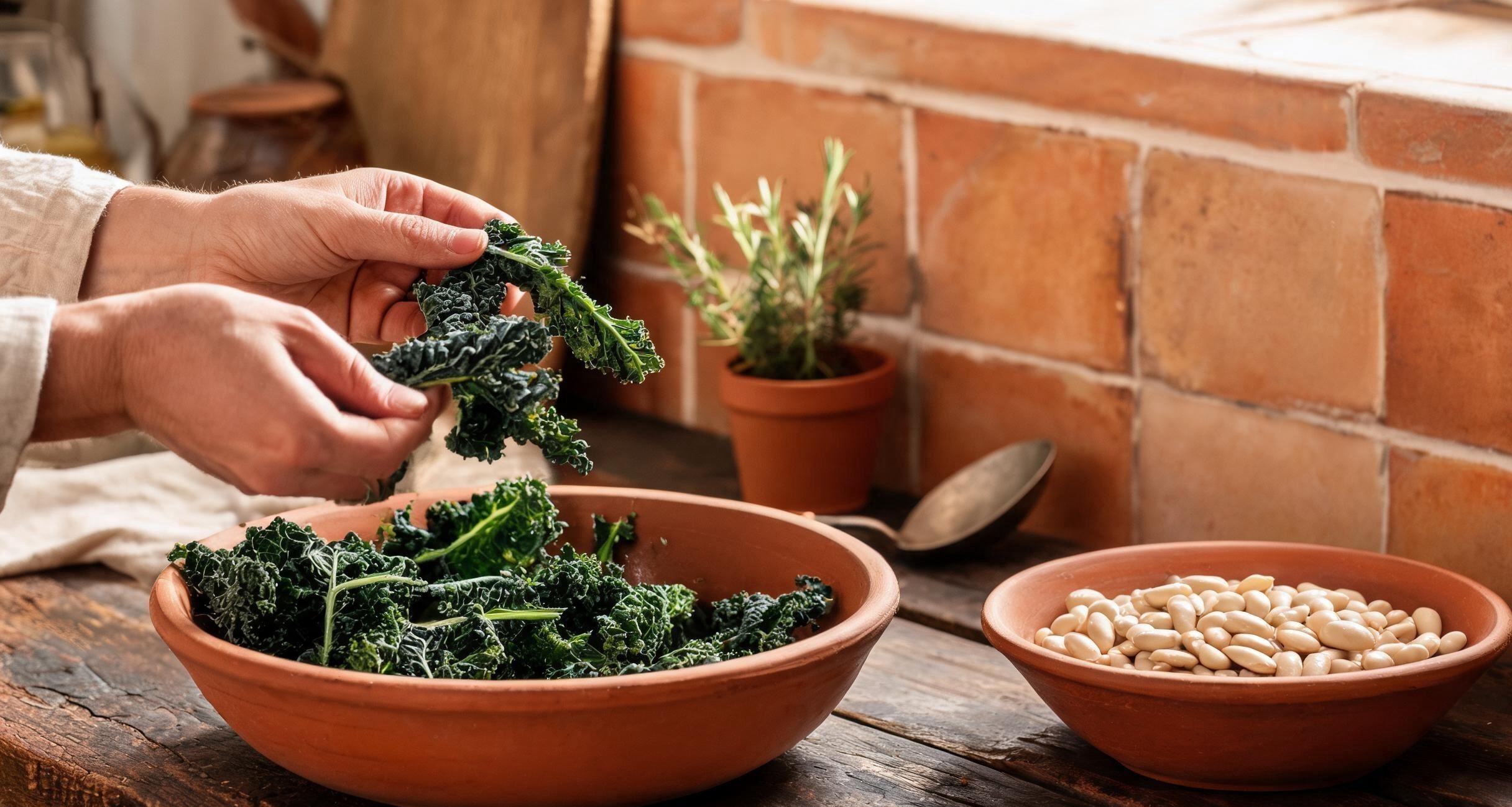
The base of ribollita is a pot of beans and greens cooked slowly together. I use dried cannellini beans, soaked overnight and simmered for about an hour and a half with a smashed garlic clove, a small piece of carrot, and a branch of rosemary. The beans should be cooked until they are completely tender but not falling apart. While the beans cook, I make the green base. An onion, two carrots, and three stalks of celery, diced and cooked in olive oil until soft. A can of crushed tomatoes goes in next, along with a large bunch of cavolo nero, the dark, bumpy Tuscan kale, stripped from its stems and chopped into ribbons. If you cannot find cavolo nero, regular kale or lacinato kale works, though the texture will be slightly different. The greens cook down in the tomato mixture for about twenty minutes, then the beans and their cooking liquid go in. Season with salt, pepper, and a generous amount of olive oil. The soup at this stage is loose and brothy. It does not look like ribollita yet.
Here is where the bread changes everything. Cut the stale loaf into thick slices, about an inch thick, and lay them in the bottom of a deep baking dish. Ladle the soup over the bread until the dish is full. The bread will absorb the liquid immediately, swelling and softening. Let it sit for at least an hour, or better yet, refrigerate it overnight. The resting time allows the bread to fully saturate and the flavors to meld. The name ribollita comes from the Italian verb ribollire, meaning to reboil, because the traditional method is to make the soup one day, let it sit, and reheat it the next. The reboiling is what gives the soup its characteristic thickness, as the bread breaks down further with each heating. My friend's grandmother in Siena reportedly made a pot on Monday and reheated portions of it through Thursday, each day thicker and more flavorful than the last.
When you are ready to serve, preheat the oven to 375 degrees. Drizzle the top of the soup with olive oil, a generous amount, because the oil is what creates the crust. Bake it for about thirty minutes, until the top is browned and crisped and the edges are bubbling. Pull it from the oven and let it rest for ten minutes before scooping it into bowls. The texture should be thick, almost like a baked pasta, with a crunchy top layer and a soft, creamy interior. The bread has disappeared entirely, absorbed into the bean and vegetable mixture, giving it body and a subtle yeasty flavor that you would not get from a broth alone. I serve it with more olive oil drizzled on top and a grating of Parmesan if I have it, though purists in Tuscany would skip the cheese.
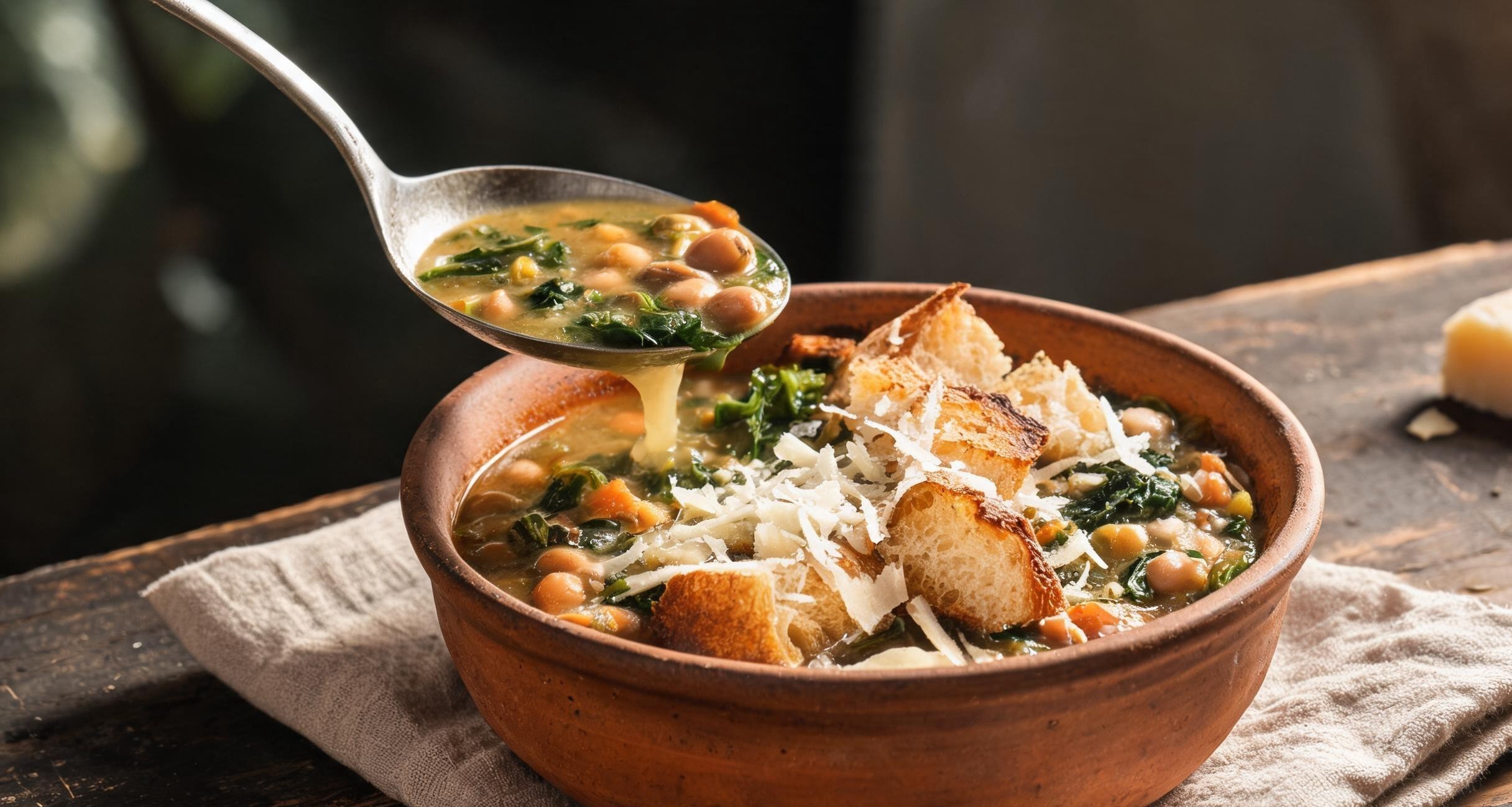
What I love about ribollita is that it is a dish that actively improves with age, which is the opposite of what we are taught about freshness. Day-old bread makes better ribollita than fresh bread. A soup that has been reheated twice tastes better than one made and served immediately. It is a practical recipe, born from a time and place where nothing was wasted, and it turns the concept of leftovers into something that does not feel like a compromise. I make a large batch every Sunday now, using whatever greens are in the fridge and a loaf of bread that is past its prime. The soup feeds me for three days, and each day it tastes a little different, a little thicker, a little more integrated. By Wednesday I am sorry it is gone, and Thursday I start thinking about next Sunday's batch.