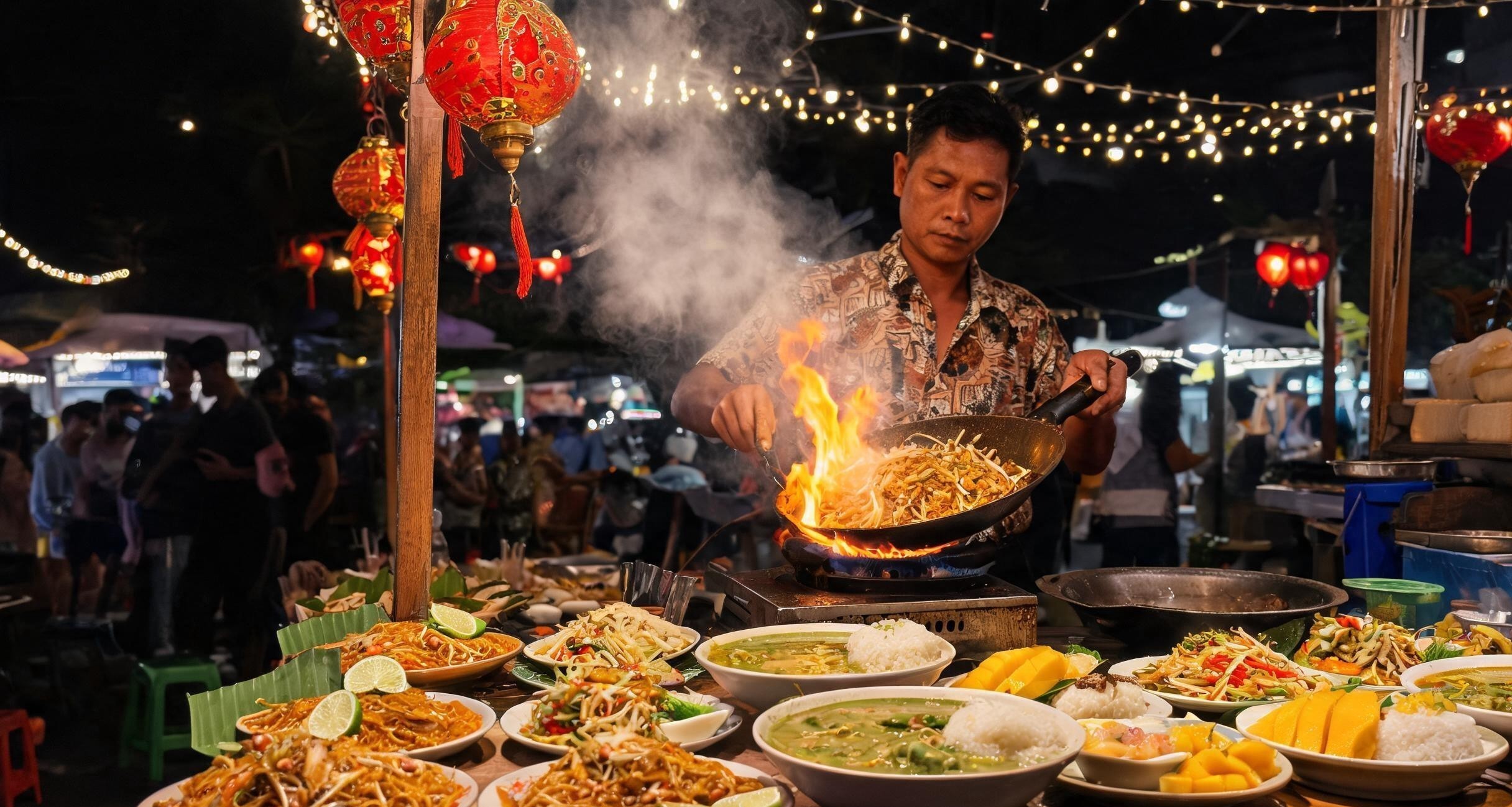
The woman at the pad thai stall in Chatuchak Weekend Market has been making the same dish for twenty-eight years. I know this because I asked her, and she answered in the clipped, practical English of someone who has repeated the same sentence to foreigners hundreds of times. The stall is small, a metal cart with a built-in gas burner and a carbon steel wok that has been seasoned so long it is almost black. The menu is pad thai, and only pad thai. There is no chicken pad thai or shrimp pad thai or vegetarian pad thai. There is one version, made with rice noodles, tofu, dried shrimp, egg, bean sprouts, peanuts, tamarind sauce, and lime, and if you want something else, you go to a different stall. I ordered and stood to the side while she fired up the wok. The gas flame was high, almost a jet, and when she added the oil and the garlic hit the hot metal, the aroma filled the immediate area like a wall. She cracked an egg into the wok with one hand, tossed the noodles with the other, added the tamarind sauce, and finished with a squeeze of lime and a handful of crushed peanuts. The whole process took less than two minutes. The pad thai was smoky, tangy, slightly sweet, and completely different from the pad thai I had eaten in Thai restaurants in the United States.
Chatuchak is the largest weekend market in Bangkok, with more than fifteen thousand stalls spread across thirty-five acres. Most people go for the clothes, the souvenirs, the antiques. I went for the food section, which occupies a long row of stalls near the center of the market where vendors have been cooking the same dishes for decades. The pad thai woman was one of several I visited that afternoon. Next to her was a man selling khao man gai, boiled chicken on rice with a ginger-garlic dipping sauce, which he served from a massive pot of broth that had been simmering since six that morning. Across the aisle was a woman making kanom krok, small coconut-rice pancakes cooked in a cast-iron mold with a dimpled surface, each pancake about the size of a golf ball. They came out hot, crispy on the outside and creamy inside, and she served them in a paper boat for forty baht, which is about a dollar. I ate three servings and would have eaten more if I had not already filled up on pad thai and chicken rice.
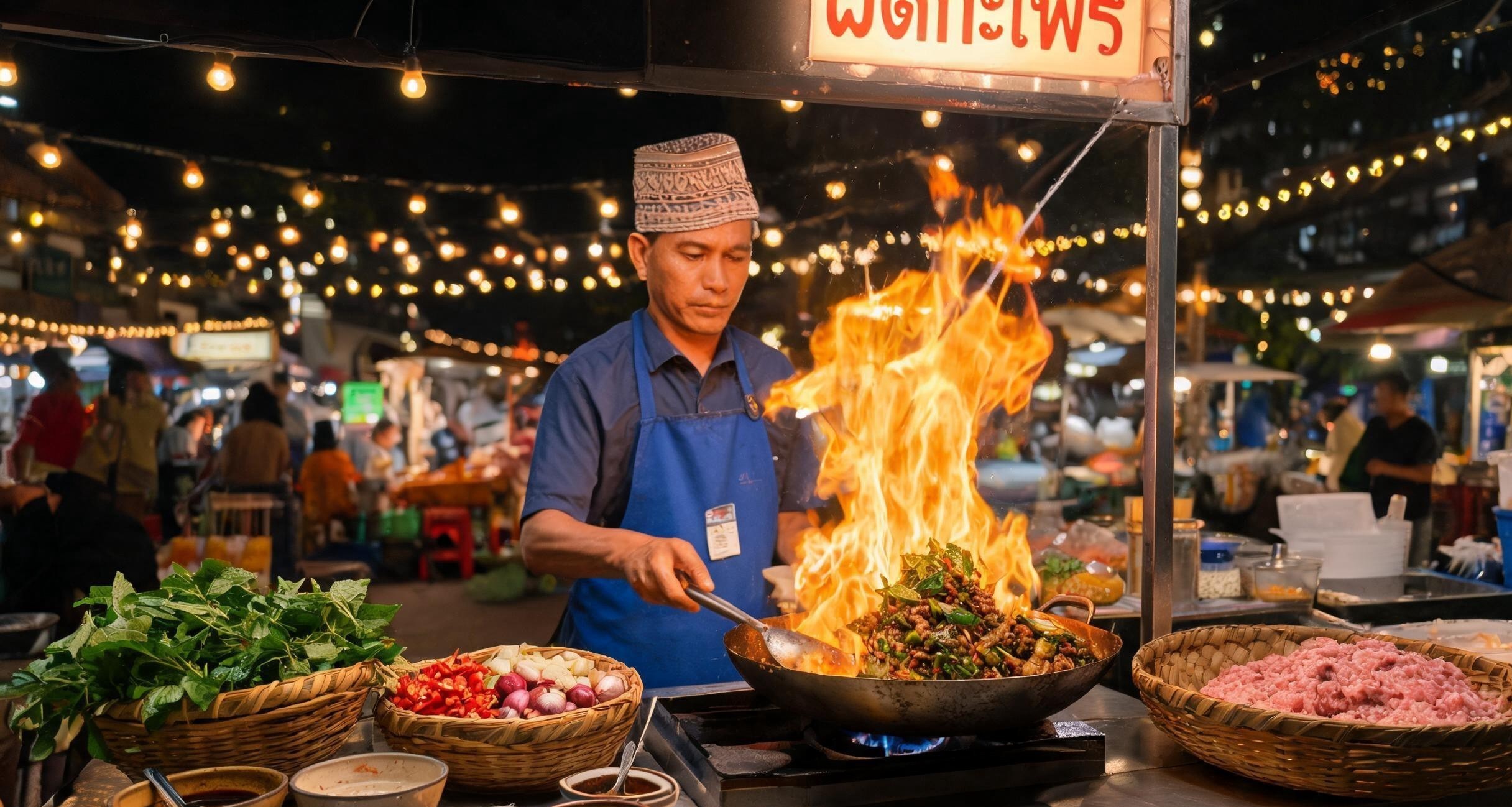
The night market at Ratchada Train Market, open every evening from five to midnight in the parking lot of a defunct shopping mall, is a different experience. The vendors here are younger, the lighting is better, and the food is more experimental, reflecting a Bangkok food scene that has been evolving rapidly in the last decade. But even here, the veterans have staked their ground. An older couple runs a stall selling only grilled pork skewers, mu ping, which they have been marinating in a blend of soy sauce, garlic, palm sugar, and coriander root for the same twenty years. The pork is grilled over charcoal and served with sticky rice and a spicy jaew dipping sauce. I ate four skewers standing next to a group of university students who were also eating four skewers, and we shared the same silent satisfaction of good pork cooked over live fire. No conversation necessary. The food did the talking.
What the night markets in Bangkok share, from Chatuchak to Ratchada to the smaller neighborhood markets, is a respect for the vendor who stays in one place and does one thing for a very long time. The best stalls are not the ones with the biggest signs or the most Instagram followers. They are the ones with the oldest woks, the deepest seasoning on their grills, and the longest lines of locals. I asked a Thai friend why she always goes to the same som tum stall, a green papaya salad cart on Silom Road, and she said it was because the woman there has been making it the same way since before my friend was born. The papaya is always fresh. The lime is always right. The balance of sweet, sour, salty, and spicy is always precise, because the vendor has made tens of thousands of these salads and her hands know the proportions without measuring. That consistency is what builds a following in Bangkok's markets. It is not novelty. It is reliability.
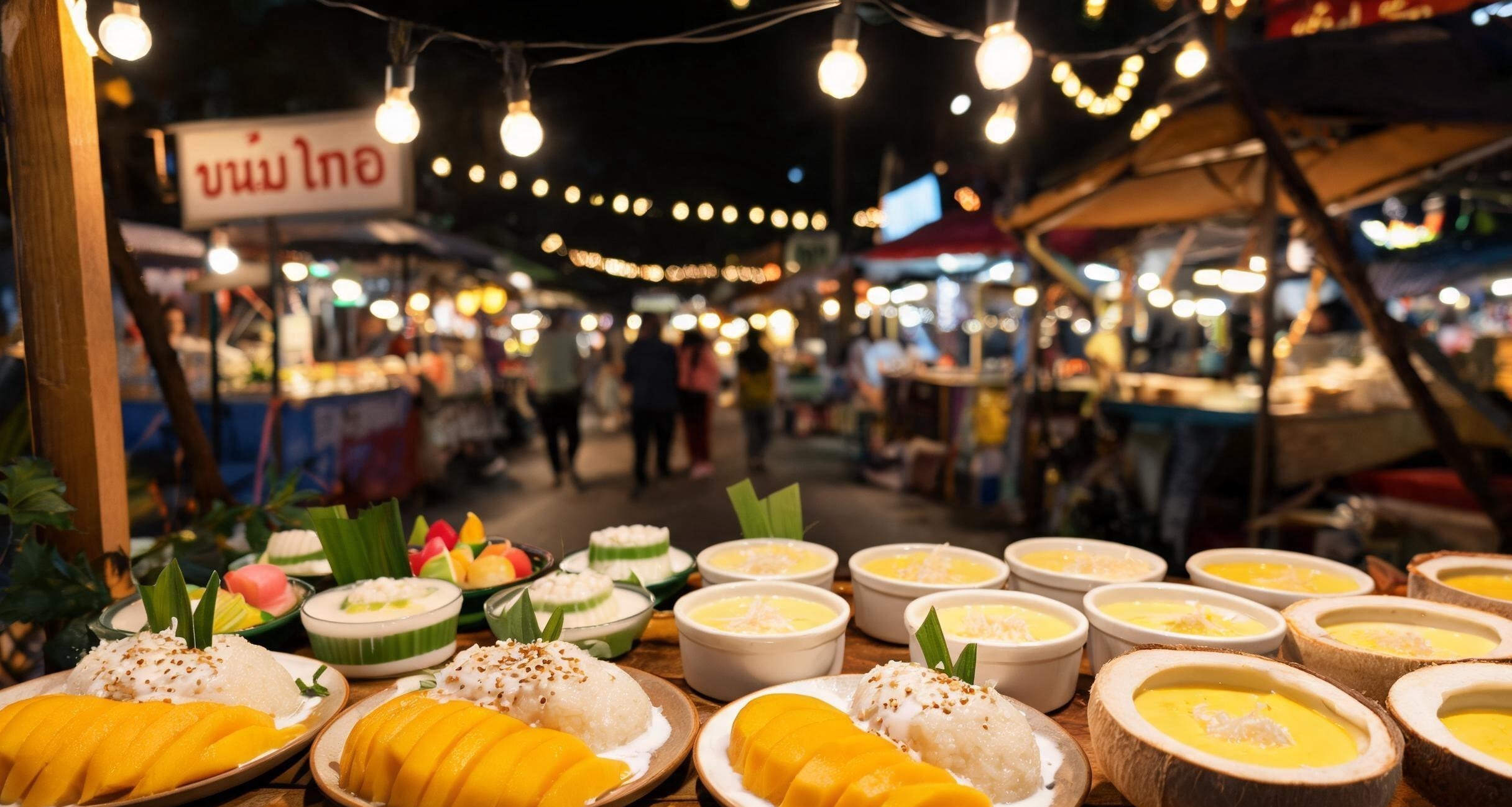
The mango sticky rice vendors are a case study in timing. Mango season in Thailand runs from March to June, and during that window, the mango sticky rice stalls at every market in Bangkok go from decent to extraordinary. The mangoes are small, golden, impossibly sweet, and the sticky rice, cooked in coconut milk with a pinch of salt, becomes the perfect vehicle for the fruit. I ate mango sticky rice at three different markets during peak season, and the best version was at a stall run by a woman who told me she only serves it when the Nam Dok Mai mangoes are available, because other varieties do not meet her standard. For eight months of the year, her stall sells nothing. For four months, she has a line. That kind of commitment to quality, the willingness to shut down rather than compromise, is common among Bangkok's market vendors, and it is the reason the food culture here remains one of the best in the world despite the rapid development and tourism that have changed so much else.
Bangkok's night markets are not theme parks or food halls curated for visitors. They are working markets where people come to eat after work, after school, after running errands. The vendors are not performing a tradition for an audience. They are feeding their neighbors, the same way they have for years, and they do it with a skill and speed that can only come from repetition. The food is cheap, it is fast, it is made in front of you, and it is better than what you will find in most restaurants. If you visit Bangkok and eat only at sit-down restaurants, you will have a good trip. If you eat at the markets, you will have a better one.