The first time I tasted real Thai green curry paste, I was standing in a wet market off Sukhumvit Road in Bangkok, and a woman I had known for about four minutes was spooning it out of a granite mortar and into a plastic bag for me to take home. She had just pounded it right there, on a folding table next to her vegetable stand, in maybe twenty minutes. The smell was sharp and herbal in a way that made the green curry paste I had been buying from Thai Kitchen in little glass jars back in Oaxaca seem like a completely different product. Because it was. I did not know that yet, but I would.
The vendor -- her name was Piyanuch, though she told me to call her Pi -- explained that the paste from the jars was fine for people in a hurry, but that it was missing something. She used the Thai word "nam jai," which roughly translates to heart or spirit, but in the context of food it means the particular energy that comes from making something by hand with attention. I nodded politely and bought the bag of paste for sixty baht, which was less than two dollars. That night, in my hostel kitchen, I fried the paste in a wok with some coconut milk, added chicken thigh, Thai eggplant, and kaffir lime leaves from another stall, and the curry that came out was unlike anything I had eaten before. The paste had a brightness to it, an almost electrical herbal quality, that no jarred version I have tried since has ever matched.
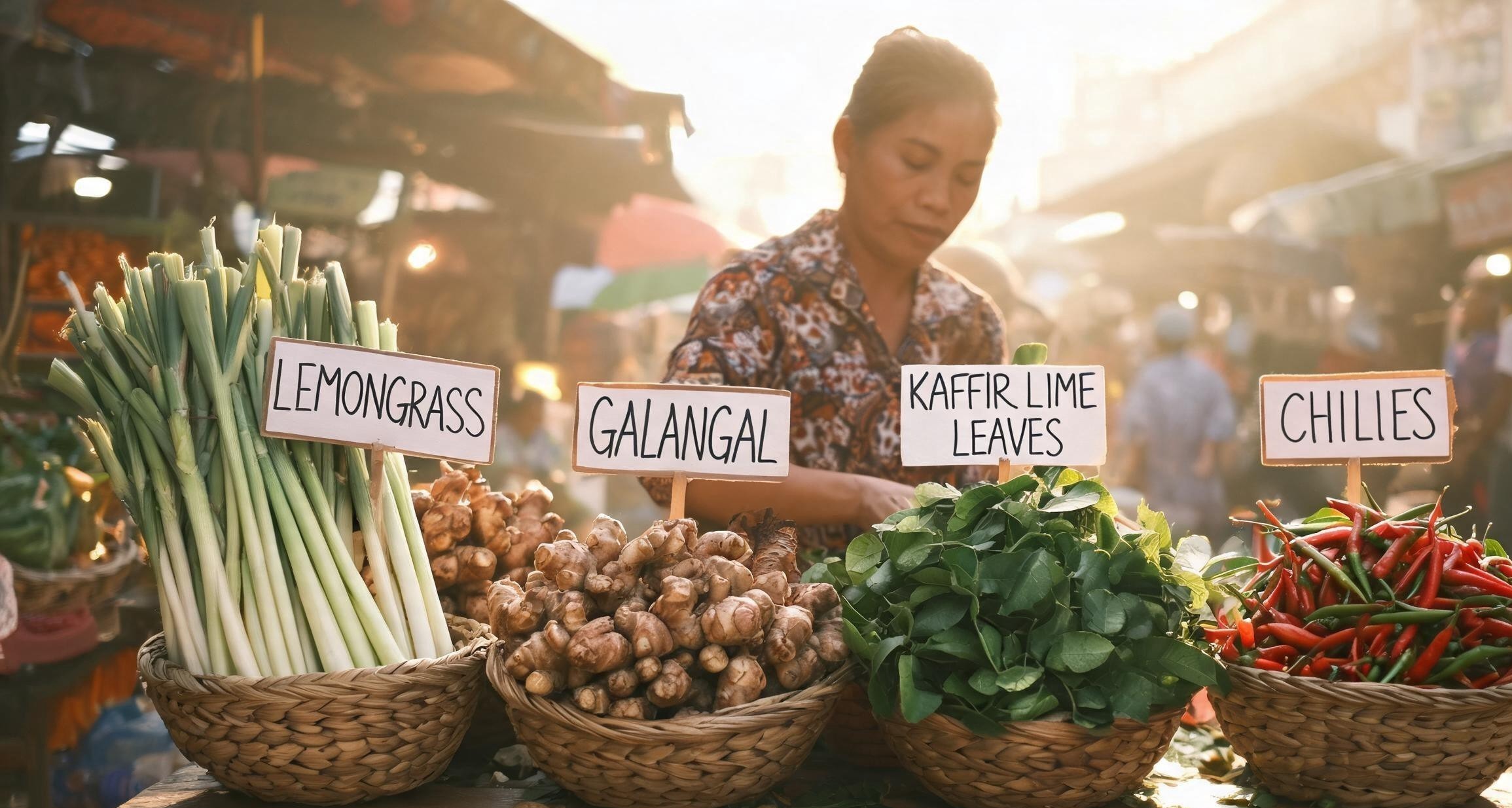
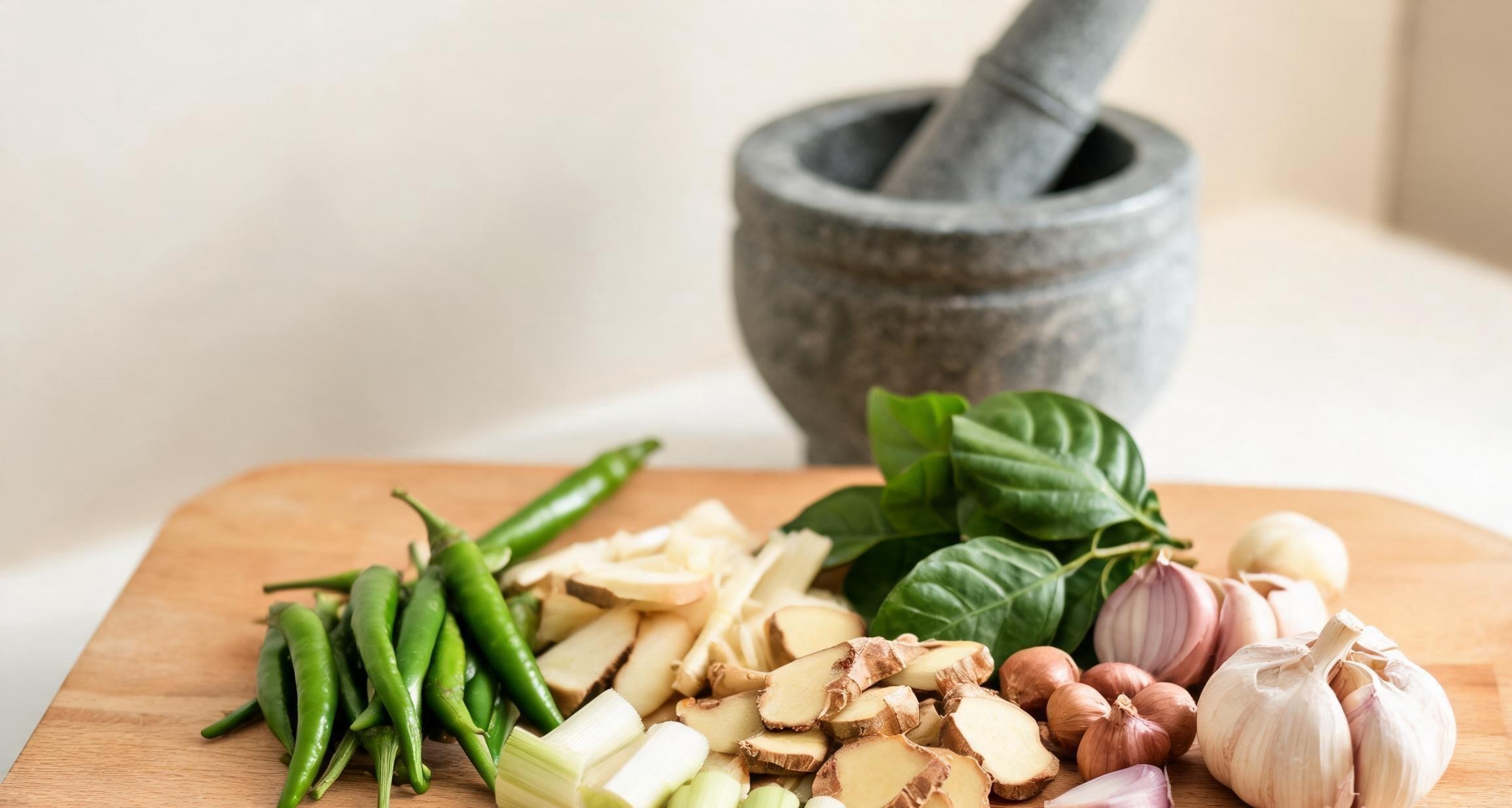
If you want to make green curry paste at home, you need to start by accepting that the ingredient list is longer than you probably expect. For one batch of paste, enough to make curry for four people, you need: six to eight green bird's eye chilies (more if you like heat, fewer if you do not), three stalks of lemongrass, one thumb-sized piece of galangal, the zest of one kaffir lime, two small shallots, four cloves of garlic, one teaspoon of shrimp paste (kapi), and two coriander roots. The coriander roots are the one ingredient that trips people up. Most grocery stores sell cilantro with the roots cut off. You need to find a Thai or Vietnamese market, or grow your own cilantro and pull the whole plant. The roots add an earthy depth that the leaves simply cannot replicate.
Let me talk about the mortar. You cannot skip this part. A food processor will chop the ingredients, and you will get a paste, technically. But a food processor cuts through fiber. It shears the lemongrass and galangal into tiny pieces. A mortar pounds them. The abrasive action of stone against stone breaks down the cell walls of the ingredients and releases their oils in a way that spinning blades do not. The difference shows up in the curry. Pounded paste produces a sauce with more depth and a smoother mouthfeel. Processed paste tends to leave small, detectable chunks of lemongrass and galangal floating in the sauce, which is not pleasant. I use a Thai granite mortar that is about eight inches across and weighs close to twelve pounds. You can buy one online for around twenty-five dollars. It is worth the investment if you plan to make Thai curry more than once or twice a year.
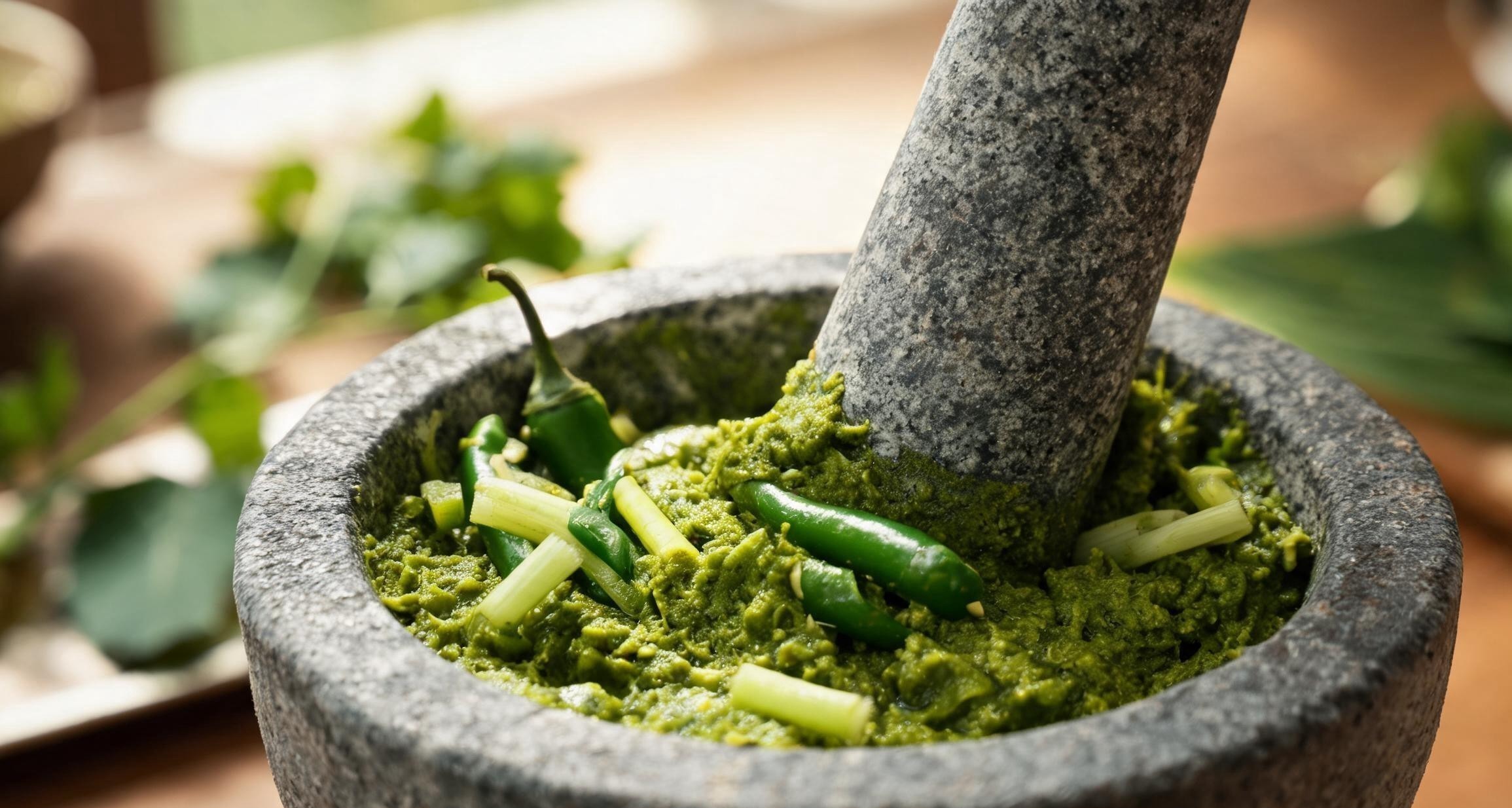
Here is the order of operations. Rough-chop everything first: slice the lemongrass into thin rounds (use only the tender bottom four inches of each stalk, discard the woody tops), chop the galangal into small pieces, roughly mince the chilies, shallots, and garlic, and grate the kaffir lime zest. Start with the hardest ingredients in the mortar. Add the lemongrass, galangal, chilies, and kaffir lime zest first. Pound with the pestle using a grinding motion -- not a sharp strike, more of a circular scrape against the bottom of the bowl. This takes patience. After about five minutes, the hard ingredients should be starting to break down. Add the shallots, garlic, and coriander roots, and keep pounding. Finally, add the shrimp paste. It is sticky and pungent, and it binds everything together. The whole process takes about fifteen to twenty minutes. The paste is done when it is a uniform bright green and you cannot distinguish individual pieces of anything in the bowl.
If you cannot find fresh galangal, fresh ginger is an acceptable substitute, though the flavor will be different. Galangal has a piney, almost medicinal quality that ginger does not. If you are in a city with an Asian grocery store, you will likely find fresh galangal in the produce section. It looks like ginger but with lighter skin and harder flesh. Do not bother with dried galangal. It has almost no flavor compared to fresh. For the coconut milk, I use the Thai Kitchen brand because it is widely available and has a high fat content, which matters for curry. You want the full-fat version, not the lite. The can should feel heavy when you pick it up, and the ingredient list should list coconut extract as the first ingredient, not water. I usually shake the can gently before opening it. The thick cream rises to the top, and that cream is what goes into the wok first.
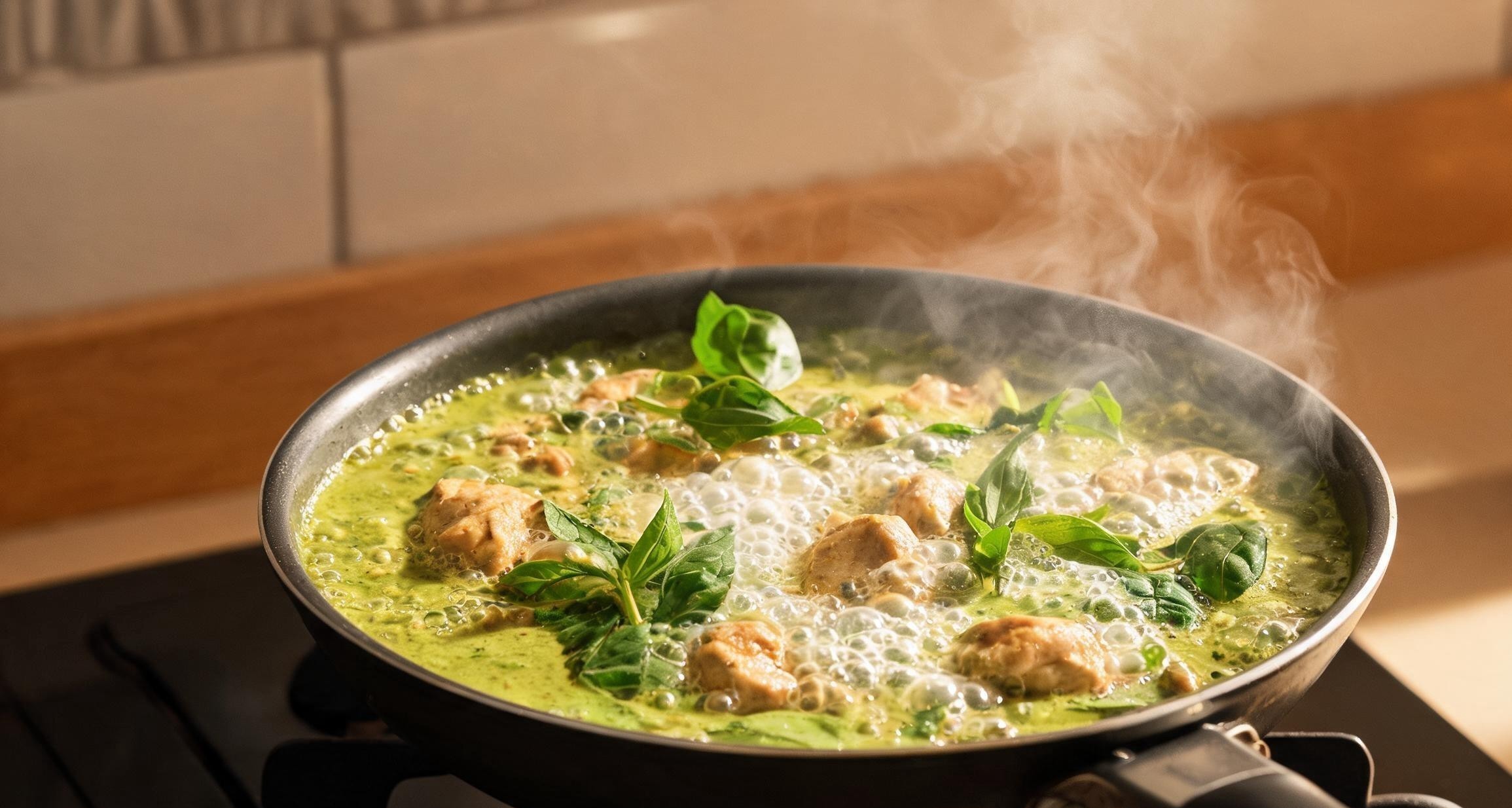
To turn the paste into curry, heat a wok or deep pan over medium-high heat. Spoon the thick cream from the top of the coconut milk into the wok and let it heat until it begins to bubble. Stir it occasionally. Within a minute or two, the cream will start to separate. You will see the oil from the coconut rising to the surface and the solids settling. This is the moment to add two or three tablespoons of your paste. Stir the paste into the split coconut cream and let it fry for about two minutes. The paste will darken slightly and the kitchen will fill with that sharp, herbal aroma. Then pour in the rest of the coconut milk, add your protein -- I use boneless chicken thigh cut into bite-size pieces -- and bring it to a simmer. Add Thai eggplant, halved, and about six torn kaffir lime leaves. Simmer for ten to twelve minutes, until the chicken is cooked through and the eggplant is tender. Season with a tablespoon of fish sauce and a teaspoon of palm sugar. Serve over jasmine rice.
I have been making this curry at home for about six years now, roughly once a month. The first few times, the paste was inconsistent -- sometimes too salty, sometimes the chilies overwhelmed everything else. But it gets easier. Your arm learns the rhythm of the mortar. You develop a sense for when the paste has reached the right texture. And after a while, you start adjusting the recipe to suit your own taste. I add one extra chili now. I use a little more galangal than I used to. These small changes accumulate, and eventually the curry becomes yours. Pi would probably approve.