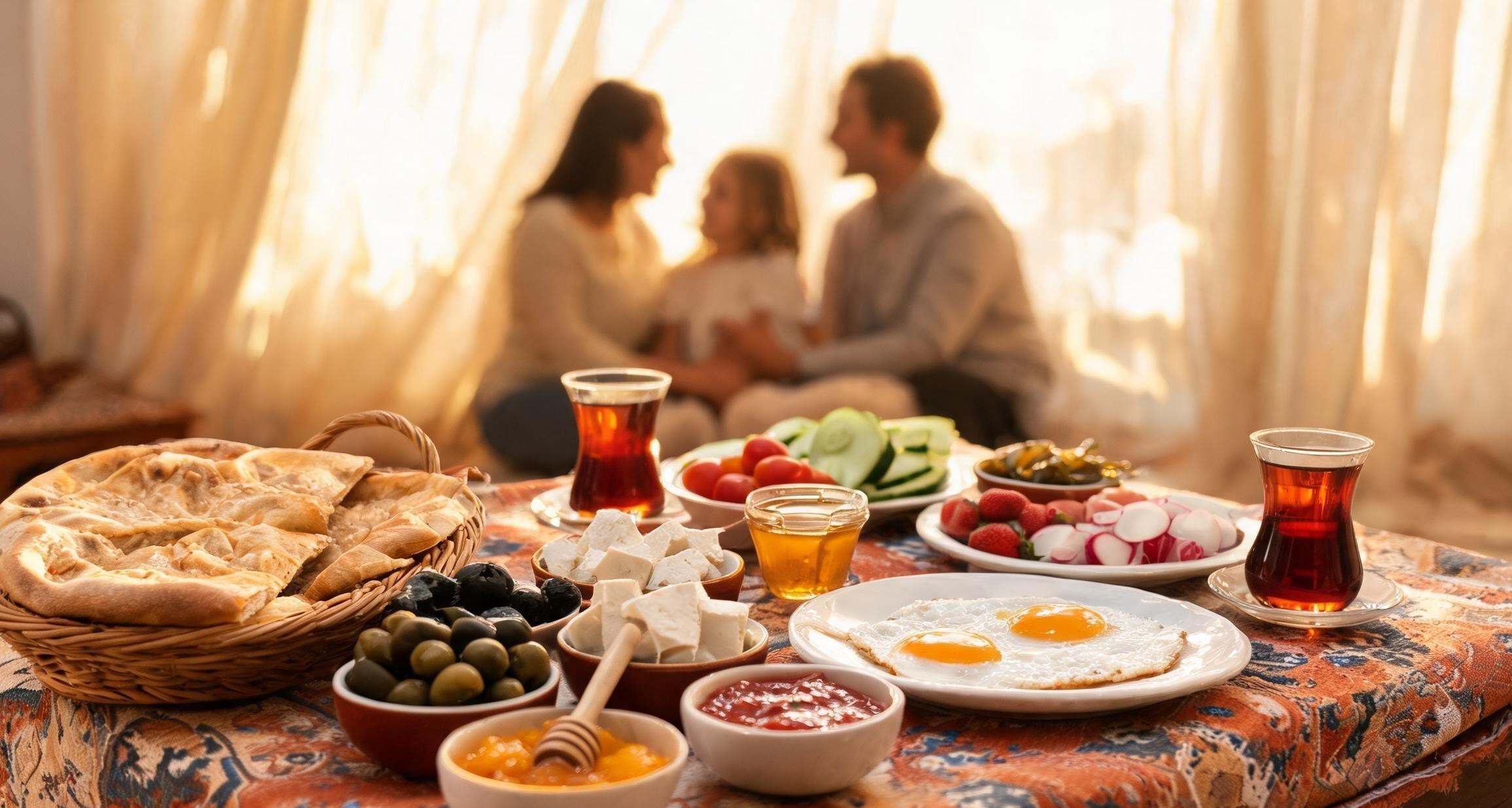
I arrived at a breakfast spot in Kadikoy at eight on a Sunday morning, which I later learned was already late by Istanbul standards. The place, a modest family-run shop with plastic chairs and wooden tables under a green awning, was nearly full. Families sat in clusters, tables covered with more small plates than I could count. Children were reaching across each other for bread. A grandmother poured tea from a tulip-shaped glass into a saucer to cool it. The sound of the street mixed with the clatter of spoons and the low hum of conversation. I took a seat near the back and asked for a full breakfast, not entirely knowing what that meant.
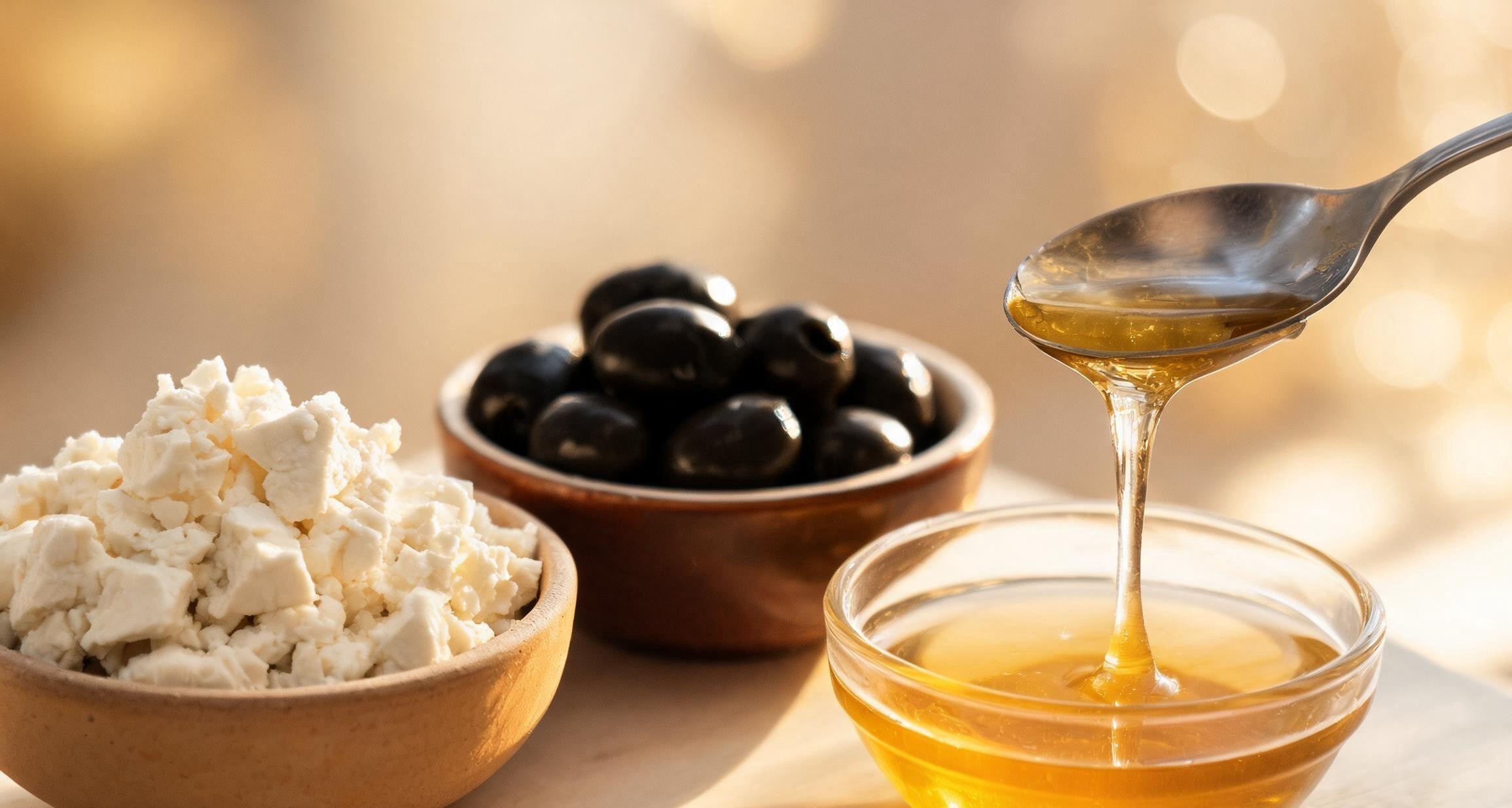
What arrived over the next ten minutes was not a single dish but an assembly of small bowls and plates that turned the meal into something closer to a ceremony. At the center was a basket of fresh simit bread, the circular crust covered in sesame seeds, warm and firm enough to tear apart. Around it were the building blocks of a Turkish morning: a shallow dish of beyaz peynir, a white cheese similar to feta but milder, made from sheep's milk. A plate of kaşar, a yellow cheese with a firmer texture and a sharper bite. A small bowl of black and green olives. A dish of honey, still in its comb, and next to it a bowl of kaymak, the thick, clotted cream that Turkey does better than almost anywhere else. You stir kaymak into honey and eat it with bread, and the first bite is sweet and rich in a way that makes you close your eyes.
Then came the eggs. I ordered the menemen, which arrived in a small copper pan, still bubbling. Menemen is a scramble of eggs, tomatoes, and green peppers cooked with olive oil and cumin, looser than Western scrambled eggs, almost saucy. The tomatoes break down completely and stain the eggs a pale orange. You eat it from the pan with a spoon and a piece of bread. Alongside came a plate of sucuk, a garlic-heavy Turkish sausage pan-fried until the casing was crisp. The combination of the soft eggs, the spicy sausage, and the fresh bread was the closest I've come to understanding why Turkish people treat breakfast as the most important meal of the week.
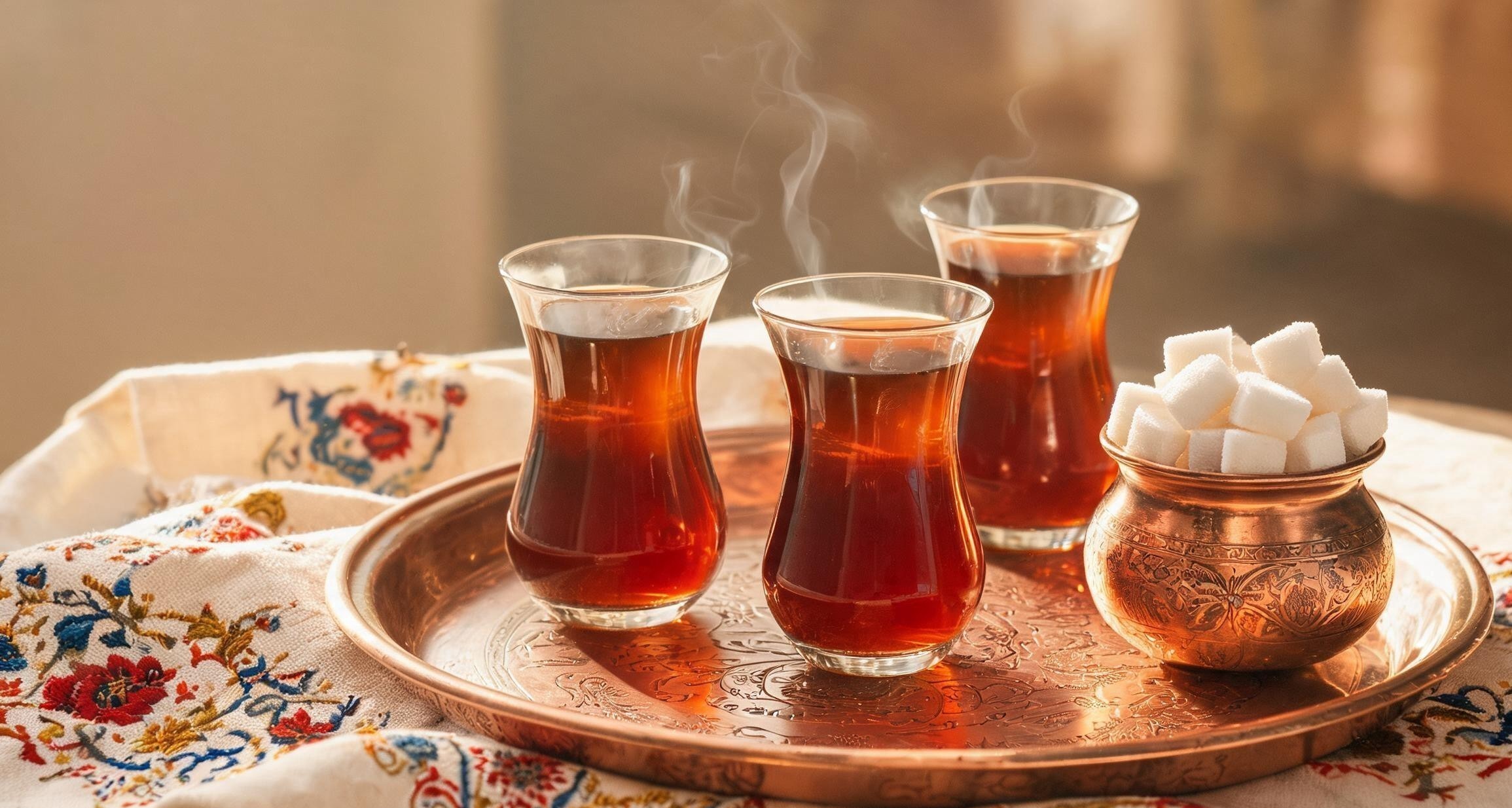
The tea arrived continuously, poured from a tulip-shaped kettle into small glass cups that had no handles. Turkish tea is black, strong, and served without milk, though you can add sugar if you want. The glasses are narrow at the waist and widen at the top, which is both practical and beautiful. The narrow middle keeps the tea hot, while the wider rim lets it cool enough to drink. I watched the waiter move between tables, refilling glasses without asking, keeping the rhythm of the meal going. Tea in Turkey is not something you order once. It is the continuous current that runs beneath the entire breakfast.
What struck me most, beyond the food itself, was the pace. Turkish breakfast is not a meal you finish in twenty minutes. The family next to me had been there for at least an hour before I arrived. The grandfather was on his second pot of tea, telling a long story. A young couple shared a breakfast between them, reaching across the table to tear off pieces of the same bread. The meal typically lasts two to three hours. It is a social event as much as it is a meal, a time when families and friends gather at the end of the week to sit together and eat slowly. You stay until you're ready to leave, and nobody pressures you to free up the table.
I learned later that Turkish breakfast, called kahvalti, varies considerably by region. In southeastern Turkey, near Gaziantep and Sanliurfa, the breakfast is heavier and more elaborate. You'll find pastirma, the air-dried cured beef seasoned with garlic and cumin, alongside kisir, a bulgur salad with tomato paste and pomegranate molasses. In the Black Sea region, breakfast includes muhlama, a dish of melted cheese and cornmeal that's dense and filling in the way that mountain food tends to be. The version I had in Istanbul leaned toward the lighter, western Anatolian style. But the structure stays the same everywhere: many small plates, fresh bread, endless tea, and no reason to hurry.
For anyone visiting Istanbul and planning to try a traditional breakfast, there are a few things worth knowing before you go. Arrive early, ideally before eight on a weekend, because the popular spots fill up fast. Order for the table, not per person. A full Turkish breakfast is a shared spread, and trying to claim one portion for yourself will give you more food than any one person should eat in a sitting. Expect to stay for a while. The waitstaff will not rush you, the tea will keep coming, and the point of the meal is not efficiency but enjoyment. Bring cash, because many of the smaller neighborhood spots, the ones worth finding, don't take cards. And don't skip the kaymak. It is, by itself, worth the trip.
I stayed at that table in Kadikoy for nearly two hours, working my way through the plates, refilling my tea glass, watching the street fill with people starting their Sundays. The bill came to about a hundred and forty lira, roughly six American dollars at the time. I paid, left a small tip, and walked toward the ferry terminal with the taste of honey and clotted cream still on my tongue. I have eaten breakfast in a lot of countries, and I don't think any of them do it quite like this.