I used to make pho with store-bought broth. I am not proud of this, but I understand why people do it. A proper pho broth takes six hours or more, and the ingredient list includes things like beef knuckles, oxtail, charred ginger, star anise, cinnamon, cloves, and fish sauce, none of which you can substitute with something from the spice aisle. The first time I made broth by hand, I started at seven in the morning and the kitchen smelled like a restaurant for three days afterward. My wife asked me if we were ever going to be able to eat anything that did not taste like pho. The broth was worth it. It was so far beyond the packaged version that I threw the remaining cartons in the trash and have not bought them since. The difference between homemade pho broth and store-bought is not a small difference. It is the difference between a real thing and a representation of a thing, and once you have tasted the real thing, the representation is impossible to go back to.
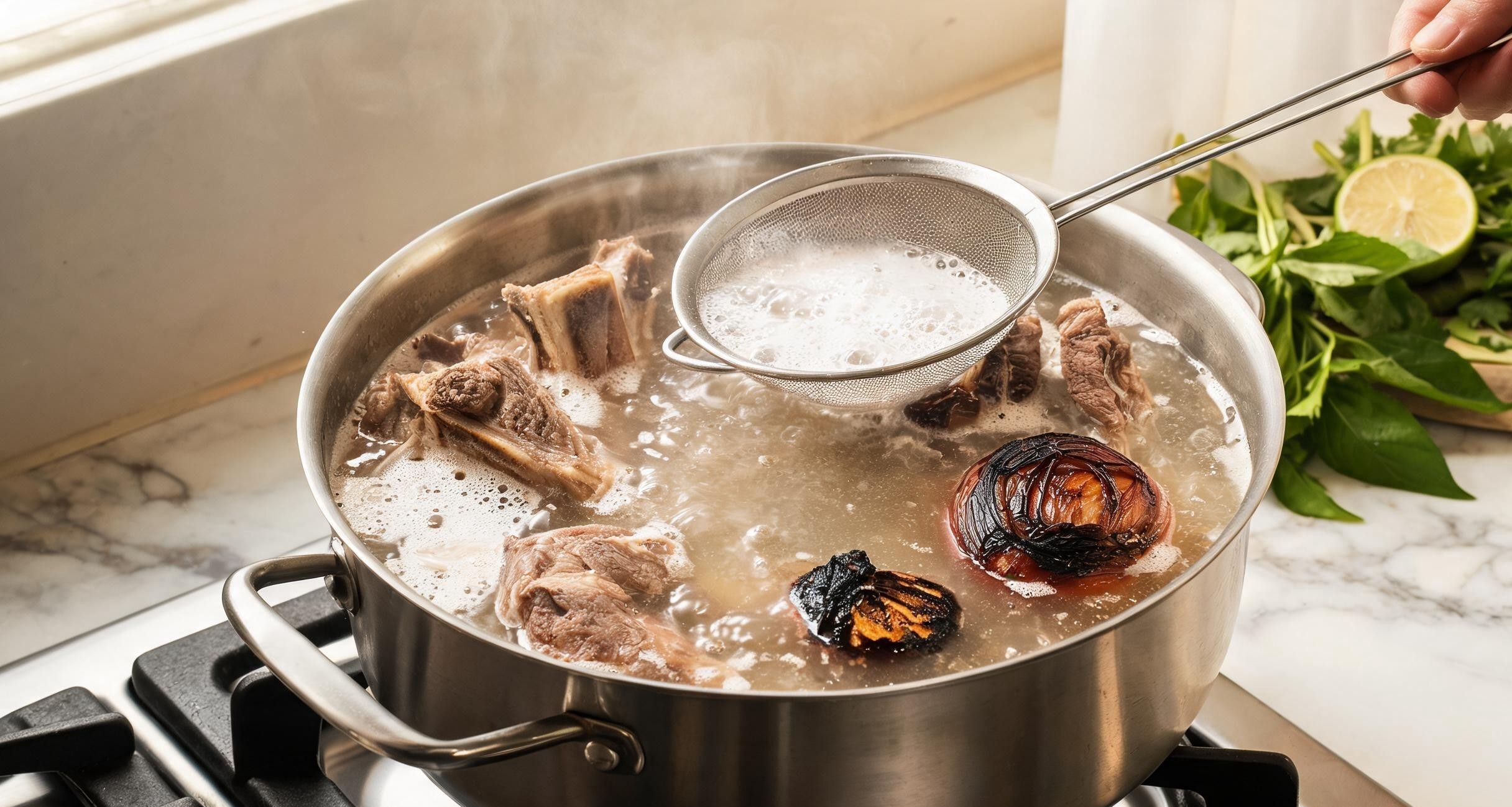
The bones are the foundation, and you cannot cut corners here. I use a mix of beef knuckle bones, which provide body and collagen, and oxtail, which adds richness and gelatin. Some people add marrow bones for extra fat, but I find knuckle and oxtail are enough. The key step that most recipes mention but do not emphasize enough is blanching the bones first. You cover them with cold water, bring to a boil, and cook for ten minutes, then drain and rinse them under cold water. This removes the impurities and blood that would otherwise cloud the broth and give it a harsh, metallic taste. It is a tedious step, and you will be tempted to skip it. Do not skip it. The difference between a clean, clear broth and a cloudy, muddy one is right here, in this ten-minute step that seems optional but makes all the difference in the final product.
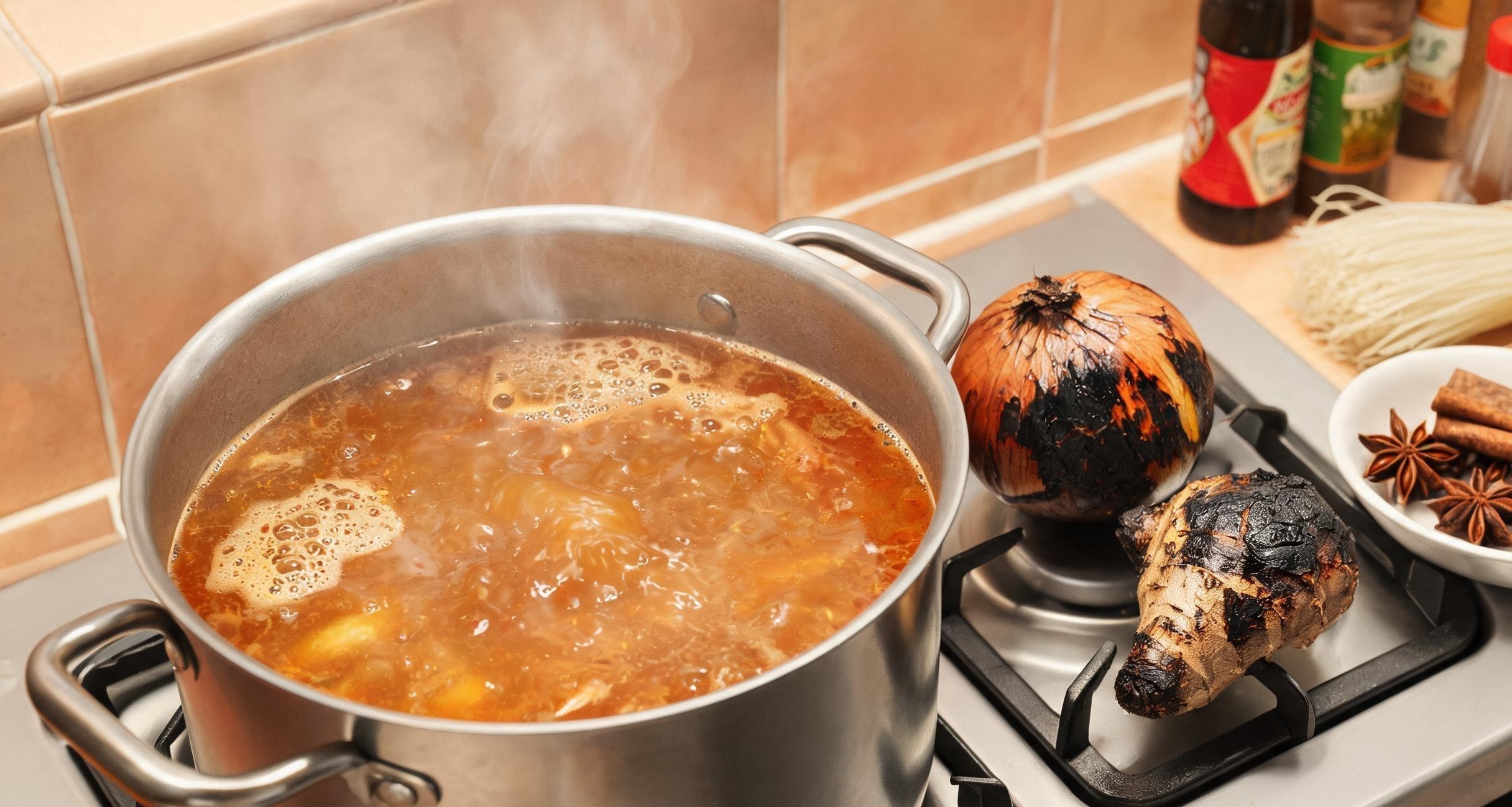
After blanching, the bones go into a large stockpot with fresh cold water. While the water comes to a boil, you char the aromatics. Two large onions, halved, and a fist-sized piece of ginger, also halved, go under the broiler or directly on a gas burner until they are blackened on the cut sides. This charring adds a smoky sweetness to the broth that you cannot get any other way. I also add three or four star anise, a cinnamon stick, four or five whole cloves, and a tablespoon of coriander seeds, all toasted briefly in a dry pan to wake up their oils. These go into the pot along with the charred aromatics, a tablespoon of salt, and a quarter cup of fish sauce. The water comes to a gentle simmer, not a rolling boil, and stays there for the next five to six hours. The low heat is critical. A rolling boil agitates the bones and fat, making the broth cloudy and greasy. A gentle simmer extracts flavor without the agitation.
During the simmer, you do almost nothing. Occasionally skim the surface to remove any foam or fat that rises. Add water if the level drops below the bones. That is it. The low, slow heat extracts flavor and gelatin from the bones without making the broth cloudy. After five or six hours, the liquid should be a deep amber color, fragrant with star anise and charred ginger, and slightly viscous from the dissolved collagen. Strain it through a fine-mesh strainer, discard the solids, and refrigerate the broth overnight. The next day, the fat will have solidified on top in a hard white layer. Skim it off. What remains underneath is your pho broth, clean and clear and intensely flavored. The overnight rest also lets the flavors meld and settle in a way that a freshly made broth does not achieve.
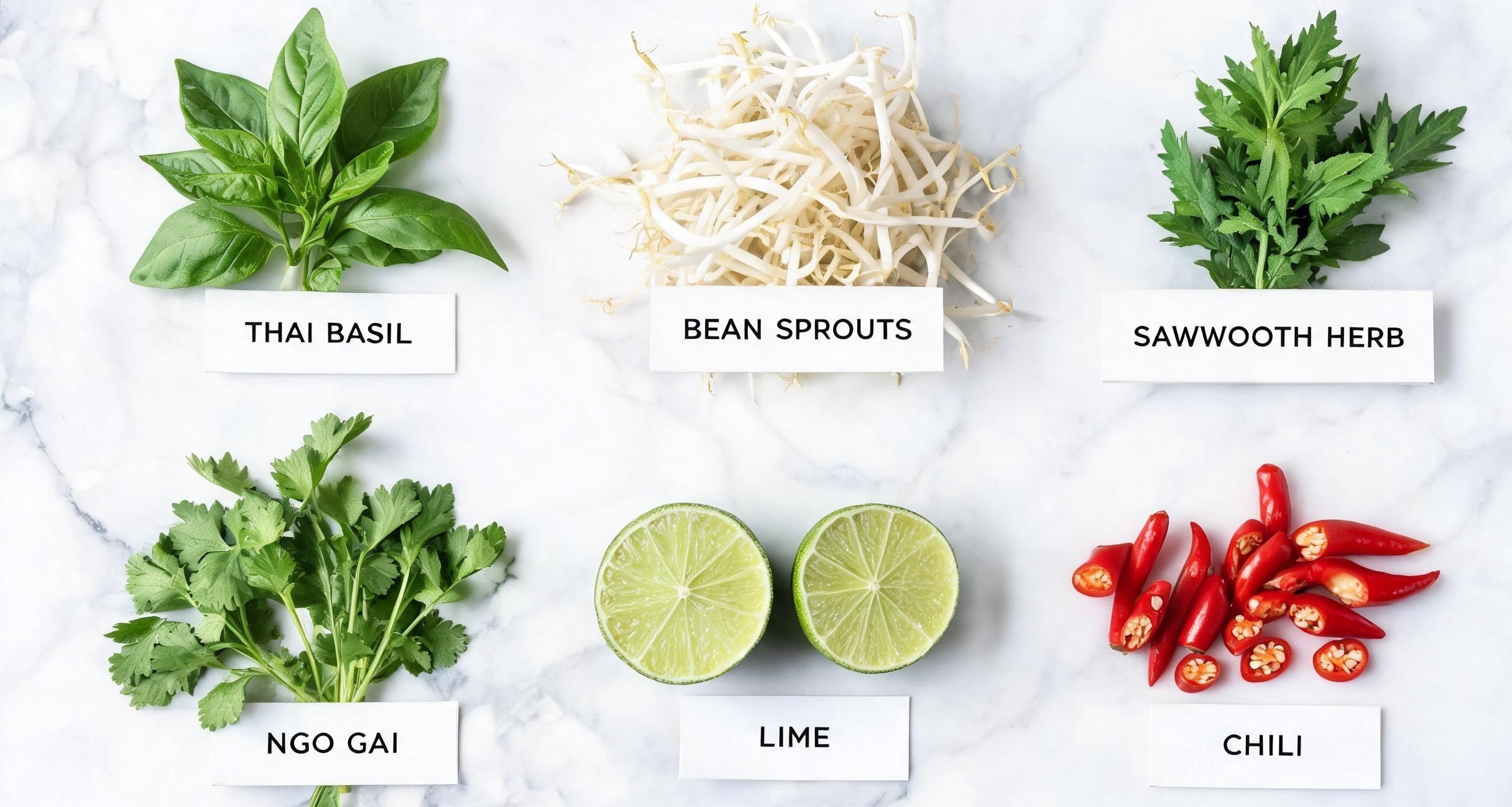
To serve, cook rice noodles according to the package directions, slice some beef thinly against the grain, and arrange the noodles and raw beef in a bowl. Ladle the hot broth over the top, which will cook the thin slices of beef instantly. Serve with a plate of garnishes: Thai basil, bean sprouts, lime wedges, sliced jalapenos, and hoisin and sriracha on the side. The first time you taste this broth, made from bones and aromatics and six hours of patience, you will understand why pho shops in Vietnam open at six in the morning and sell out by noon. It is not complicated food. It is just food that requires you to respect the process. The bones do the work. You just have to show up and wait, and the waiting is the hardest part and the most important part.